
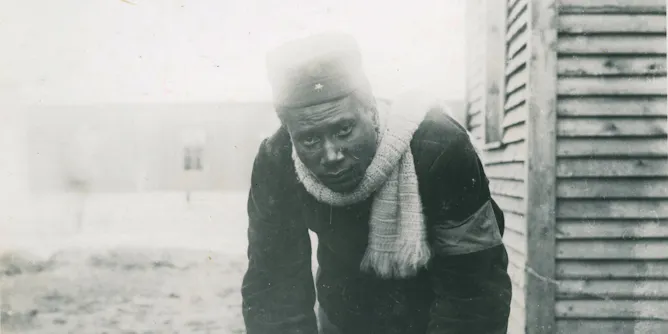
African prisoners in German camps were studied by ethnographers, who recorded their voices. What they had to say is poignant and unexpected.
Articles on Prisoners of war
Displaying 1 - 20 of 27 articles
Mercenaries are outlawed under international law. But Russia has misused the label to deny foreign fighters their protections as prisoners of war.
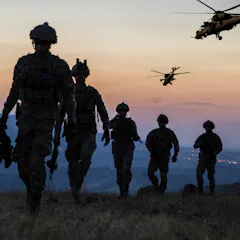
New Zealand has been quick to voluntarily report on its compliance with international humanitarian law. Turning those words into deeds remains the challenge in a violent and insecure world.
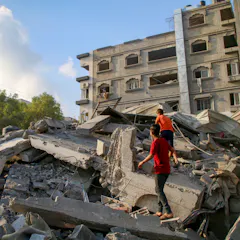
A scholar of the laws of war explores the complex issues raised by Israeli bombing of Gaza in retaliation for the slaughter of its citizens.
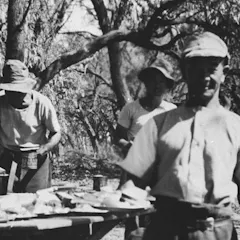
98% of Australia’s Japanese population were sent to internment camps during the second world war.
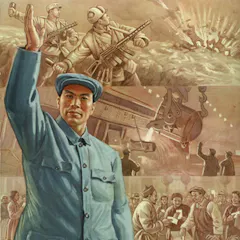
The Mao suit has a fascinating history. Vast quantities of this ‘people’s uniform’ were made for soldiers during the Korean war – which ended 70 years ago today – including Australian POWS.

Evidence shows New Zealand’s first world war soldiers killed both surrendering and wounded German soldiers. Their actions, condoned at the highest level, cast a long shadow.

The International Criminal Court issued its first arrest warrants for Russians allegedly responsible for war crimes in Ukraine.
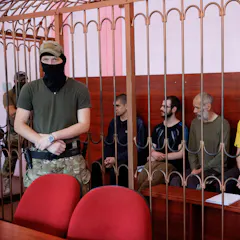
Five British nationals were part of a prisoner swap with Russia recently. Here’s what international law tells us about the detention and treatment of people taken in time of conflict.
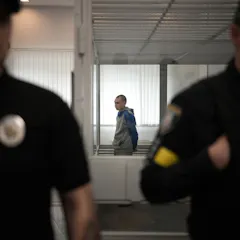
Both Russia and Ukraine are signatories to the Geneva Convention on the treatment of prisoners of war – how much it is being observed is another matter.

A digest of the week’s coverage of the war against Ukraine.
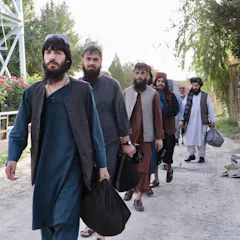
An Afghan soldier convicted of murdering three Australian soldiers is among six prisoners who could be released as part of a peace deal between the Afghan government and the Taliban.

It’s one of the largest prison escapes in world history and it’s through fiction we can understand the tragedy, from both an Australian and Japanese perspective.

In 1918, in Wünsdorf prisoner-of-war camp, a German sculptor created a bust of Indigenous soldier Douglas Grant. For decades, the whereabouts of this nationally significant sculpture were unknown - until now.
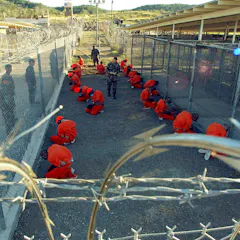
On Dec. 10, 1903, the US military leased 45 square miles of Cuban territory to build a naval base. How did Guantanamo Bay become an infamous prison for alleged terrorists?
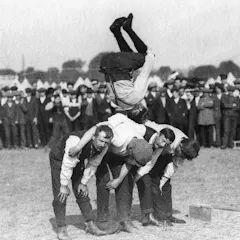
During First World War, the rhetoric of chivalry counteracted the inhumanity of the conflict in sometimes surprising ways.
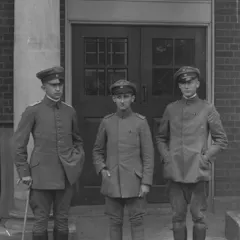
In September 1917, 22 German World War I prisoners held at a camp just outside Nottingham, managed to escape.
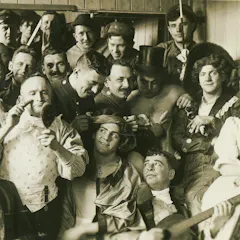
Many thousands of Germans got through internment by performing farces, dressing up as women and clapping along to the can-can.

Over 20,000 former POWs returned to Australia at the end of the second world war. Archival research sheds light on those who struggled to readjust to life here - and the impact on their wives.
Scientists have uncovered a hidden tunnel left in remarkable condition at a now derelict prison in Bridgend, South Wales.
Top contributors
-

Senior Archivist at the University of Melbourne Archives, The University of Melbourne
-
Professor of English Regional History, University of Nottingham
-
Postdoctoral Fellow in Asian Studies, Te Herenga Waka — Victoria University of Wellington
-
Professor and Lecturer in Military History, London South Bank University
-
Lecturer in Military History, Lincoln Bishop University
-
Postdoctoral Research Fellow, University of Leeds
-
Professor of History, Monash University
-
Lecturer in Politics, Kingston University
-
Teaching Fellow in French, University of Leeds
-
Reader in Forensic Geoscience, Keele University
-
Maitre de conferences en histoire de l'Europe moderne, Université de York, Fellow 2018 - IEA de Paris, Institut d'études avancées de Paris (IEA) – RFIEA
-
Professor of International Law, UNSW
-
Lecturer in Twentieth Century Literature and Culture, Edinburgh Napier University
-
Postdoctoral Fellow, School of Archaeology & Anthropology, Australian National University
-
Challis Chair of International Law, Sydney Law School, University of Sydney