

Calls by Pierre Poilievre and Donald Trump to defund public broadcasters seem aimed at silencing criticism and obscuring oversight of their actions. That’s dangerous for democracy.
Articles on Press freedom
Displaying 21 - 40 of 217 articles

Political attacks are now supercharged by technology platforms retreating from accountability, and exploited by hostile foreign powers.
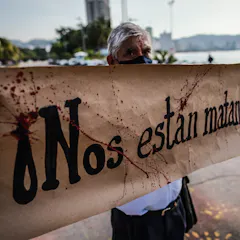
National and local governments are thought to be responsible for almost half of all attacks on journalists in both countries.
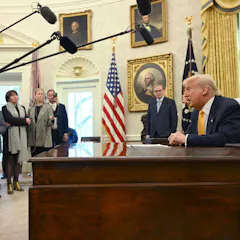
Your money is safer in a transparent and accountable environment.

Attacks on the judiciary, the press and universities are all part of a concerted attempt to stifle dissent in America.
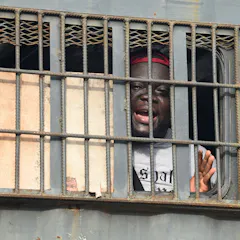
Online harassment of journalists is becoming a serious problem in an age of social media.
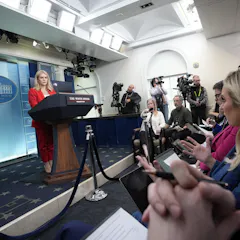
The Trump White House has decided to choose which journalists can be given access to the president.
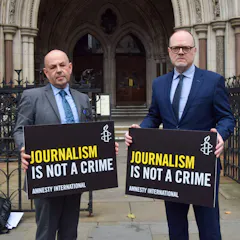
Covert tactics are an essential investigative tool in tackling contemporary organised and serious crime – they are not intended to police the 4th estate.
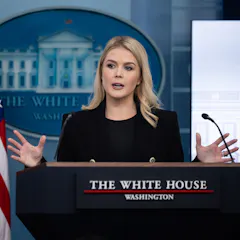
The Trump administration has moved to control which journalists have access to the US president.
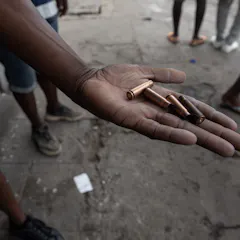
Dialogue with Mozambique’s opposition leader Venâncio Mondlane is necessary. However, it must not be another ‘elite bargain’ that does not benefit the common people.
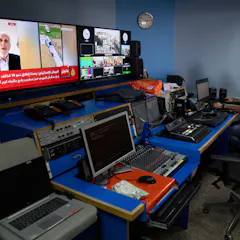
Al Jazeera is facing another challenge to its reporting on the Israel-Gaza conflict: it is now being banned by the Palestinian Authority.
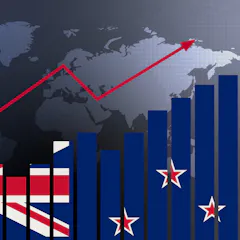
New Zealand generally compares well on global measures of freedom, happiness and transparency. But rankings in some important areas have been sliding for years now.
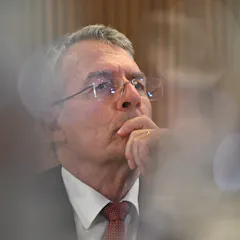
The government has a record of promising improvements in transparency, but falling short in terms of passing legislation.
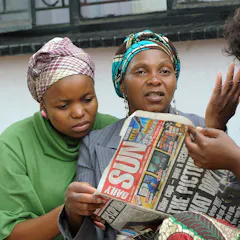
South Africa’s press council may need more awareness campaigns to enable citizens to hold the media accountable.
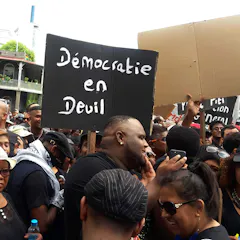
There’s been a gradual erosion of democratic rights and liberties in the island of Mauritius.
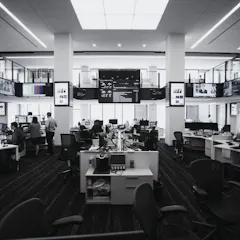
In a time when media companies are more cash-strapped than ever, the threat of defamation action has a chilling effect on the stories that get told.
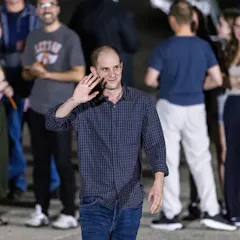
The release of Gershkovich and his fellow hostage highlights the way some authoritarian regimes have cynically used such people as pawns in geopolitical manoeuvres.

Justice has finally prevailed as wrongfully imprisoned journalists are freed. But what does this complicated deal mean for future hostage diplomacy?
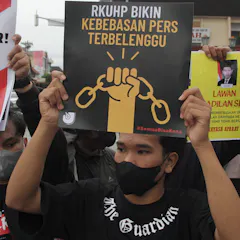
Last year, there were 87 violent incidents against journalists in Indonesia. And late last month, a journalist and his family died in an arson attack at their home.
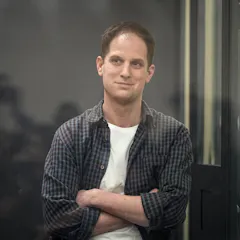
Gershkovich is the first foreign correspondent to be charged with spying since the end of the cold war.
Top contributors
-

Professorial Fellow, University of Canberra
-
Professor of Journalism and Communications, Macquarie University
-
Senior Research Fellow, Centre for Advancing Journalism, The University of Melbourne
-
Full Professor in Journalism, Dublin City University
-
Reader in International Journalism, City St George's, University of London
-
Associate Professor, TC Beirne School of Law, The University of Queensland
-
Professor in Media and Communication, Goldsmiths, University of London
-
Associate Professor in International Relations & Academic Director of the Royal Air Force College Cranwell, University of Portsmouth
-
Caxton Professor of Journalism, University of the Witwatersrand
-
Emeritus Professor of Journalism, Cardiff University
-
Senior Lecturer, School of Arts and Social Sciences, Department of Journalism, City St George's, University of London
-
Professor and Lee Hills Chair of Free Press Studies, University of Missouri-Columbia
-
Professor of Communications, University of Westminster
-
Director of Undergraduate Studies, School of Journalism, Media and Cultural Studies, Cardiff University
-
Professor of Media Industries, University of Nottingham