
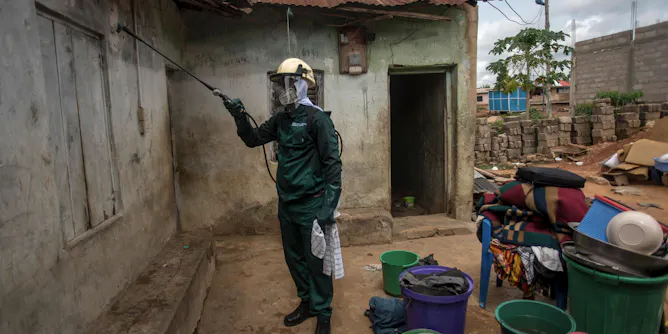
To achieve malaria elimination on the continent, Africans need to own the agenda.
Articles on Poverty2021
Displaying all articles
Young people living in the challenging contexts of urban informal settlements may be more at risk of experiencing generalised anxiety disorder.
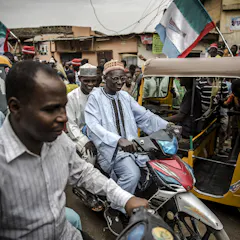
Nigeria needs more industrial production, foreign and domestic investment, not just handouts.

The socio-economic and political factors that keep conventional energy out of reach of the poor can do the same with renewable energy.

Despite evidence that cash payments can help improve well-being, they have limitations as well, according to a development economist.

The country still has a way to go in addressing the challenges of social inequity. But there has been some progress in every sphere of government.

Restricting trade to control the pandemic damages livelihoods, especially those of the urban poor. The control of future pandemics must strike a balance between health and economic activity.
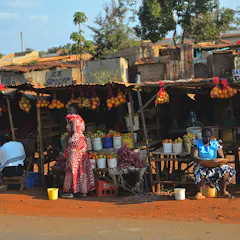
Kenya’s urban poor lack enough food and the little they can afford is often unsafe and of poor nutritional value.
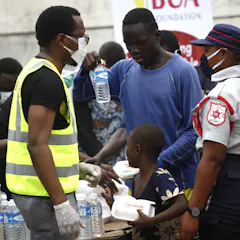
The Nigerian government must adopt a process that is open in implementing its social assistance programmes.
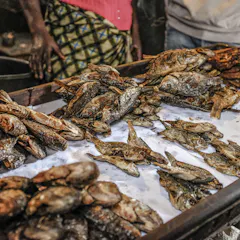
Africa’s industries are not growing at the same pace as its cities, leaving the informal economy as the main source of income for many. COVID-19 lockdowns have cut this umbilical cord.
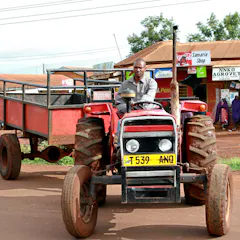
Why poverty line data do not capture the ability of Tanzanians to build relatively good houses.

Zimbabwe’s energy policy needs to be reconsidered if the country’s electricity shortage is to be resolved.
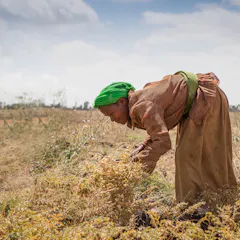
Smallholder farming might not be able to generate enough value on its own, but farmers still need support.
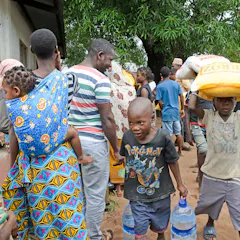
Income is a useful measure for tracking economic progress over time. But a broader lens is needed to understand the relational and often political ways in which poverty emerges and is reproduced.
Top contributors
-

Senior Research Associate, University of Johannesburg
-
Research associate at African Centre for Cities, University of Cape Town
-
Senior lecturer, University of Exeter
-
Assistant Professor of Economics, Drake University
-
Director of Scientific Operations at the Pan-African Mosquito Control Association and Associate Professor of Medical Entomology, Université des sciences, des techniques et des technologies de Bamako
-
Anthropologist and senior researcher, Chr. Michelsen Institute
-
Senior Scientist , South African Medical Research Council
-
Icrea Research Professor at ICTA-UAB, Department of Private Law, Universitat Autònoma de Barcelona
-
Senior research fellow at the Centre for Social Development in Africa, University of Johannesburg
-
African Population and Health Research Center
-
Spatial Economist, International Maize and Wheat Improvement Center (CIMMYT)
-
Senior Research Fellow, World Institute for Development Economics Research (UNU-WIDER), United Nations University
-
Professor of Economics & Business, Allegheny College
-
African Population and Health Research Center
-
Senior Economist, Center for International Forestry Research – World Agroforestry (CIFOR-ICRAF)