

When people reflect on how their actions shape the future, they are more likely to support solutions to present-day issues like poverty and inequality.
Articles on Poverty
Displaying 61 - 80 of 1031 articles

Past experience suggests that adding work requirements to Medicaid will strip health services from millions of American without increasing employment.

Interviews with female prisoners in WA show many struggled with violence, drugs, alcohol, poverty and homelessness from an early age.

Money and budgeting skills are undeniably important. But financial literacy education can’t ignore the broader economic structures that influence students’ lives.

The Canadian Food Policy Advisory Council offers lessons for strengthening democracy and building participatory governance mechanisms in Canada and beyond.

Media coverage often focuses on those fleeing their country as refugees, while internally displaced people remain less visible and beholden to national governments.
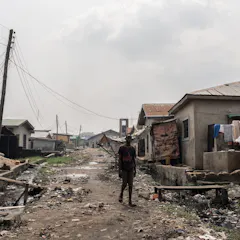
Forced eviction is not a solution to the growth of slums.
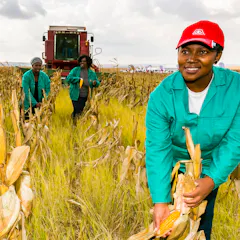
Investing more in agriculture, especially with external financing, offers the biggest gains in raising incomes and reducing poverty.
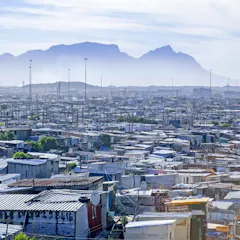
Economic modelling suggests that a basic income grant for all individuals aged between 18 and 59 could significantly reduce poverty and inequality in South Africa.

Relying on GDP, inflation or unemployment is an inadequate way to monitor the health of the economy.

A study of about 1 million girls in Indonesia suggests government programs can be effective in reducing the number of child brides.

More than 120,000 people are homeless in Australia. The problem can be solved, but it will take more than just building more homes

New research shows that Americans’ personal wealth is not enough to compensate for factors that affect how long people live, such as health behaviors, education or social support.

Relying only on exports is not sufficient given the fluctuating rupiah and global commodity prices, and creating strong domestic demand becomes increasingly crucial.
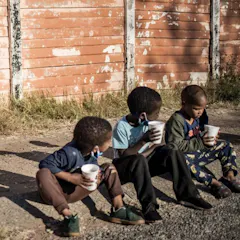
Fragmentation of services is a barrier in addressing severe child poverty.

The Trump administration’s sudden freeze of funding for USAID is an immediate disaster, but the economic model for international solidarity has been outdated for a long time.
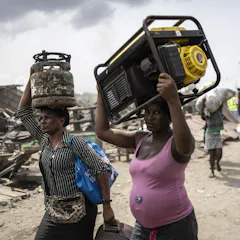
Nigeria needs a broad-based coalition of developmentalist elites.

Research shows a possible return to society of $1.24 for every dollar invested in increasing the JobSeeker rate.
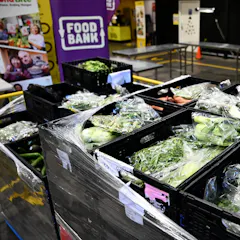
The cost-of-living crisis means more Australians are going without adequate food. The growing problem must be tackled by a promised food security strategy.

Nigeria’s 2025 budget is anything but pro-poor.
Top contributors
-

Professor of Social Development Studies, University of Johannesburg
-
Professor of Economics & Business, Allegheny College
-
Professor of Political Studies, University of Johannesburg
-
Professor, Crawford School of Public Policy, Australian National University
-
Professor, Sol Plaatje University
-
Pro Vice-Chancellor, Climate, Sustainability and Inequality and Director, Southern Centre for Inequality Studies, University of the Witwatersrand
-
Senior Fellow, Department of Agricultural Economics, Stellenbosch University
-
Director of the Roy McKenzie Centre for the Study of Families and Children, Te Herenga Waka — Victoria University of Wellington
-
Professor of Economics, Fordham University
-
Senior Research Fellow, World Institute for Development Economics Research (UNU-WIDER), United Nations University
-
DSTI/NRF Research Chair in Welfare and Social Development, University of Johannesburg
-
Distinguished Research Fellow, Human Sciences Research Council
-
Honorary Research Fellow, City Political Economy Research Centre, City St George's, University of London
-
Dean of the Faculty of Economic and Management Sciences, University of Pretoria
-
Senior Researcher, Southern Centre for Inequality Studies, University of the Witwatersrand