

Decades of research shows how the higher education system has failed to give Australians a “fair go”. How can we move from good intentions to long-overdue change?
Articles on Postgraduate
Displaying 1 - 20 of 27 articles

New research examines why Māori and Pacific representation in university STEM subjects remain so stubbornly low.

At least in the short term, employment opportunities for graduates seem to be increasing.

There’s strong evidence that, all things being equal, leading South African universities provide “world class” training at PhD level.

Writing groups provide a space where the “rules of the game” of academia become clear.
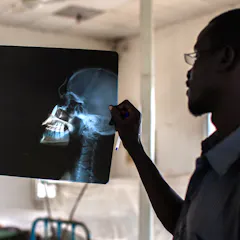
African countries need to start producing and developing their own medical devices. Suitably skilled biomedical engineers are needed for this sort of innovation to take root.

South Africa must act to halt the decline and save its universities’ well deserved global reputation of excellence.

Female baby boomers who missed out earlier in life are now jumping at the opportunity to further their education.

Assessment should be a part of teaching and learning at universities. It’s important because it will subvert exclusion and allow all students to take responsibility for their work.

This Masters degree sets a precedent in South Africa and gives universities that want to be truly inclusive a lot to think about.

African academics living in the diaspora have access to resources that can really help their peers working on the continent.

There is a very real risk that South Africa’s major research projects will stumble and the whole research machine will be shut down by ongoing student protests.
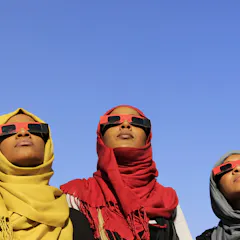
Collaboration is one of the keys to making African science soar: when the continent’s universities work together, they can produce amazing results.

Australia produces thousands of PhD graduates every year but many will find it hard to secure a university career. So we should do more to help them consider a career outside of academia.

Many people are left floundering when they try to get working on their PhDs. In Africa, this is often because the skills they need haven’t been developed earlier in their academic careers.

The limits of fertility and an elongated academic career path are currently at odds. If the choice to bear children contributes to the ‘leaky pipeline’ of women in STEM, what can be done?

Shouting past each other via different kinds of media isn’t going to help researchers – from éminences grises to new postdocs – effectively work together on issues in the field of science.
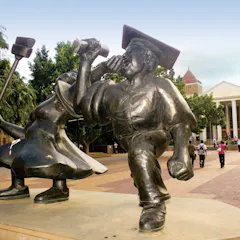
More and more African universities are realigning themselves to tackle their countries’ societal and economic problems.

A lifetime of study and preparation are no guarantee of success for PhDs when they hit the job market. Things can and should be improved.

Reduction in funding for overseas students sparks protest from Iraq postgraduates.
Top contributors
-

Previous Vice President of the Academy of Science of South Africa and DSI-NRF SARChI chair in Fungal Genomics, Professor in Genetics, University of Pretoria, University of Pretoria
-
Postdoctoral Fellow in Regenerative and Developmental Biology, Tufts University
-
Professor of Education and Dean of York Graduate Research School, University of York
-
Research Scientist, The University of Queensland
-
Senior lecturer, Linguistics, University of the Witwatersrand
-
Professor of Higher Education Policy, Monash University
-
Professor of Philosophy of Education, Stellenbosch University
-
Secretary & Registrar, Cranfield University
-
PhD candidate, University of Lincoln
-
Dean of Science, University of California, Santa Cruz
-
Assistant Professor at University of Strasbourg and researcher at BETA (CNRS), Université de Strasbourg
-
Professor of Higher Education, Rhodes University, South Africa, Rhodes University
-
Full Professor of Physics, University of the Western Cape
-
Director, Science Policy and Projects, Australian Academy of Science
-
Professor of International Politics, Clinton Institute, University College Dublin