
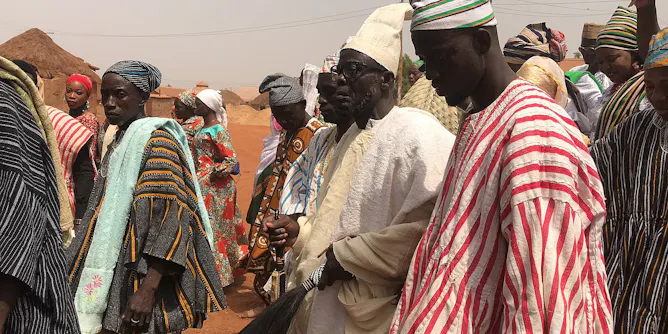
Chieftaincy conflicts in northern Ghana have hindered development in the country.
Articles on Political parties
Displaying 41 - 60 of 97 articles
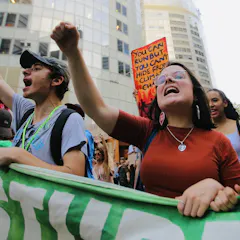
State governments, councils, researchers and entrepreneurs are slowing our slide to disaster – but they need others to step up.
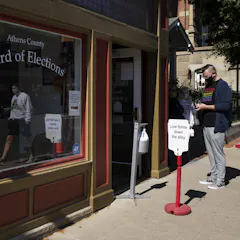
This year is seeing a high number of absentee and mail-in ballots and voting in the period before Election Day – but early voting periods are not new to the 2020 election.
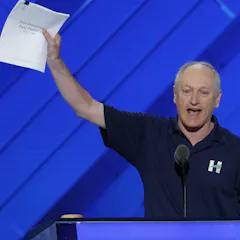
Party platforms are a vital clue about which groups hold real power in the two major national parties, and can help predict what the government will actually do.
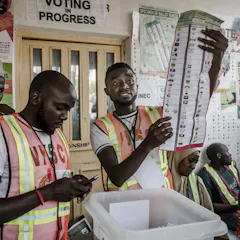
Nigeria’s Independent National Electoral Commission recently deregistered some political parties, leading to debates over whether this was a step in the right direction.
There seems little chance of getting people to agree on the big picture, but even partisans see eye-to-eye sometimes when you get down to the nitty gritty.
The true number of people who do not favor either of the two major political parties in the US has actually remained stable in recent years.
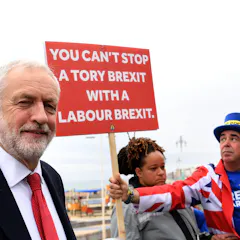
Members and leaders are at odds over the two biggest issues of the day. And an ambitious motion on a Green New Deal could make waves in Brighton too.
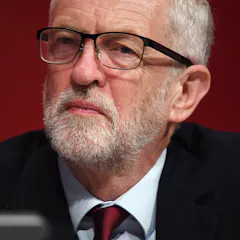
Labour’s grassroots members and its leadership look set to clash at its Conference in Brighton. But don’t bet on the members getting Corbyn to back Remain.
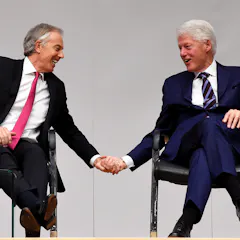
Democratic presidential candidates share many ideas and opinions. What they don’t share, writes one historian, is the label ‘liberal.’

A spatial analysis of India’s election results shows a unique geographical footprint of the BJP vote and how its recent progression follows obvious geographic patterns.
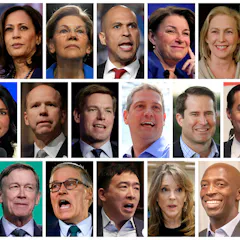
The number of candidates in presidential primaries has skyrocketed since the 2016 election. Divisions inside political parties and easy ways for candidates to raise money are among the reasons why.
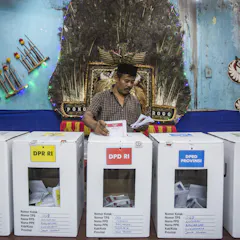
The ruling PDI-P, while leading the polls, did not experience a significant surge.
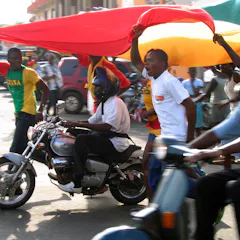
In Ghana vigilante groups are formed to act on behalf of political parties.
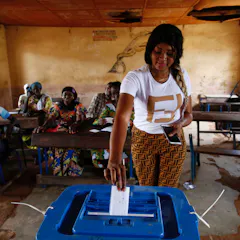
Elections are supposed to hold politicians accountable: Officials who fear losing their seat will work harder for voters. But in some countries, political competition actually makes government worse.
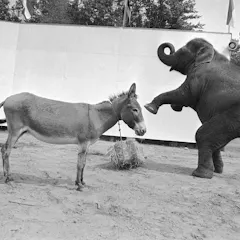
The true number of people who do not favor either of the two major political parties in the US has actually remained stable in recent years.

The victory of a Democratic Socialist in a New York primary will not lead to the dictatorship of the proletariat. It’s an incremental addition to the long history of moderate socialism in the US.

Male and female lawmakers differ in their reasoning why women struggle in winning elections. They also have different opinions about the legitimacy and effectiveness of the gender quota policy.
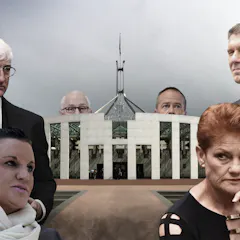
The recent elections in Tasmania, South Australia and the byelection in Batman have left an impression that the advance of the minor parties has stalled. This is not necessarily the case.
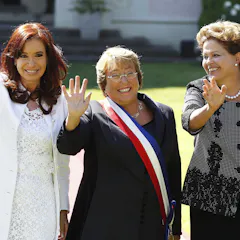
New research on Latin America’s four recent female presidents disproves the idea that merely putting a woman in power will improve gender equality.
Top contributors
-

Professor of Politics, Queen Mary University of London
-
Professor of Politics, Griffith University
-
Assistant Professor, Universitas Muhammadiyah Jakarta
-
Professor and Co-Director of the Center for an Independent and Sustainable Democracy, Arizona State University
-
Associate Professor of Political Science, University of Dayton
-
Professor of Politics, University of Sussex
-
Professor Emeritus of Political Science, Indiana University
-
Professor of Politics, Department of Government and International Relations, University of Sydney
-
Senior Lecturer, Department of Government, University of Essex
-
Honorary Senior Lecturer, School of Social and Political Sciences, University of Sydney
-
Associate Professor, Faculty of Law, Monash University
-
Lecturer, Tumaini University Makumira
-
Visiting Lecturer, Department of Journalism, City St George's, University of London
-
Professor Emeritus of Applied Philosophy, Glasgow Caledonian University
-
Assistant Professor of Public Policy and Politics, University of Virginia