
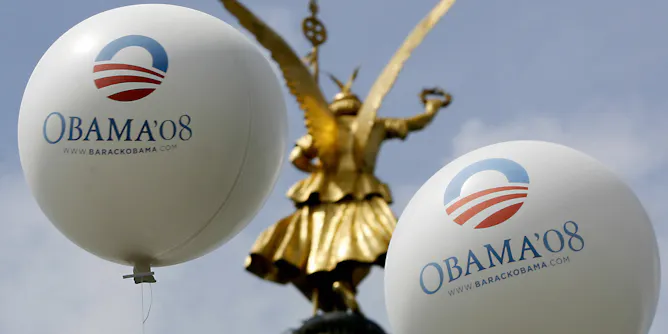
Everything is political. And that includes typefaces, write two scholars who found that people see one group of typeface styles as liberal, another group of styles as conservative.
Articles on Political campaigning
Displaying 21 - 40 of 69 articles
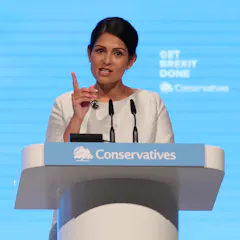
When an election looms, some politicians reach for the easy ‘crackdown’ on Travellers and Gypsies to win over core voters.
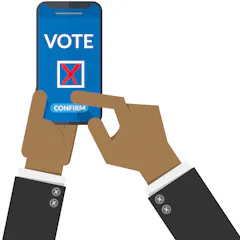
South African voters felt that mobile political campaigns were intrusive, violated their privacy and made them feel disillusioned with the political process.
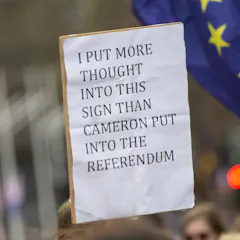
They can be summed up, thus: ignore your people at your peril.

Politicians have been using memes to appear cool, plugged in, even ‘lit.’ Here’s why that’s not necessarily a smart idea.
Health care dominated 2018’s political ads. Digital advertising grew, but hasn’t yet killed TV’s share. And dark money favored Democrats, say scholars studying the volume and content of campaign ads.
Effective political campaigns use three main online strategies; research identifies which of them is most effective.

How data-driven behavioural sciences are being road tested in the political sphere.

The history of widespread advocacy campaigns shows that the ‘No’ campaign has many unfair advantages in the marriage equality debate.
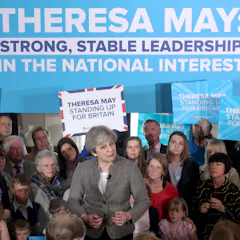
Why is the PM constantly repeating this phrase and what impact is it really having on her campaign?
The prime minister knows how to use the element of surprise to her advantage.
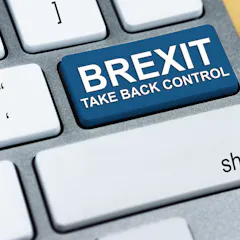
Businesses were top dog when it came to branding but popular politics show there’s a new player in town.

The gambling lobby’s failure to seriously influence the 2016 ACT election should embolden governments around Australia that have a mind to deal with gambling reform.
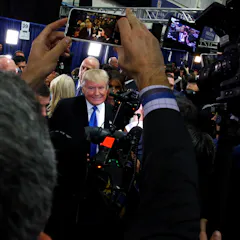
We now find ourselves in a ‘post-truth’ environment, trying to find meaning in dumbed-down democracy. How did we get here?
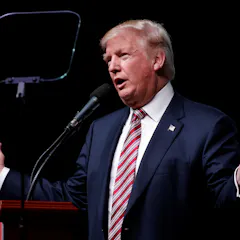
The narrative Donald Trump has played during the campaign is that the elites who have abandoned him or disagree with him are all part of the establishment he seeks to destroy.

People tend to assume that most papers have an inherent bias, so a group of economists looked at what happens when there’s a surprise pick.
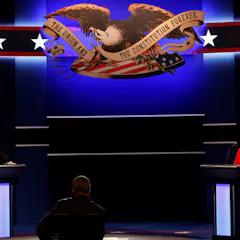
To decide between Hillary Clinton and Donald Trump, American voters will have to decide which narrative they prefer, leaving the truth to emerge later from the political rubble.
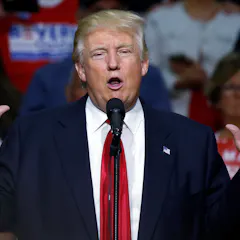
How does Donald Trump get away with the type of campaign he’s running? Why, if he’s a narcissistic demagogue, has he found an audience who respond to his politics?

Mobilising and organising large numbers of voters makes for a powerful political force, and as a tool for change in democracies. Its use is not limited to ‘elites’.
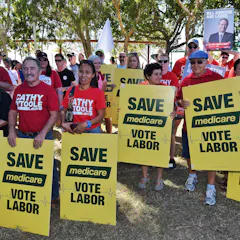
Labor’s ‘Mediscare’ is a reminder of just how potent a well-developed and executed scare campaign can be in an electoral contest.
Top contributors
-

Honorary Senior Lecturer, School of Social and Political Sciences, University of Sydney
-
Professor of Government and Public Policy, Washington State University
-
Lecturer in Politics, The University of Melbourne
-
Professor of Information Studies, Syracuse University
-
Professor of Government, Bowdoin College
-
Professor of Government, Wesleyan University
-
Director of Undergraduate Studies, School of Journalism, Media and Cultural Studies, Cardiff University
-
Associate Professor of Politics, Richmond American International University
-
Postdoctoral Research Fellow, School of Politics and International Relations, Australian National University
-
Principal Fellow, Melbourne School of Government, The University of Melbourne
-
Director, Vice-Chancellor's Centre of Public Ideas (CoPI) and Donald Horne Professor of History and Public Ideas, University of Canberra
-
Lecturer in Politics, University of Bristol
-
Associate Professor, School of Business and Tourism, Southern Cross University
-
Assistant researcher, University of Sydney
-
Senior Lecturer, Communications, Media and Culture, University of Stirling