

Polio can be circulating through a community long before anyone is paralyzed. Monitoring sewage for the virus lets public health officials short-circuit this ‘silent transmission.’
Articles on Polio
Displaying 61 - 80 of 91 articles

Vaccines have long been considered safe, but many people still believe they are not. A new study shows that people who think they know more than medical experts are more likely to believe that vaccine are not safe.
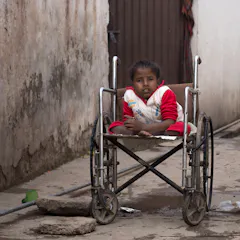
Pakistan had only eight new diagnoses of polio in 2017. The virus’ days look numbered – but health workers have their work cut out for them to eradicate the devastating disease once and for all.
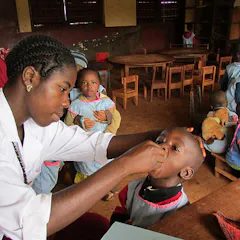
Social media rumours are putting Nigeria’s vaccination campaigns at risk.
Current plans to eradicate polio mean keeping the virus alive – and risk restarting the epidemic.
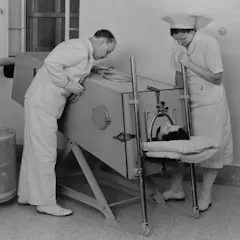
Vaccination is not to be taken for granted.
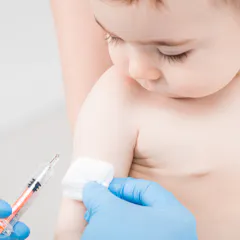
Vaccinating against an infectious disease can stop once the threat of future transmission is deemed sufficiently low.
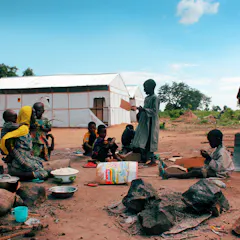
More than 788 health facilities have been destroyed in parts of North-Eastern Nigeria captured by Boko Haram insurgents, crippling health services in the area.

You may not know anyone with an infectious disease covered by the immunizations on the 2017 list of recommended vaccines. Here’s why that doesn’t matter, and why children still need to be protected.

A new polio outbreak in Nigeria has hampered the country’s efforts to be declared polio free by 2017.
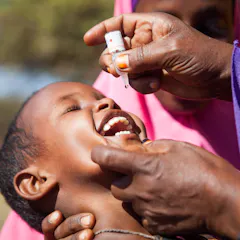
Every year hundreds of thousands of children die from vaccine-preventable diseases. Africa leaders could change this if they improved vaccination efforts.
Despite Nigeria’s success in eradicating polio, it is struggling to get a grip on mother and child vaccinations.

As more vaccines have been developed, the challenge of delivering them with minimal pain and number of visits to the doctor has increased. Needle-free vaccinations might help.
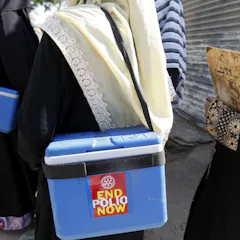
Researchers are piloting a smartphone app to collect better information about who is getting vaccinated and to design better incentives for health workers on vaccination drives.
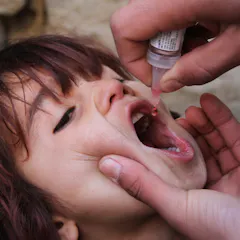
Recent polio outbreaks in Ukraine and Mali, caused by a vaccine-derived form of poliovirus, don’t mean the vaccine isn’t working. On the contrary, they are a reminder to keep up vaccination rates.
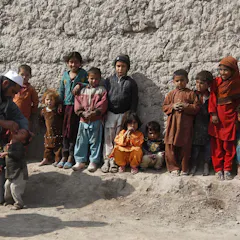
Eradicating the last 1% of polio cases in the world requires an endgame plan centred on immunisation and surveillance.

The positive impact of the polio eradication initiatives on the continent can be felt across the health sector in other health programmes.
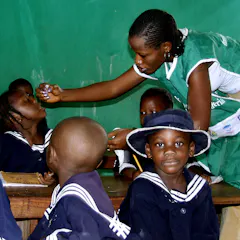
Nigeria’s strategy to eliminate polio was so effective that it was duplicated to deal with ebola. So why did the country take so long to get off the list of polio-endemic countries?
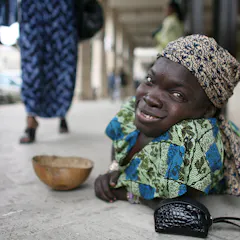
It’s been one year since the last polio case was reported in Africa. If the continent keeps this up, it could be declared polio free by 2018.
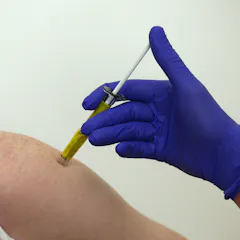
Prior to the 1970s, almost all Phase I and II drug trials were conducted on prisoners. Our standards have gotten better since then, but still need revision.
Top contributors
-

Associate Principal Research Fellow, Burnet Institute
-
Fellow, Nigerian Academy of Science
-
Extraordinary Professor, Global Health, Stellenbosch University; South African Medical Research Council
-
Senior Lecturer, Film and Media Studies, University of Pittsburgh
-
Director of the School of Journalism & Strategic Media, Professor of Media Studies, Middle Tennessee State University
-
Postdoctoral Research Associate, School of Infection and Immunity, University of Glasgow
-
Head, Centre for Vaccines and Immunology, National Institute for Communicable Diseases
-
Chancellor's Fellow, History of Medicine, Emotions and Modern British History, University of Edinburgh
-
Postdoctoral Researcher, Molecular Biology, University of Leeds
-
University of Southern California
-
Masters of Public Health graduate, Harvard University
-
Associate Professor, Melbourne School of Population and Global Health, The University of Melbourne
-
Assistant Research Scientist in Epidemiology, University of Michigan
-
Assistant professor, public policy, Utah Valley University
-
Professor of Global Biosecurity, NHMRC L3 Research Fellow, Head, Biosecurity Program, Kirby Institute, UNSW