
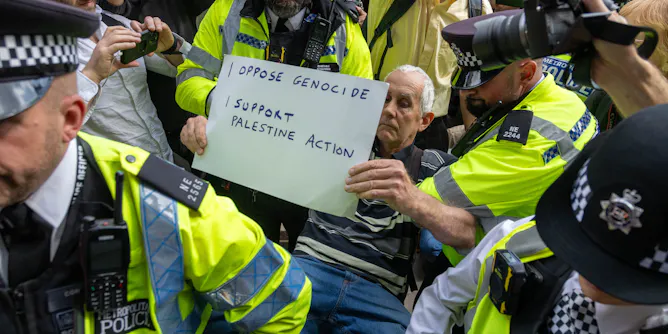
Since entering office, the Labour government has further tightened restrictions on the right to protest.
Articles on police powers
Displaying 1 - 20 of 25 articles
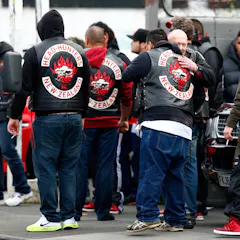
The government’s promised crack-down on gangs may have to work around existing legislation – and human rights provisions.
Publisher Ernest Moret was detained under terrorism powers for taking part in protests against Emmanuel Macron’s pension reforms.

Strip-searches are rarely a matter of public debate in the UK. Raw data – and the impact known from research in other jurisdictions – suggests though that they should be.
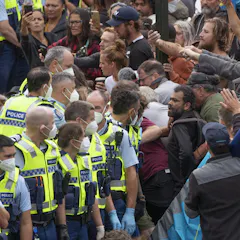
With the occupation of parliament grounds entering its second week, police walk a thin blue line between enforcing the law and not inflaming the situation.
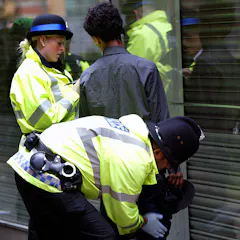
In the past year, black people were seven times more likely to be stopped and searched than white people.

The home secretary’s proposals are a step away from democracy.
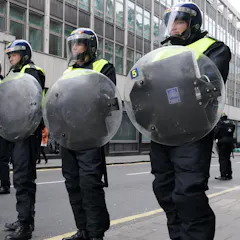
Police forces need to negotiate with communities to win back trust or risk getting trapped in a cycle of violence.
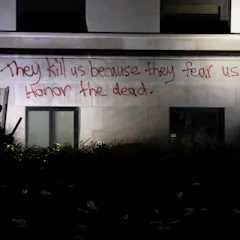
Other agencies or officials can do much of what police do now. So let’s disband police forces and replace them with local community organizations.
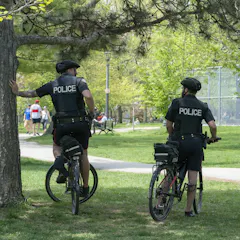
The provincial government has funding to support non-police safety and well-being initiatives — but 99 per cent of it just supplements police budgets.
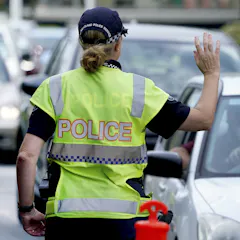
Many people are unaware of their rights and options if they receive a penalty notice, especially if they think they’ve done nothing wrong.
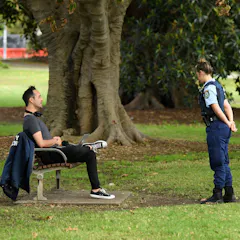
We need any new laws on what we can and can’t do to be clear to all, applied consistently and transparently, which is not the case at the moment.

Bike helmet laws are meant to be about safety. But the hefty penalties and huge number of fines are causing resentment – made worse by some police abusing the law to stop, question and search riders.
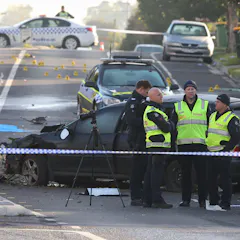
As a police officer, I was involved in many pursuits, investigated serious accidents and later became a researcher. Here’s what I’ve learned about how police make decisions in a pursuit.
Counter-terrorism legislation has created a permanent zone of suspicion – but not for everyone.
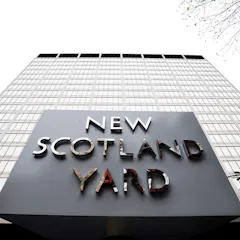
Allowing the police unfettered use of vast databases of information will begin to tilt the balance of power towards totalitarianism.

Underage police informants can’t necessarily be trusted to provide accurate information, so why compromise their safety?
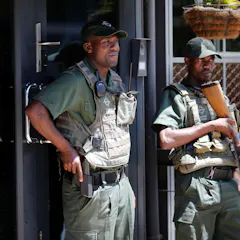
The future of private security is beset by many challenges and what forms of regulation would be required to align it with the public interest.
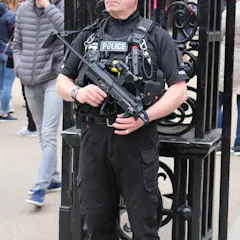
A review of international research shows that police may well be better off without weapons.
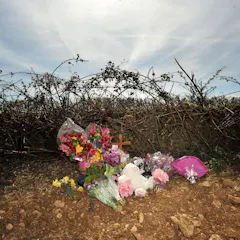
Killer Christopher Halliwell almost escaped trial after a police officer bent the rules to find one of his victims.
Top contributors
-

Associate Professor Julie Berg and Director, Institute for Safety Governance and Criminology, University of Cape Town
-
Associate Professor in Law, University of Canterbury
-
Professor of Criminology, University of Technology Sydney
-
Research Officer, Roméo Dallaire Child Soldiers Initiative, Dalhousie University
-
Senior Lecturer Faculty of Business and Law, De Montfort University
-
Post Doctoral Research Assistant, Edge Hill University
-
Associate Professor of Journalism, The University of Texas at Austin
-
Associate Professor in Criminal Justice and Criminology, Bond University
-
Lecturer in Sociology and Criminology, University of Liverpool
-
University of Southampton
-
Senior Lecturer in Criminology, Manchester Metropolitan University
-
Professor of Criminology & Public Policy, University of Brighton
-
Assistant Professor of Medicine, University of South Florida
-
Reader in Constitutional Law and Human Rights, University of Birmingham
-
Senior Lecturer in Police Studies, University of Tasmania