
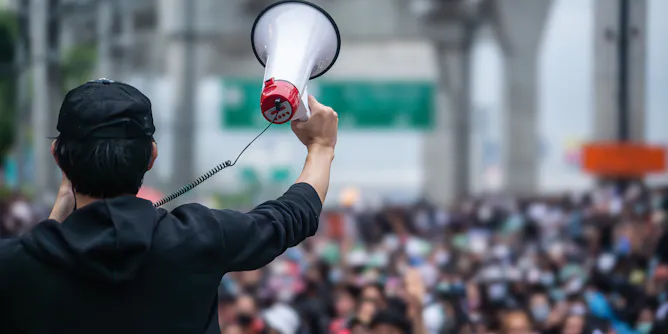
“The people” is a slippery, vague concept – and this is precisely what makes it so powerful.
Articles on Polarisation
Displaying 1 - 20 of 41 articles

New research shows experiences of adversity are linked with stronger perceptions of injustice – and a greater tendency to believe in conspiracy theories.

Discussions in the media about the generational divide in politics only capture part of what is happening.

As content is clipped, reposted and reframed, audiences encounter fragments rather than the original message.

Forty-five years apart, two assassination attempts on American Presidents rather uncannily happened at the very same location. This case of history repeating itself offers much food for thought.
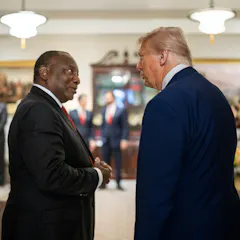
South Africa’s preference for dialogue has become harder to sustain in a polarised world.
Experts can combat misinformation by sharing their opinions, instead of just information.

Tim Berners-Lee, the man who gave us the world wide web, dreamt the technology would unite us. But something went really wrong with the rise of social media.

Some contemporary satire prioritises affirming the prejudices of its partisan audience over delivering the democratic benefits it once promised.

By encouraging people to imagine beyond their own experience, reading poetry can help them see things from a different perspective.

Study shows polarisation takes different forms depending on the conditions on the ground.

South Africa’s government of national unity forged after the 2024 elections refutes the claim that there are two antagonistic political camps.

From the vaccine rollout, to hotel quarantine, to understanding the science of the virus, a range of experts look back at how Australia fared.

In surveying people both before and after the poll, we found the most decisive factors in determining the way people voted weren’t gender, politics, age or income.

Do social networks and their algorithms really amplify political hostility and polarisation? Interdisciplinary research nuances this pessimistic view.

The stark reality is the United States has never been one country. And Trump is better than anyone at exploiting that.

Astronomers caught the bizarre ‘awakening’ of an incredibly rare magnetic star.

Daryl Van Tongeren explains what it means to be intellectually humble, and why it’s so important right now on The Conversation Weekly podcast.

In an uncertain world our natural instinct is to seek out answers that reassure, even when they don’t make sense.

Take control and think critically about the information you consume.
Top contributors
-

Host, The Conversation Weekly Podcast, The Conversation
-
Associate Professor, Universidad Central de Venezuela
-
Project Lead Ethics of Algorithms, Bertelsmann Stiftung
-
Researcher, Universidade de Coimbra
-
Professor of Digital Communication, Hamburg University of Applied Sciences
-
Assistant Professor of Marketing, IESE Business School (Universidad de Navarra)
-
Professor of Applied Biochemistry, University of Nottingham
-
Lecturer in Animal Cognition, Queen's University Belfast
-
Bradlee Professor of Government and the Press, Harvard Kennedy School
-
Lecturer in Politics and Public Policy, University of Cambridge
-
Lecturer In Pulsar Astrophysics, University of Manchester
-
Associate Lecturer, Curtin Institute of Radio Astronomy (CIRA), Curtin University
-
Adjunct Senior Fellow, School of Global, Urban and Social Studies, RMIT University
-
Professor of Physics, University of Wisconsin-Milwaukee
-
Associate Professor of Political Science, West Virginia University