
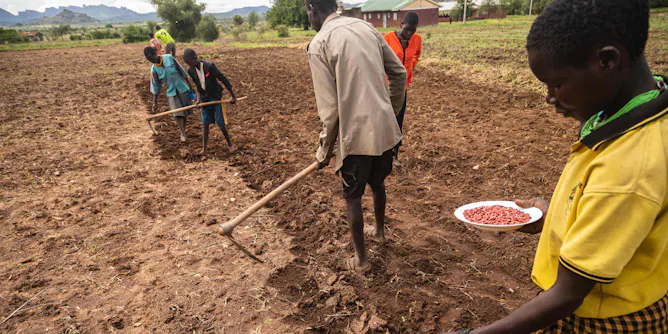
Figuring out how climate change will cause plant disease and pests to spread across Africa’s Great Lakes farms is critical for future food supplies.
Articles on Plant pathology
Displaying all articles

The same busy foraging that makes bees vital pollinators could also turn them into Trojan horses for a serious fungal disease threatening native forests.

Coffee wilt disease has continually devastated farms around the world. Understanding the fungus’s genetics can help protect everyone’s cup of joe.

Fusarium oxysporum can infect over 120 plant species. Whether it destroys Cavendish bananas as it did their predecessor depends on the agricultural industry and consumers.

Don’t let microbes and insects turn your Halloween masterpiece into a horror show before the big night.

For the past 13 years I’ve focused on sequencing one plant pathogen’s genome. Here’s where that scientific journey has led.
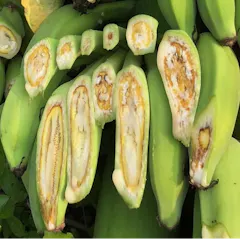
Fungi and other organisms called oomycetes are
highly adaptable. That’s bad news for the global food supply.

These plants play a crucial role in a delicate ecosystem. If Cape Beech trees or in fact other native tree species are wiped out, that whole ecosystem shifts.

Oomycete spores hack into plants to get what they need, causing agricultural disease. Can researchers figure out how to close plants’ security loopholes and create more resilient crops?

Precisely calibrated timekeepers are found in organisms from all domains of life. Biologists are studying how they influence plant/pathogen interactions – what they learn could lead to human medicines.
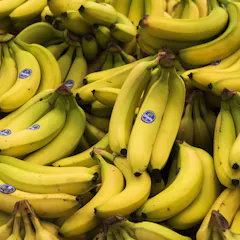
Every single Cavendish banana plant worldwide is genetically identical. This vast monoculture sets them up for disastrous disease outbreaks. But researchers have ideas on how to protect the crop.
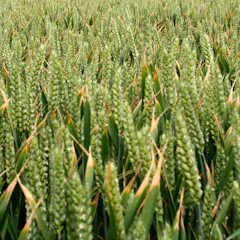
Modern agriculture is synonymous with monoculture. That lack of diversity is bad news for plants’ natural immune defenses. Researchers are figuring out how to help plants fend off microbes – without pesticides.

Rapid genetic disease screening will be the key to saving East Africa’s crops - just as it was during West Africa’s ebola crisis.
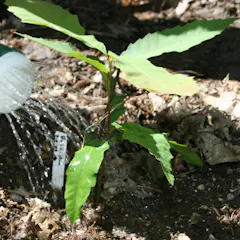
Adding a single wheat gene helps the American chestnut withstand a fungal pathogen that nearly wiped these hardwood trees out of the eastern forests they once dominated.
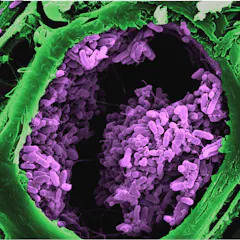
Vaccines aren’t just for animals anymore. Research shows priming plants with pathogen-derived compounds strengthens their immune systems and enhances protection against future attack.
Top contributors
-

Previous Vice President of the Academy of Science of South Africa and DSI-NRF SARChI chair in Fungal Genomics, Professor in Genetics, University of Pretoria, University of Pretoria
-
Ph.D. Student in the School of Plant and Environmental Science, Virginia Tech
-
Molecular Plant Virologist, Mikocheni Agricultural Research Institute
-
Assistant Professor of Plant Pathology, University of California, Davis
-
Professor in the Department of Environmental and Forest Biology, State University of New York College of Environmental Science and Forestry
-
Research officer, Department of Agriculture and Food - Western Australia
-
B.S. Student of Biochemistry and Molecular Biology, University of Maryland, Baltimore County
-
TED Fellow | Research Fellow | School of Chemistry and Biochemistry | ARC CoE Plant Energy Biology, The University of Western Australia
-
Researcher, Mikocheni Agricultural Research Institute
-
Special Professor of Phytopathology, Wageningen University
-
University of California, Riverside
-
Professor of Biological Sciences, University of Maryland, Baltimore County
-
Professor, Advisor to the Executive, University of Pretoria, University of Pretoria
-
Research Fellow, Department of Conservation Ecology and Entomology, Stellenbosch University
-
Cornelius Vanderbilt Chair in Biological Sciences, Professor of Biological Sciences and Biomedical Informatics, and Director of the Vanderbilt Evolutionary Studies Initiative, Vanderbilt University