
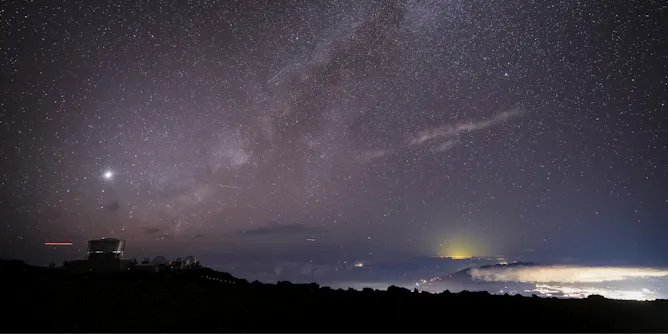
Over the next few days, astronomers will pull together evidence to determine whether the object is a comet.
Articles on Planetary formation
Displaying all articles
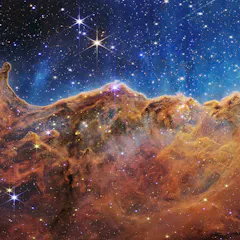
Analysis of fragments of the first solids that emerged out of the birth of the sun date our supernova as being 4.6 billion years old.
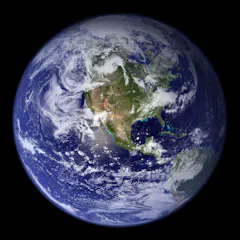
All the buildings and the cars and the restaurants, and the phones and even everything that’s inside of you… it all started with an exploding star, billions of years ago.

Pluto has a density between that of rock and ice – so that immediately suggests the dwarf planet is made of a mix of both. But how do we know?
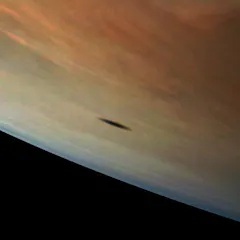
Jupiter now has at least 79 moons, the most for any known planet. But where did these newly discovered moons come from?
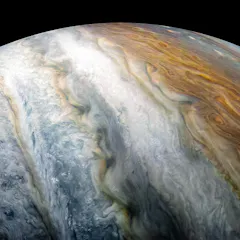
Now’s a great time to see Jupiter as it’s about to be the closest to Earth for some time. Time too to catch up with the latest on the Juno mission, exploring the largest planet in our Solar System.
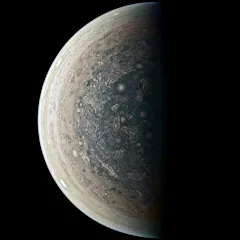
We may need to re-think our models of Jupiter’s formation thanks to the first results from Juno probe orbiting the planet, and new observations from Earth.
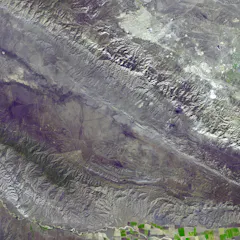
Fifty years on from a groundbreaking paper, geophysicists have progressed from believing continents never moved to thinking that every movement may leave a lasting memory on our planet.
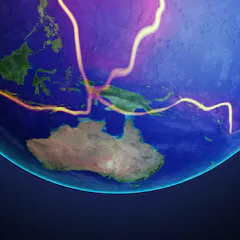
Earth is the only planet in our solar system with both plate tectonics and life. Is there a connection?
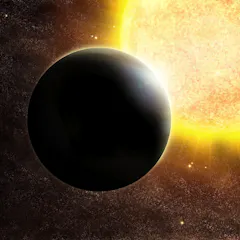
Many of the new planets found in other star systems have some extraordinary orbital behavior. So what’s going on?
Jupiter had a big influence on how our solar system’s planets formed. New research – led by a high school student – tried to nail down how rare Jupiter analogs really are in other planetary systems.

The New Horizons spacecraft is only hours away from its closest approach to Pluto. It’s hoped the brief encounter will help answer many questions about the oddball member of our solar system.
Top contributors
-

Professor (Astrophysics), University of Southern Queensland
-
Assistant Professor, Environmental Geophysics, University of Toronto
-
Postdoc astrophysicist, Mississippi State University
-
Senior Instrument Scientist, Australian Nuclear Science and Technology Organisation
-
PhD Candidate, Adjunct Lecturer, Assistant Examiner, University of Southern Queensland
-
W J McDonald Postdoctoral Fellow, The University of Texas at Austin
-
Professor in Geophysics and Remote Sensing, Queensland University of Technology
-
Senior Curator (Astronomy), Museums Victoria Research Institute; The University of Melbourne
-
Research Scholar, Academia Sinica
-
Visiting Fellow at the ANU Centre for Sustainable Energy Systems, Australian National University
-
Associate Professor, Department of Earth Sciences, Carleton University
-
Program Manager / Adjunct Research Fellow, Swinburne University of Technology
-
Assistant Professor, Michigan State University