
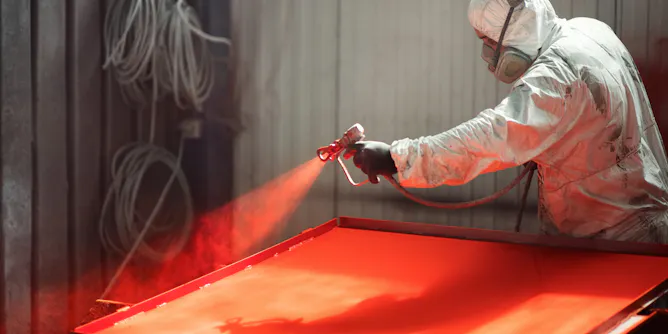
Different paint recipes work for different uses. Two art conservators explain how analyzing paints from the past can reveal how they were made – and how best to preserve them.
Articles on Pigment
Displaying all articles

Some tattoo inks contain unlabeled materials that can cause allergic reactions.

Your faithful companion sees the world differently than you do, but it’s a mistake to assume dogs only see black, white and shades of grey.
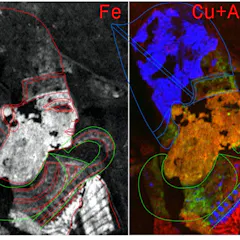
A technique called portable X-ray fluorescence has helped Egyptologists identify changes and adjustments to details of tomb decoration that are invisible to the human eye.
Health claims for chlorophyll water are all over TikTok. We looked at the evidence to see what stacked up.
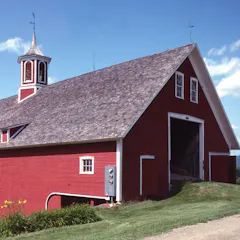
Barns are practical buildings, designed to safeguard farm animals and equipment. Why are so many of them painted to stand out from the landscape?

We wanted to find out which biological phenomena are crucial for pattern formation and which are just incidental. These sorts of questions can be answered with mathematical modelling.

A simple chemical reaction turns the red pigment of beets into a new, nontoxic blue dye.
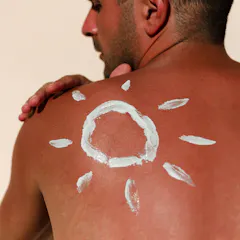
Exposure to the sun every other day produces more skin pigment than sunbathing every day – but protection is still vital.
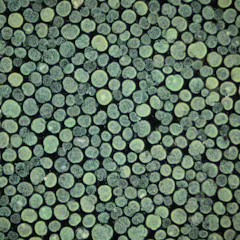
Did you recently hear news that Earth’s oldest pigments were hot pink? That’s not quite right. When they were in living bacteria a billion years ago, they were performing photosynthesis – and green.

Interdisciplinary research led to the discovery that three historic books were covered in a layer of arsenic.
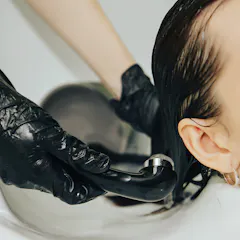
Less-toxic hair dye would be a great invention. But discounting the risks that come with nanoparticles could undermine other efforts to protect human health and environmental from their effects.
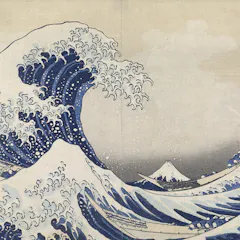
Hokusai’s Great Wave is the enduring image of Japanese art. Less well known is the story of its primary pigment - Prussian blue - which was created in a lab accident in Berlin and sparked ‘blue fever’ in Europe.
A US study into whether a new drug can give us a tan without going into the sun generated headlines around the world. Here’s what the study really says.

Here’s the science behind the amazing colours we should see on British trees this year.

Children living with albinism are very vulnerable to attack, kidnapping, mutilation and murder. In Tanzania, fear is keeping many children away from school and costing them an education.
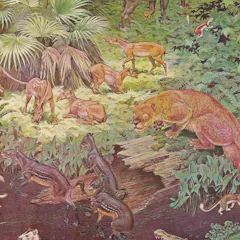
Scientists have shown how tiny organic tissue remnants in fossils correspond to the pigments in the animals’ original skin and hair.

One of nature’s most spectacular events occurs every autumn, when the leaves of hardwood trees burst into brilliant color before falling to the ground. These autumnal displays in the eastern United States…
Top contributors
-

Post Doctoral Research Fellow, RMIT University
-
Principal Research Fellow, Dermatology Research Centre, The University of Queensland
-
Research Librarian, University of Southern Denmark
-
Emeritus Professor of Ecology, University of Salford
-
Lecturer in Macroevolution, University of Bristol
-
Professor of Archaeometry, University of Southern Denmark
-
PhD candidate in paleontology, Virginia Tech
-
Professor of Physiological Plant Ecology, Appalachian State University
-
Professor Emerita of Biology, Indiana University
-
Adjunct Professsor, School of Psychology, Faculty of Health and Medical Sciences, Adelaide University
-
Postdoctoral Researcher, Dermatology Research Centre, The University of Queensland
-
Post-Doctoral Research Fellow, SARChI in Higher Education and Human Development Research Group, University of the Free State
-
MB BS Phase 1 Lead & Senior Lecturer in Medicine and Molecular Genetics, University of York
-
Professor of Advanced Technology Transitions, Arizona State University
-
Senior Lecturer, Nutrition and Food Science, Australian Catholic University