
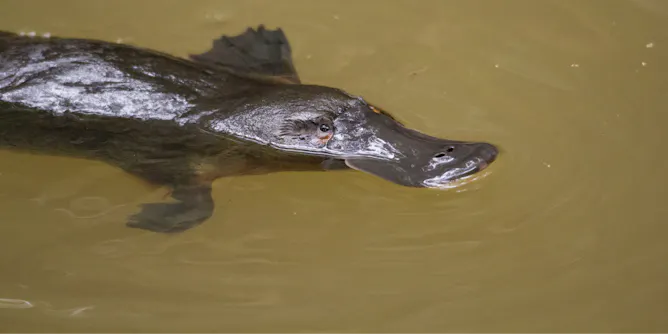
All species alive today, from chimpanzees to bacteria, are cousins that each have equally long lineages, rather than ancestors or descendants of one another.
Articles on Phylogeny
Displaying all articles
Viruses do more than just cause disease – they also influence ecosystems and the processes that shape the planet. Tracing their evolution could help researchers better understand how viruses work.
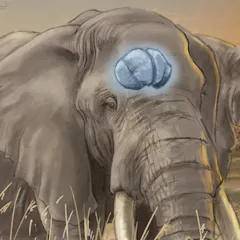
Some animals, such as California sea lions, have small brains relative to their body size, but are still impressively intelligent, showing brain evolution is even more complex than it appears.
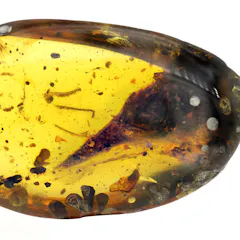
The skull of Oculudentavis, found encased in amber, provides new clues into the transition from dinosaurs to birds and may be smallest of either ever found.

Eucalypts have been in Australia for 45 million years. But hundreds of species appeared more recently than previously thought.
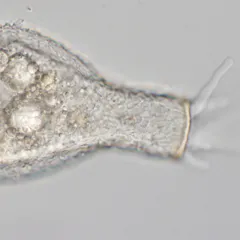
Using the family relationships between single-celled protists alive today, researchers hypothesized what their evolutionary ancestors looked like – and then looked in the fossil record for matches.
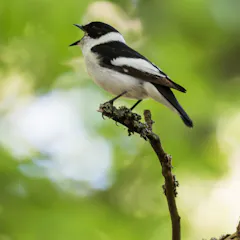
Biologists investigated whether birds that search for multiple mates would evolve ever more elaborate songs to attract them. What they found might have surprised Darwin.
Top contributors
-

Senior Professor of Paleontology, Chinese Academy of Sciences
-
Associate Professor of Biology, Scripps College
-
Postdoctoral Research Associate in Microbiology, The Ohio State University
-
Assistant Professor of Zoology, Universidade de São Paulo (USP)
-
Research Scientist in Microbiology, The Ohio State University
-
Professor in Evolutionary Biology, College of Science and Engineering, Flinders University
-
Assistant Professor of Biological Sciences, Vanderbilt University
-
Director, N.C.W. Beadle Herbarium; Senior Lecturer in Plant Systematics, University of New England
-
Assistant Professor of Biological Sciences, Mississippi State University
-
Associate professor, Stony Brook University (The State University of New York)
-
Postdoctoral research fellow, Vanderbilt University
-
Professor of Microbiology, The Ohio State University
-
Science Consultant in Microbiology, The Ohio State University
-
Professor of Biological Sciences, University of Maryland, Baltimore County