

Childhood cancer affects different tissues and has different causes. We need to treat it as a separate disease.
Articles on Pediatrics
Displaying 1 - 20 of 33 articles
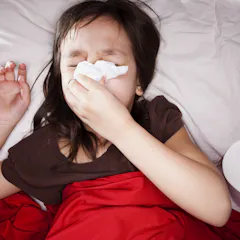
A particularly infectious subvariant of influenza is keeping emergency room numbers high and causing especially severe illness in children.

Without support from the community, workplace, government and society as a whole, even doctors have trouble breastfeeding – a challenge commercial infant formula companies take advantage of.
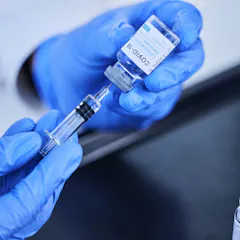
Healthy children may now only receive a COVID-19 vaccine ‘off-label’ – but in many states, pharmacists and other non-physicians may not be able to administer them that way.
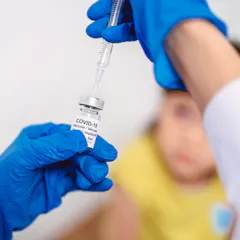
According to the American Academy of Pediatrics, evidence continues to support the COVID-19 vaccine’s use in young and higher-risk children and adolescents.

Because vitamin D plays a crucial role in many aspects of health and growth, inadequate levels can put children at risk of developing chronic disease early on.

Up to 25% of infants diagnosed with abusive head trauma – otherwise known as shaken baby syndrome – die, and a substantial percentage who survive are left with long-term disabilities.

No parent wants to see their child suffer and untreated pain can have health consequences. But parents may have concerns about use of opioids for their child’s acute pain. Here are tips for safer use.

Children typically haven’t accumulated enough cellular damage to develop cancer. Because their bodies are still developing, pediatric cancers differ from adult cancers in key ways.

Nearly 100,000 US children under age 5 are hospitalized each year for an RSV infection.

Despite an abundance of research on strep, there is still a great deal of debate in the scientific community over whether and when people should get tested and treated for it.

Three factors that can speed up adoption of clinical research discoveries are context, tailoring resources and efficient knowledge sharing.

Similar to the patterns seen with COVID-19, flu and RSV, HMPV is making a comeback after years of being repressed by people wearing masks and social distancing.

While RSV can become severe for any child, it poses a particularly serious threat for the youngest babies and for high-risk children.

Research shows that many girls are in elementary school when they have their first period. But often they have not received adequate health education.

With COVID-19 shots finally available for infants and preschoolers, knowing how to combat misinformation on social media and elsewhere could be more important than ever.

Researchers find that households without enough diapers for their children are more likely to struggle with other hardships.

A pediatrician recommends helping your child cope with getting vaccines by employing “The Three P’s” – Preparation, Proximity and Praise.
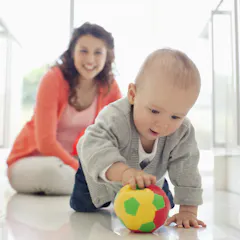
Even babies who are not yet standing or walking get lots of benefits from active movement – but most infants aren’t getting enough physical activity.

Pediatricians and other health care providers can take some concrete steps toward building trust and counteracting anti-vaccination misinformation.
Top contributors
-

Assistant Professor of Pediatrics, University of Colorado Anschutz
-
Associate Professor of Pediatric Infectious Diseases, Baylor College of Medicine
-
Associate Professor and Psychologist in Pediatric Pain, University of Calgary
-
Assistant Professor of Public Health, University of Pittsburgh
-
Assistant Professor of Behavioral and Community Health Sciences, University of Pittsburgh
-
Adjunct Associate Professor of Epidemiology, University of California, Los Angeles
-
Professor of Paediatrics and Emergency Medicine, University of Alberta
-
Assistant Professor of Pediatrics, University of Pittsburgh
-
Associate Professor of Emergency Health Services, University of Maryland, Baltimore County
-
Scientific Officer in Biomedical Sciences, University of Leeds
-
Assistant Professor of Gastroenterology and Hepatology, School of Medicine, University of Washington
-
Associate Professor of Clinical Psychology, University of Calgary
-
Associate Professor, Department of Health and Kinesiology, University of Nebraska Omaha
-
Ph.D. Candidate in Integrated Mathematical Oncology, University of South Florida
-
Associate Professor of Sociomedical Sciences, Columbia University Mailman School of Public Health