
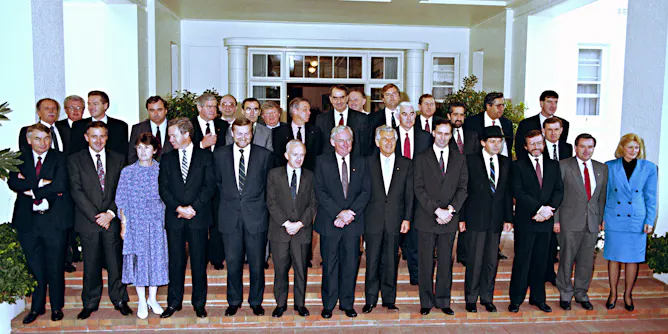
What if Bob Hawke, hailed as a leader who actually ‘got’ environmental issues, had never been rolled by Paul Keating? Perhaps the climate policy wars would have turned out differently.
Articles on Paul Keating
Displaying 41 - 60 of 98 articles
From doted-on child to Rhodes Scholar, ACTU president and ultimately prime minister, Robert James Lee Hawke had a significant impact on Australian life.
All the polls suggested the Keating government would be finished at the 1993 election – until Opposition Leader John Hewson launched a 650-page policy document called “Fightback!”.
Australians have never liked sitting PMs being deposed by their own parties - but the outrage over Malcolm Turnbull’s destruction is the greatest in modern history.
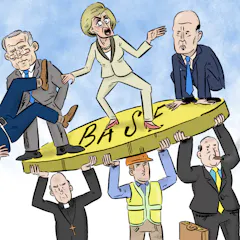
The Liberals who want to tear down Malcolm Turnbull claim they are in a battle for the heart and soul of the party - but where is this heart and soul, and how strong is it?
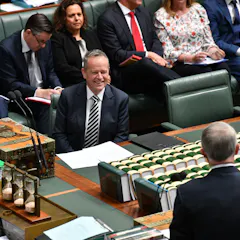
Labor has managed more cohesion in recent years because its left and right wings have shifted to common ground - partly through its factions.
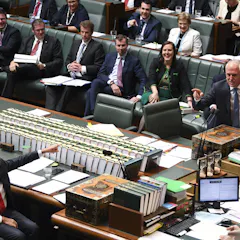
Creating epithets for political opponents has a long history in Australia – and when it works, it can be devastating.
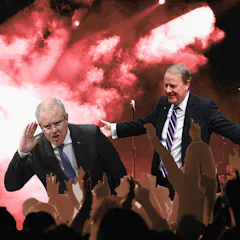
Some have set the course for electoral victory, others have tanked. In any case, federal budgets are important moments in the life of governments – especially those that are a little wobbly.
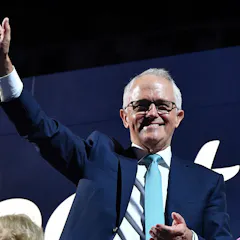
History warns us to beware of the fickleness of polls taken mid-term, which tend to be a snapshot rather than a deep reading of the electoral mood.
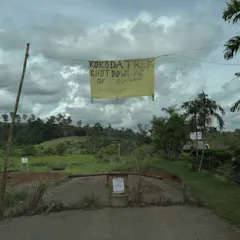
The blockade of the Kokoda Track by local landowners is a product of the complex political and economic issues currently affecting Papua New Guinea.
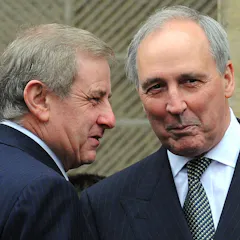
Cabinet papers released today by the National Archives show Working Nation began as a rational exercise but was soon overtaken by a desire to make the policy everything to everyone.
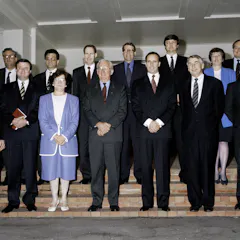
Paul Keating’s government, faced with the prospect of international action on climate change, took steps to preserve the coal industry - a tactic that has been rebooted many times since.
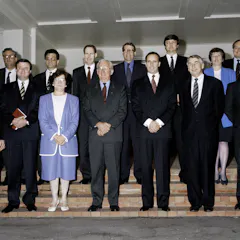
After 1993, Paul Keating became ever-more dominant in cabinet policy discussions to ensure a legacy for the Labor government.
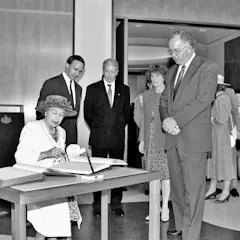
The arguments about a potential Australian republic in cabinet submissions suggest a failure of imagination and, more seriously, of trust.
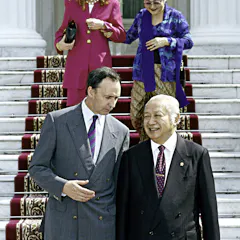
It was Paul Keating himself who first raised the idea of a security agreement between Indonesia and Australia in June 1994 to Indonesian President Soeharto.
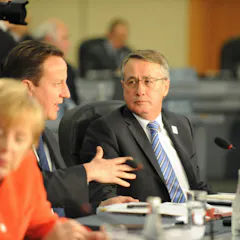
While both parties may have set out to modernise and renew their ideologies, the ALP’s and Labour’s attempts to marry the old and new instead precipitated two separate identity crises.
For his own good, Malcolm Turnbull can’t get out of the country quickly enough. He’s off on Wednesday to the G20 in Germany and, if he has any sense, while he’s abroad he’ll try to avoid being drawn on…
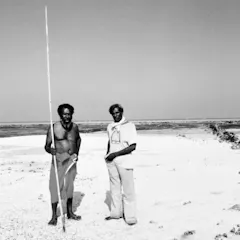
The Mabo decision changed Australia’s concept of land ownership. It was a divisive yet important step toward recognising Indigenous rights and establishing native title.
The Prices and Incomes Accord was a series of agreements between Labor and the ACTU where unions would moderate their wage demands in exchange for improvements in the ‘social wage’.

Even though enterprise bargaining agreements proved controversial when introduced, their use is actually in decline today.
Top contributors
-

Professorial Fellow, University of Canberra
-
Director, Vice-Chancellor's Centre of Public Ideas (CoPI) and Donald Horne Professor of History and Public Ideas, University of Canberra
-
Former Visiting Fellow, SPRU, University of Sussex Business School, University of Sussex
-
Emerita Professor of Politics, Adelaide University
-
Senior Lecturer, School of Humanities and Social Sciences, Deakin University
-
Professor in History, Australian National University
-
Senior Project Manager, Murdoch University
-
Sir John Bunting Chair of Public Administration, Australian National University
-
Lecturer in Australian Political Studies, University of Canberra
-
Professor, Australian Studies Institute, Australian National University
-
Professor, RMIT University
-
Senior Lecturer, School of Government and International Relations, Griffith University
-
Senior Fellow, Federation University Australia
-
Director, Graduate School of Government, University of Sydney
-
Jim Gillespie is a Friend of The Conversation.
Associate Professor in Health Policy, Leeder Centre for Health Policy, Economics and Data & Sydney School of Public Health, University of Sydney