
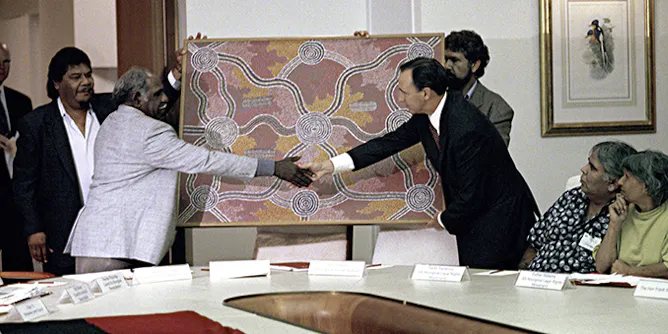
Cabinet papers reveal the extent to which the Keating government was torn between concern for fiscal responsibility and a desire to tackle Indigenous disadvantage and pursue meaningful reconciliation.
Articles on Paul Keating
Displaying 61 - 80 of 98 articles
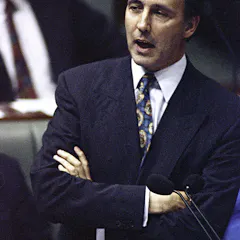
Labor’s project of economic transformation hit some harder realities as Paul Keating assumed the top job. And a new push on remaking Australia stirred a brooding reaction of its own.

The 1992 and 1993 cabinet papers confirm that Australia was a reluctant player in international discussions about climate change and environmental issues under Prime Minister Paul Keating.
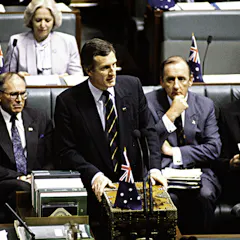
Blindsided by John Hewson’s policy platform, the Keating government scrambled to come up with solutions to the “recession we had to have”.
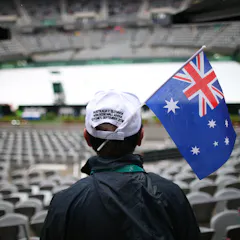
By the end of 1992, Paul Keating had done more than anyone to place on the political agenda issues of national identity that had been either dead or dormant for years.
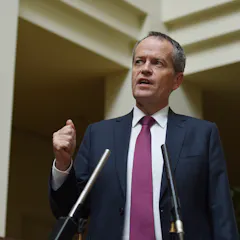
Former Deputy Prime Minister Brian Howe says Bill Shorten must channel the abilities of his colleagues in parliament and the broader progressive movement if he is to lead the ALP back to government.
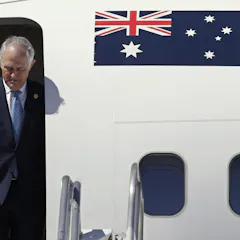
Australia needs a clear bipartisan vision of its role in the world and a strategic agenda for the long-term national interest.
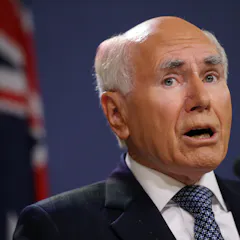
Former prime minister John Howard has stood by his decision to commit troops to the war in Iraq.
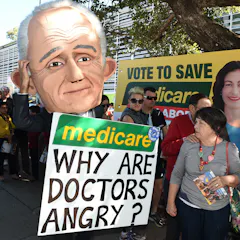
Scare campaigns only work if there is some anxiety to build on. Labor’s Medicare campaign plugged into a long history of Coalition ambivalence – or open hostility – towards Medicare.

There’s been a deafening silence in recent Australian elections over the environment. But it hasn’t always been the case.

Eighties culture is big, from nostalgic TV dramas to tours by ageing pop stars. But it’s time for a clear-eyed assessment of the decade, which prized excess and economic rationalism along with synth pop and big hair.

The logic of the policy changes initiated by the Hawke government in mid-1990 has underpinned asylum-seeker policy for much of the quarter-century since.

While the press at the time focused on what Keating called “the Punch and Judy show”, cabinet papers reveal that the fourth Hawke government was working at an astonishing pace at reforms still felt today.
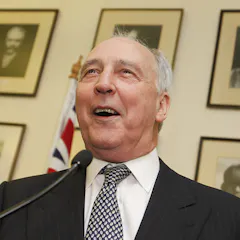
Kerry O'Brien has provided the platform for Paul Keating to define his political career, explain what drove his reform agenda and cement his position as one of Australia’s greatest leaders.
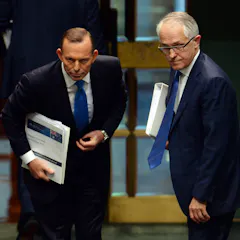
In leadership contests in particular, the media’s role is often markedly different from the competition between parties.
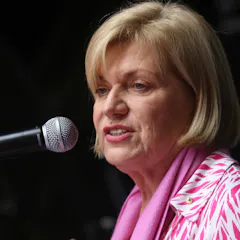
When Australia’s government first pledged to set an emission-reduction target, Jon Bon Jovi was riding high in the charts. The progress made in the 25 years since has hardly been a blaze of glory.
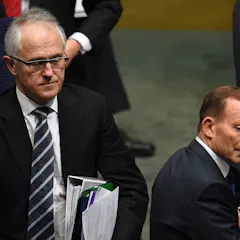
From Hawke-Keating to Rudd-Gillard, climate policy has an uncanny ability to cost Australian political leaders their jobs. And it was a key element in the rivalry between Tony Abbott and Malcolm Turnbull.
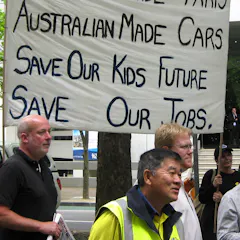
Something similar to E.P. Thompson’s story of England in the first three decades of the 1800s has happened in Australia between the mid-1980s and today.
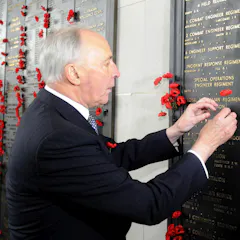
There is a complicated story involving the Anzac legend and the left between the 1920s and the 1960s which historians have barely begun to untangle.
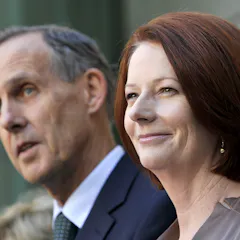
A political party that isn’t sure what it stands for isn’t really a party.
Top contributors
-

Professorial Fellow, University of Canberra
-
Director, Vice-Chancellor's Centre of Public Ideas (CoPI) and Donald Horne Professor of History and Public Ideas, University of Canberra
-
Former Visiting Fellow, SPRU, University of Sussex Business School, University of Sussex
-
Emerita Professor of Politics, Adelaide University
-
Senior Lecturer, School of Humanities and Social Sciences, Deakin University
-
Professor in History, Australian National University
-
Senior Project Manager, Murdoch University
-
Sir John Bunting Chair of Public Administration, Australian National University
-
Lecturer in Australian Political Studies, University of Canberra
-
Professor, Australian Studies Institute, Australian National University
-
Professor, RMIT University
-
Senior Lecturer, School of Government and International Relations, Griffith University
-
Senior Fellow, Federation University Australia
-
Director, Graduate School of Government, University of Sydney
-
Jim Gillespie is a Friend of The Conversation.
Associate Professor in Health Policy, Leeder Centre for Health Policy, Economics and Data & Sydney School of Public Health, University of Sydney