
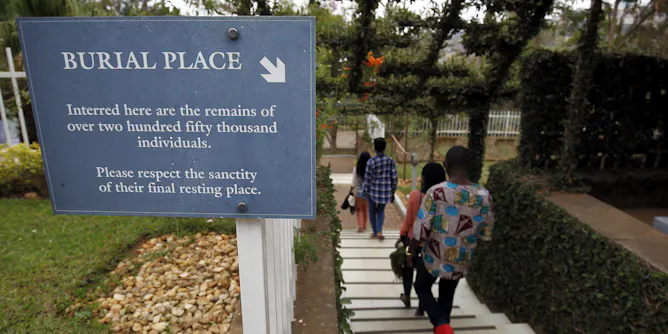
As Rwanda marks the 24th anniversary of the 1994 genocide, much more needs to be done to unite the country.
Articles on Paul Kagame
Displaying 61 - 78 of 78 articles
Writing about Rwanda sometimes gives the impression of crossing a minefield. It is not a question of controversies between researchers but of denunciation and intimidation.

No one is immune to change in leadership that has led many African presidents to lose their coveted top job.
The Rwandan model can’t be replicated easily given that it depends heavily on political dominance and tight, centralised control of patronage networks.
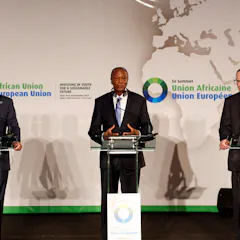
The transformation of the EU-Africa summit series into the EU-AU summit is more than just a change of name. It reflects the increasing recognition of the AU as an international actor.
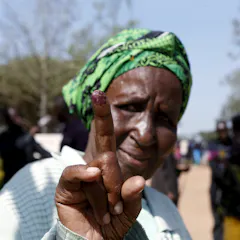
The outcome of the race between increasingly artful electoral manipulation and limitless possible manifestations of democratic expression is never entirely certain.
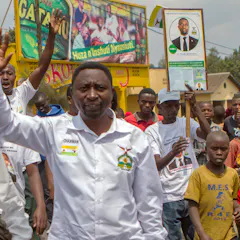
With frequent irregularities, it’s easy to become cynical about elections in Africa. But polls are an essential component of the continent’s growing democracy.
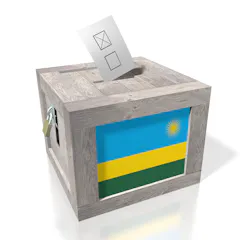
The next Rwandan presidential election will take place in a week’s time. Incumbent Paul Kagame will be the certain victor, but a few other candidates have thrown their hats in the ring.
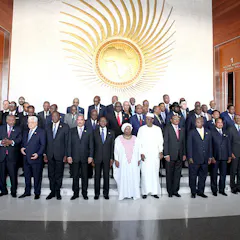
The African Union is changing the way it does business. Its new reforms, led by Rwandan President, Paul Kagame, call for fewer strategic priorities and addressing bureaucratic bottlenecks.
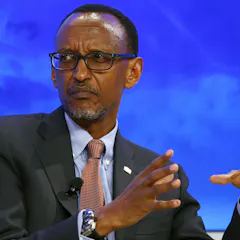
To improve, African countries need to find a balance between political and economic matters. This is where leadership becomes particularly important. But this is currently lacking on the continent.
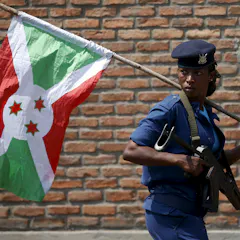
The competition between the two authoritarian regimes has become a fact that, given the regional context, is here to last. It justifies repression and indefinitely postpones democratic expression.
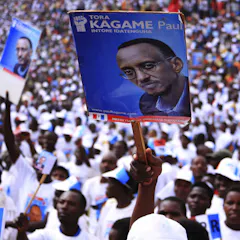
Africa’s democratic promise of the 1990s has lost its shine. Hopes for accountable rule have faded in Uganda, Ethiopia and Rwanda. All have blocked the path to meaningful popular empowerment.
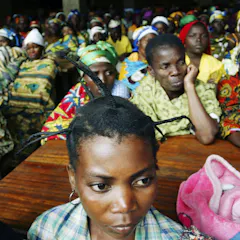
Even with the end of the war in central Africa, continuing instability in the region has triggered an epidemic of rape.
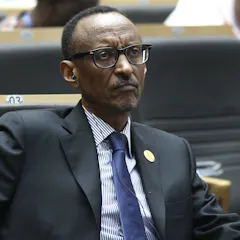
The reality of Rwanda is that there is no viable alternative to President Paul Kagame, within or outside his ruling RPF. Political rivals have died, are jailed, or have fled the country.
Recent changes to the Rwandan constitution appear to have been tailor-made for the current president. This does not bode well for the country’s future constitutional base.

Unlike the third-term fever afflicting the Great Lakes region, Rwanda is not mired in corruption and stagnation. Rwandans were fearful and anxious about what might happen after 2017 without Kagame.
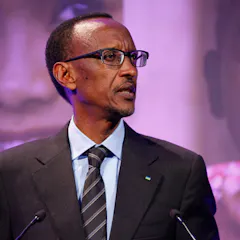
Paul Kagame, the President of Rwanda, has carefully orchestrated a constitutional reform that allows him to remain in power for the next 18 years.
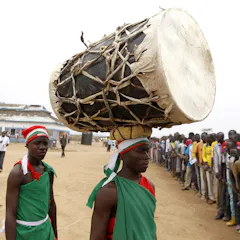
Rwanda and Burundi, once the conjoined twins of East Africa, marked over five decades of going separate ways since independence. Today, the difference in their fortunes couldn’t be more stark.
Top contributors
-

Postdoctoral Research Associate, King's College London
-
Associate Professor of International Studies, University of Nottingham
-
Professeur des universités, Université Paris 1 Panthéon-Sorbonne
-
Professor of Democracy, University of Birmingham
-
Professor in International Development, University of Antwerp
-
Visiting Assistant Professor, UMass Lowell
-
Visiting Professor, SIT Graduate Institute
-
Assistant Professor, Vrije Universiteit Amsterdam
-
Yarik Turianskyi is Manager of the Governance and African Peer Review Mechanism Programme at the South African Institute of International Affairs and guest lecturer in African Governance and Eastern European Politics, University of Pretoria
-
Associate Professor of International Relations, University of Trieste
-
Professor of Peace and Conflict Studies, Colgate University
-
Professor of Law and Politics, Institute of Development Policy and Management (IOB), University of Antwerp
-
Reader in International Relations, Royal Holloway, University of London
-
Research fellow, Institute on Comparative Regional Integration Studies (UNU-CRIS), United Nations University
-
Directrice de recherches émérite au CNRS, École des Hautes Études en Sciences Sociales (EHESS)