

South Africa has clear rules for hiring teachers – but many educators believe other influences are stronger.
Articles on Patronage
Displaying 1 - 20 of 27 articles
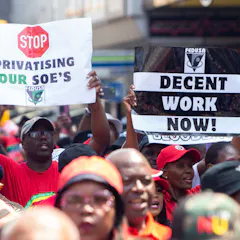
Elites have often shaped or manipulated state policies in ways that protect their interests and reinforce inequality.
Setting up a unity government highlights that a positive turnaround is possible for South Africa, though it is far from guaranteed.

Because the US government has rarely offered full-throated support for the arts, there’s a long tradition of innovation, adaptation and collective action among American artists.
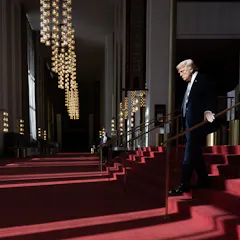
The president has followed in the footsteps of Louis XIV of France and the czars of Russia, who operated national theaters as extensions of monarchical power.
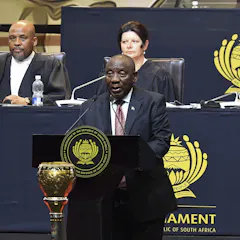
Elite political culture matters, especially in the context of a unity government. To succeed, party leaders must embrace the politics of collaboration built on trust.
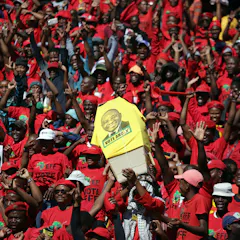
ANC and EFF differ on ideology and policy – an alliance between them would prove difficult to put together and made to work.

Based on official statistics, we conclude that the country has made more progress towards land reform than is generally suggested.

While ‘patron’ is a position with no formal power, it’s an important role for members of the royal family.

To fête the 70th year of Queen Elizabeth’s reign, several towns – and a few villages – are to be granted the royal right to call themselves cities.
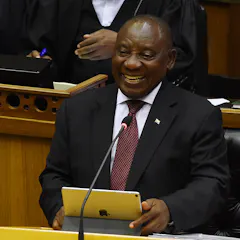
Ramaphosa is constrained by his tenuous control over South Africa’s governing party, the ANC.

Having a royal lend their name in patronage to a charity may have some benefits but it can also have its drawbacks.
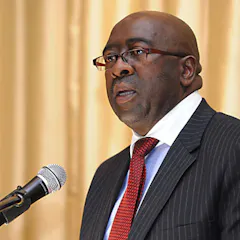
Nhlanhla Nene was highly regarded for refusing to fund former President Zuma’s ludicrous rent-seeking projects.

Robert Mugabe’s rule in Zimbabwe is over. But the country’s road to democracy remains a bumpy one as Zanu-PF, the new president and the military go about entrenching power.

A different form of state capture is underway in South Africa’s rural areas where traditional leaders are selling off people’s land to miners. But communities are fighting back.

South African business can beat back the toxic ‘white monopoly capital’ title by doing things differently and not by shouting from roof tops.

There are a few things that musicians should understand about the music industry if they are to avoid being taken for a ride.

Reforming South Africa’s state owned enterprises should start with greater accountability and financial responsibility.
The misfortunes experienced by Brian Molefe, the CEO of South Africa’s power utility Eskom, shows that the battle for the country’s public purse is not a one way bet.
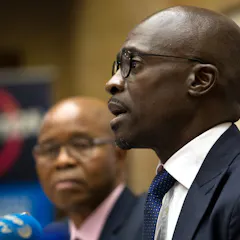
A captured South African Treasury is bad news for the country’s poor but the view that the capture is a natural enemy of the market economy is a myth.
Top contributors
-

Professor of Political Studies, University of Johannesburg
-
Associate professor, University of Cape Town
-
Lecturer in Politics and International Relations, University of Leicester
-
Professor of Urban Governance, University of the Witwatersrand
-
Professor of Political Economy, University of the Witwatersrand
-
Lecturer of Social and Cultural Anthropology, University of Helsinki
-
Post Doctoral Researcher, Graduate School of Business (GSB), University of Cape Town
-
Senior Lecturer in History, University of Dundee
-
Senior Lecturer in Law, University of Liverpool
-
Professor in Political Science, University of South Africa
-
Director, Centre for Philanthropy, University of Kent
-
Chief Research Specialist in Democracy and Citizenship at the Human Science Research Council and a Research Fellow Centre for African Studies, University of the Free State
-
Director of the Bureau for Economic Research, Stellenbosch University
-
Professor of English Regional History, University of Nottingham
-
Senior Fellow, Department of Agricultural Economics, Stellenbosch University