
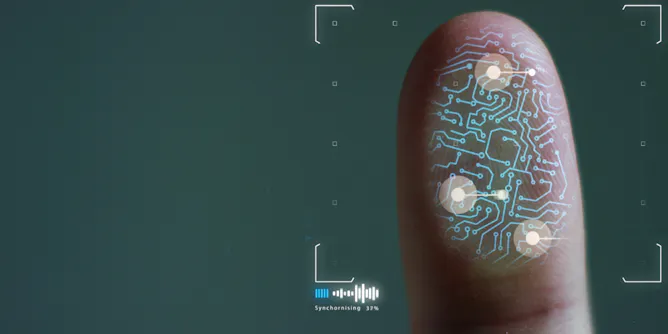
While the data from a fingerprint is very hard to retrieve, cybercriminals can get around biometric technology in various ways. And having a weak passcode is like giving them a hall pass.
Articles on Passwords
Displaying 21 - 40 of 62 articles
The first internet communication was underwhelming, thanks to a computer crash. But a lot has happened since then – including key decisions that helped build the internet of today.

More than ten years since blockchains were developed, their usefulness is only just being discovered.

In a recent Canadian court case, defence and prosecution argued over whether a suspect was required to provide his password to allow for a search warrant to be executed on his phone.

The CEO of a Canadian cryptocurrency company died recently, and took his passwords with him, leaving his clients high and dry. The debacle illustrates again that cryptocurrencies should be regulated.

When it comes to picking a new password, people’s resistance to change can make them less secure online.

Think defensively about your online accounts and data security – and don’t assume you’ll avoid harm.

The November 30, 2018, Marriott International announced a data breach concerning 500 million clients, the second biggest ever. With new data breaches announced nearly every day, how , everyone is now wondering how this was possible.
Protect yourself from hackers, trolls, bots, social media executives and programmers in need of ethics training.
Biometrics are more secure than passwords – but when they’re compromised fingerprints and retina scans are hard to reset. Brain responses to specific stimuli are as secure and, crucially, resettable.
There is always a tension between usability and security. People want systems to be secure so that their identities aren’t stolen, but they want those same systems to be easily accessible.

Passwords are an integral part of our daily IT life – and a major source of vulnerabilities. What are the problems and risks, and how can we reduce them?

Four important elements to consider when evaluating how safe you are online.
A roundup of research into what makes passwords secure, and options for new standards of login authentication.
Recent federal changes to password-strength guidelines echo the findings of research we’ve been doing. It’s time to think differently about what makes a password secure.

From power walks to silly walks, we can use our movement to generate energy in a way that is unique to everyone. And that can be used to help secure our wearable technology.
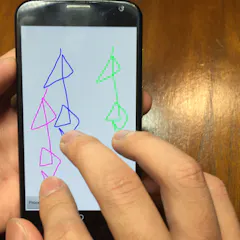
A simple idea that’s surprisingly secure: drawing your own unlock pattern on a touchscreen. Faster and easier to remember than a password, and much harder to guess or crack.

Going as far back as the Bible, and as widely known as the phrase ‘Open, Sesame,’ passwords are a textual link to our past. But they may not be around much longer.

If security advice from government agencies doesn’t ring true, customers won’t take it – which puts us all at risk.
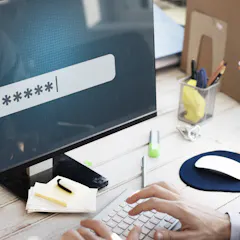
The first line of cyberdefense is having a good password. What does research say about what that actually means?
Top contributors
-

Senior Lecturer in Networking, The Open University
-
Professor of Cyber Security Practice, Edith Cowan University
-
Security Researcher, Associate Professor in Resilient Systems, Edith Cowan University
-
Professor of Cyber Security, University of Nottingham
-
Professor of Cybersecurity Management, University of Dayton
-
Adjunct Senior Lecturer, Applied Ethics and CyberSecurity, Griffith University
-
Senior Lecturer, University of the Witwatersrand
-
Associate Professor in Telecommunications Engineering, Swinburne University of Technology
-
Professor of Computer Science and of Engineering & Public Policy, Carnegie Mellon University
-
Professor of Information Systems, Mississippi State University
-
Professor of Computer Science, Elon University
-
Teaching Professor of Computer Science and Electrical Engineering, and Associate Director, UMBC Cybersecurity Institute, University of Maryland, Baltimore County
-
Research Professor of Computer Science, University of Dayton
-
Professor of Artificial Intelligence and Image Processing, Electrical and Electronic Engineering, Queensland University of Technology
-
Assistant Professor of Computer Science and Engineering, University at Buffalo