
A 100-year-old equation helps scientists build solar cells, develop biofuels and even study quantum computers.
Articles on Particles
Displaying all articles

What you don’t see when you burn a candle.

The electron is the tiniest particle. Then there are neutrinos, which are as small but may weigh more.

During a walk in the Scottish Highlands, one of the greats of particle physics had the idea of a lifetime

When you’re running late in the winter, you don’t want to have to spend time scraping frost off your windshield. Try some expert-recommended techniques instead.
Nothing is harder to find than you might think.

Nuclear isomers are rare versions of elements with properties that mystified physicists when first discovered. Isomers are now used in medicine and astronomy, and researchers are set to discover thousands more of them.

Despite the halt to the federal mask mandate for mass transit, people may still choose to protect themselves. For those who do, the type of mask and how well it fits matter.

The CDC’s updated mask guidelines say that cloth masks offer the least protection from COVID-19. Differences in the materials masks are made from and the ways they fit are the reason.
Physicists know a lot about the most fundamental properties of the universe, but they certainly don’t know everything. 2021 was a big year for physics – what was learned and what’s coming next?
Gravity exists because the universe is full of ‘stuff’ – here’s how it came to be.

Things get weird at the quantum level and now we know they can happen really fast when a particle pushes through an almost insurmountable barrier.

The northern lights might look like magic, but they can actually be explained by science – here’s how.
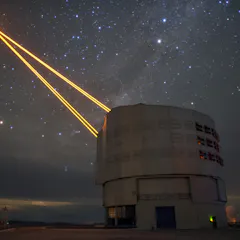
How exactly do the stars twinkle in the night sky? As it turns out, the answer is full of hot air… and cold air.

Georgina, age 5, wants to know why rainbows are round.
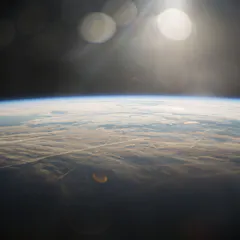
Some people think the sky is blue because of sunlight reflected off the ocean and back into the sky. But that’s not the real reason.
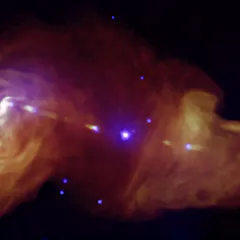
It’s difficult to get jets - powerful, lightning fast particles - to give up their secrets. The new Square Kilometre Array radio telescope could hold the key to solving jets’ mysteries.

The Nobel Prize-winning research on neutrinos is expected to push the boundaries of science and technology.
Top contributors
-

Assistant Research Professor of Mechanical Engineering, Colorado State University
-
Professor (Astrophysics), University of Southern Queensland
-
Professor (Physics), University of Southern Queensland
-
Professor of Physics, University of the Witwatersrand
-
PhD Candidate, University of Southern Queensland
-
Professor, Australian National University
-
Post-doctoral researcher in Astrophysics, University of the Western Cape
-
Associate Professor, School of Physics, The University of Melbourne
-
Lecturer, University of Southern Queensland
-
Professor of Medicine, Division of HIV, Infectious Diseases and Global Medicine, University of California, San Francisco
-
Assistant Professor of Mechanical Engineering, Binghamton University, State University of New York
-
Senior Lecturer of Particle Physics, Lancaster University
-
Associate Professor of Nuclear Physics, University of Guelph
-
Professor of Molecular, Cellular and Developmental Biology, University of Colorado Boulder
-
Principal Lecturer in Physics and Astronomy, Rochester Institute of Technology