

Anna Jarvis founded Mother’s Day in 1908 to honor women’s collective work for peace. Today, the celebration is largely detached from its political origins.
Articles on Pagan
Displaying 1 - 20 of 21 articles
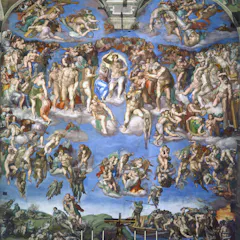
The artist used daring imagery that sparked controversy from the moment it was unveiled.
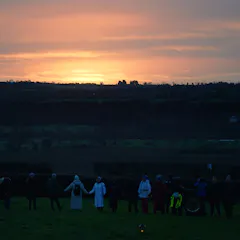
Yule, celebrated by Wiccans and many other Pagans in the Northern Hemisphere on Dec. 21, the day of the winter solstice, is a time for reflection.
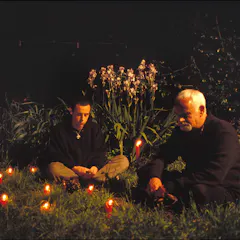
Practitioners of Pagan religions no longer need to go into a forest to find an object for their altars. Commercialization means that sacred objects are available online.

In the last Census, 33,148 Australians identified with a nature religion, or Paganism. Who are the Pagans – and what do they do and believe?

Native Americans are struggling to find sage for their spiritual practices as the plant is being overharvested for sale to the wider public.
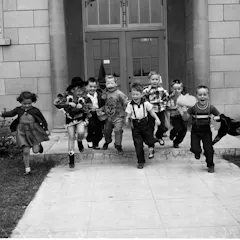
From its origins as a Celtic pagan ceremony to its celebration of all things gruesome and ghoulish today, Halloween has been reinvented over the centuries.
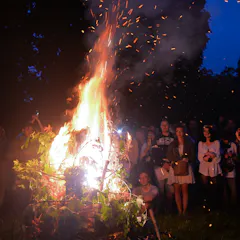
For Wiccans, midsummer, with the maximum hours of sunlight, is the time for celebrating new life.

A folklorist explains the prehistoric origins of the mythical Easter Bunny and why this longstanding cultural symbol keeps returning each spring.

Whether someone is scrolling mindlessly or actively conducting research, WitchTok connects witches to their practices and community.

Christmas was popularized in the United States during the American Civil War, when Harper’s Weekly featured the image of Santa Claus visiting the Union Army on its front page.
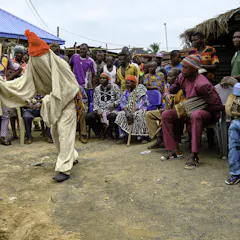
Over the past 15 years there’s been a revival of young people - mostly Christians - participating in traditional masquerades, despite these being branded as pagan.

Historians and scientists discovered how colonisation in eastern Europe changed ecosystems – and the societies embedded in them.

The curious history of a ritual meant to ward off bad luck.

Easter is actually a mish-mash of different traditions celebrating the coming of spring.
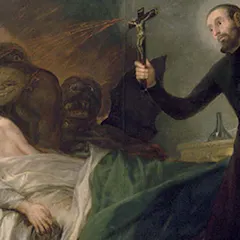
Forty-five years ago, ‘The Exorcist’ terrified viewers with its portrayal of a practice that goes back several centuries and continues today in Christianity.

The idea that the athletic contests – held in honour of the Greek god Zeus for over a thousand years – were shut down by a puritanical Christian emperor makes for a good story. But is it true?
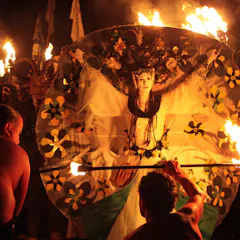
Edinburgh will this year host the 30th Beltane.

Militants are tapping into centuries-old literary tastes, appropriating them for their own nefarious ends.
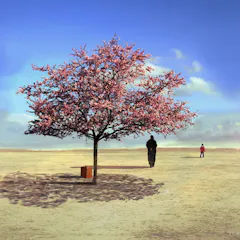
The proposition that Easter is a 100% Christian affair is manifestly unsustainable. It shows an ignorance of history. Worse, it shows a failure to understand the way religious traditions work.
Top contributors
-

Affliated Scholar at the Women's Studies Research Center, Brandeis University
-
Lecturer, Tourism, Edinburgh Napier University
-
Professor of Classics and Head of the Centre for Classical Studies, Australian National University
-
Class of 1950 Herman B Wells Endowed Professor and Professor of Middle Eastern Languages and Cultures, Indiana University
-
Professor of Gothic Studies, Bath Spa University
-
Honorary professor, College of Arts, Social Sciences, La Trobe University
-
Professor of Political Science, University of Arkansas
-
Senior Research Fellow at Campion Hall, University of Oxford
-
PhD Candidate/Teaching Fellow in Systematic Theology, Boston College
-
Associate Professor of Sociology, Middlebury College
-
Professor of Anthropology, USC Dornsife College of Letters, Arts and Sciences
-
Sessional Academic, The University of Queensland
-
Postdoctoral fellow, Nonreligion in a Complex Future project, L’Université d’Ottawa/University of Ottawa
-
Lecturer, University of Nigeria
-
Associate Professor of English, West Virginia University