
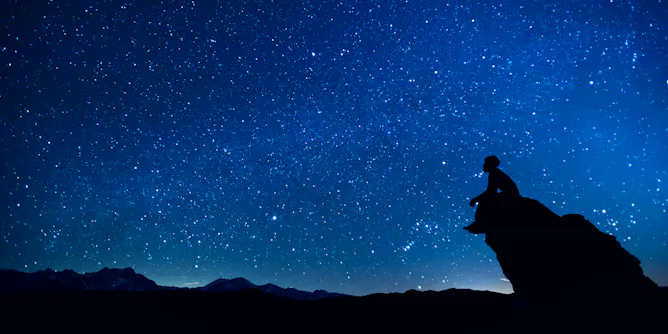
Astronomers know a lot about what’s in outer space – and think it’s possible it never ends.
Articles on Outer space
Displaying 41 - 55 of 55 articles
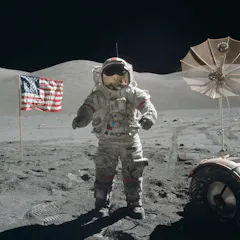
Several current programs aim at sending humans back to the Moon. What would be the purpose, and what are the real prospects?
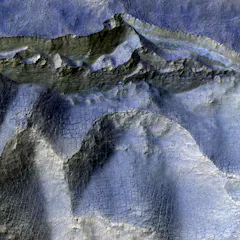
Space mining might be closer than you think. But legal issues about the ownership of space resources must be urgently addressed to avoid space wars over natural resources.

Martian meteorites allow scientists here on Earth to decode that planet’s geology, more than a decade before the first missions are scheduled to bring rocks back home from Mars.
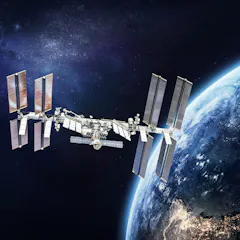
The distance between the ISS and Earth is the same as about 3,850 football fields. To bring the station down, rockets will lower it a bit, and then gravity will send it crashing the rest of the way.

Australia is a member of the 1979 Moon Treaty, which sets rules for resource extraction from outer space. Now that the Trump administration is eyeing moon mining, will Australian companies join in?
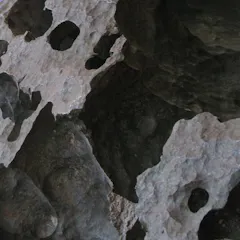
Tomanowos, aka the Willamette Meteorite, may be the world’s most interesting rock. Its story includes catastrophic ice age floods, theft of Native American cultural heritage and plenty of human folly.
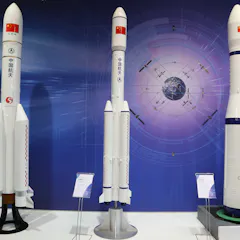
The space industry and global interest in all matters inter-planetary is growing.
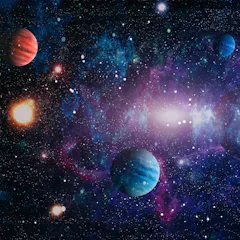
There are probably more than a million planets in the universe for every single grain of sand on Earth. That’s a lot of planets. My guess is that there probably is life elsewhere in the Universe.

We are in the Milky Way. If you travelled on an extremely fast spaceship for more than two million years, you would reach our neighbour, the Andromeda galaxy. All other galaxies are even further away.

CC BY-ND39.8 MB (download)
A podcast all about nothing. From the importance of doing nothing to the ill-effects of time spent in solitary confinement and what nothing means in space.
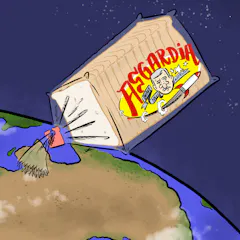
The real question is not so much about how to classify Asgardia – a satellite purporting to be a state – but the idea of human settlements in space in the future.

If Ghana is to fully harness the benefits of space technology, it will need space legislation and regulations.
Nearly 50 years since the first man walked on the moon, our morals are still stranded on Earth.

It’s like one great big distillery up there.
Top contributors
-

Senior Lecturer in Physics, Nottingham Trent University
-
Researcher, Air and Space Law, McGill University; Bond University
-
Postdoctoral research associate, University of Oxford
-
Professor of Earth, Planetary, and Space Sciences, University of California, Los Angeles
-
Emeritus Professor of Cosmology and Astrophysics, Institute of Astronomy, University of Cambridge
-
Senior Lecturer in Philosophy, University of St Andrews
-
Professor of History, University of Warwick
-
Professor (Astrophysics), University of Southern Queensland
-
Honorary Research Fellow, Physics and Astronomy, University of Glasgow
-
Political Scientist, University of the Western Cape
-
Australian Government Women in STEM Ambassador, Professor of Practice, UNSW
-
PhD Candidate, The University of Queensland
-
Professor of Robotics, Head of Centre for Robotics Research, King's College London
-
Professeur de physique et science de la soutenabilité, Université Paris Cité
-
Professor in the Sociology of Law, University of Oslo