
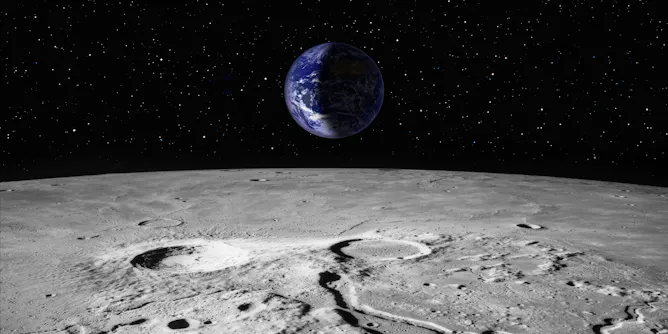
There are major gaps in space law, which could have dire consequences for space exploration and the search for extraterrestrial life.
Articles on Outer space
Displaying 21 - 40 of 55 articles
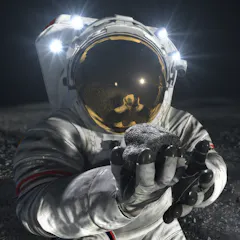
The next generation of spacesuit needs to do more than simply protect an astronaut from the vacuum of space.
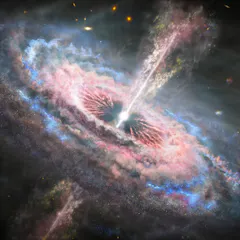
The discovery raises big questions about widely accepted models of galaxy formation.
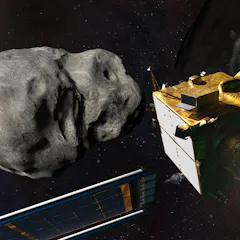
The mission provided details about how to deflect an asteroid should one threaten Earth in future.
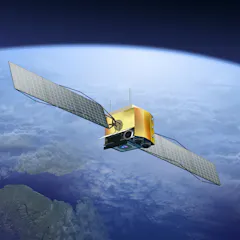
The capability for attacking satellites in space using cyber technology is advancing fast
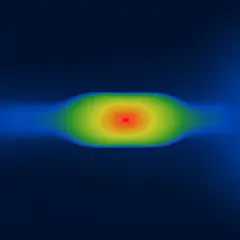
The observation could fill in gaps in our knowledge about planet formation.

Spaceplanes seemed out of favour when the shuttle was retired in 2011; they now seem to be making a comeback.
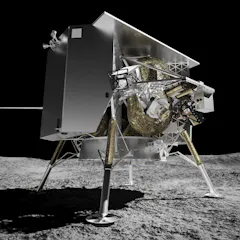
Sending human ashes and personal mementoes to the Moon is now possible, but it opens up a maze of legal and ethical conundrums.

The Peregrine and Nova-C landers are due to carry out valuable science at two diverse lunar locations.
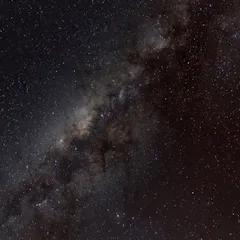
An astronomer explains why space looks so dark despite containing 200 billion trillion stars.
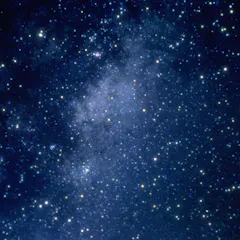
Measuring the ages of planets and stars is tricky. An observational astrophysicist describes the subtle clues that provide good estimates for how old different space objects are.
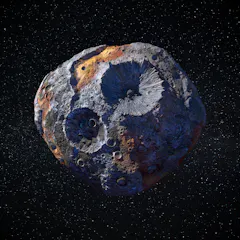
Liftoff to the distant asteroid is scheduled for Oct. 5, 2023 – the beginning of a six-year journey to one of the most unusual objects in the solar system.

If an astronaut were to die on Mars, neither cremation nor burial would be good options.
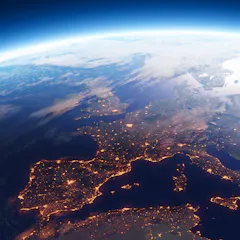
Regional development isn’t just about measuring the difference between today’s haves and have-nots to determine whether that gap might narrow or widen. Our idea of what is fair changes over time.

Internet access opens up the world in many ways.
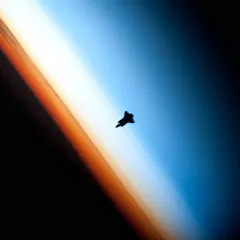
A new publication clarifies how existing legal frameworks apply to space exploration and development. The McGill Manual also highlights the catastrophic implications of conflict in space.
Our reliance on space infrastructure means that conflict in space would have global catastrophic consequences. But a recent declaration by the United States provides hope.

The dwarf planets in our Solar System are cold, dark, far away and full of surprises.
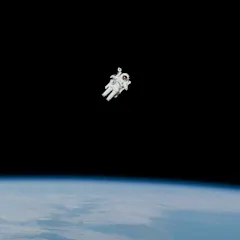
The vastly differing environment would need a whole new approach to disposing of dead bodies.
Billions of galaxies are in the universe, with billions of stars in every galaxy. Could billions of planets be out there too?
Top contributors
-

Senior Lecturer in Physics, Nottingham Trent University
-
Researcher, Air and Space Law, McGill University; Bond University
-
Postdoctoral research associate, University of Oxford
-
Professor of Earth, Planetary, and Space Sciences, University of California, Los Angeles
-
Emeritus Professor of Cosmology and Astrophysics, Institute of Astronomy, University of Cambridge
-
Senior Lecturer in Philosophy, University of St Andrews
-
Professor of History, University of Warwick
-
Professor (Astrophysics), University of Southern Queensland
-
Honorary Research Fellow, Physics and Astronomy, University of Glasgow
-
Political Scientist, University of the Western Cape
-
Australian Government Women in STEM Ambassador, Professor of Practice, UNSW
-
PhD Candidate, The University of Queensland
-
Professor of Robotics, Head of Centre for Robotics Research, King's College London
-
Professeur de physique et science de la soutenabilité, Université Paris Cité
-
Professor in the Sociology of Law, University of Oslo