

Gaza’s economic collapse has been years in the making.
Articles on Oslo Accords
Displaying 1 - 20 of 25 articles

The former British leader was tapped to lead redevelopment efforts in Gaza if a deal is agreed upon.
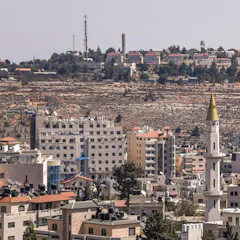
Palestinian-American historian Maha Nassar traces the history of Palestinian efforts to build an independent state. Listen on The Conversation Weekly podcast.
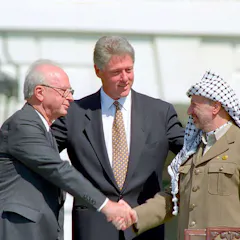
Ever since Bill Clinton helped create the Palestinian Authority successive US administrations have prevented it working properly.
For almost 80 years, Palestinians in Gaza have resisted proposals to resettle elsewhere.
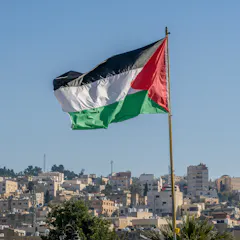
Recognition of Palestinian statehood was previously held out as an incentive to completing peace negotiations. But that’s changed now, and New Zealand should consider changing its position too.
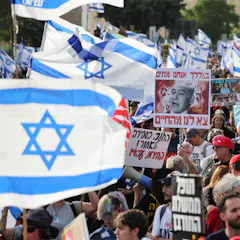
The Israeli prime minister, Benjamin Netanyahu, is opposed to a two-state solution, but many ordinary Israelis and Palestinians don’t feel the same way.
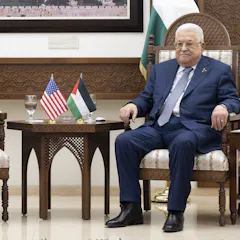
Israel has made it clear that Hamas should have no role in Gaza after the war. But seeking an alternative in the Palestinian Authority is fraught with problems.
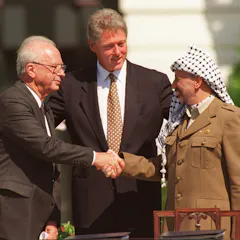
The two sides got very close to a deal in the 1990s but have drifted apart since then.

The two football-loving nations are also political allies with a shared history.

The Nobel Peace Prize has recognized some legendary leaders and peace activists, but it has a mixed track record of recognizing people who actually deserve the prize.
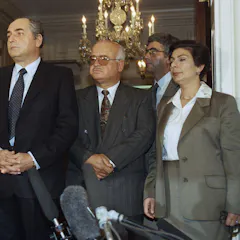
In part 2 of Inside the Oslo Accords, a podcast series from The Conversation Weekly, Hanan Ashrawi and Yossi Beilin talk about what happened after the initial declaration of principles was signed.
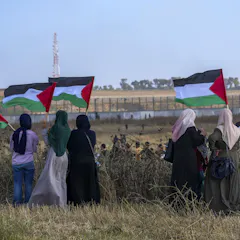
The history of Palestinian statehood is marked by shifts in four sovereignty categories. Understanding them can shed light on the complex dynamics and key challenges in Palestine’s statehood pursuit.
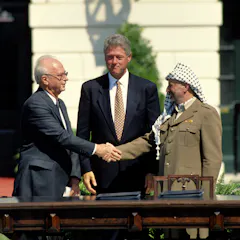
A new podcast series from The Conversation Weekly marks 30 years since the first Oslo accord was signed in September 1993.
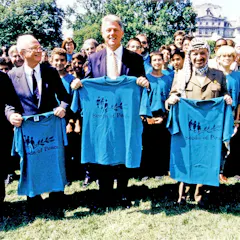
Part 1 of Inside the Oslo Accords, a three-part podcast series from The Conversation Weekly, marking the 30th anniversary of a key moment in the Israel-Palestine peace process.
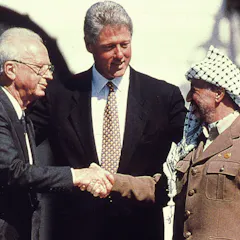
A famous gesture kick-started hopes of peace in the Middle East. But today, the idea of a two-state solution seems further away than ever before.
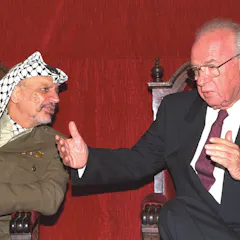
When Yasser Arafat and Yitshak Rabin shook hands on the White House lawn in September 1993 it looked as if Israel and Palestine might achieve a lasting peace. Three decades on this remains a dream.

The West Bank governing body has seen its popularity erode amid accusations of corruption and incompetence.

Nothing seems to have brought a lasting peace to Palestinians and Israelis. Two Middle East scholars suggest approaches different from what has been tried before.
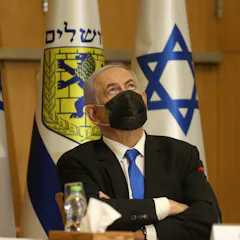
Benjamin Netanyahu, is the latest in a line of Israeli prime ministers who have not engaged with the idea of Palestinian self-determination.
Top contributors
-

Associate Professor in the School of Middle Eastern and North African Studies, University of Arizona
-
Host, The Conversation Weekly Podcast, The Conversation
-
Reader in International Journalism, City St George's, University of London
-
Professor of International Relations, City St George's, University of London
-
Emeritus Professor of Law, University of East London
-
Tony Walker AM is a Friend of The Conversation.
Director, La Trobe University
-
Associate Professor of Political Science, University of Richmond
-
Associate Professor in Sport Policy & Management, Qatar University
-
Visiting Professor, Ethics and International Development, L’Université d’Ottawa/University of Ottawa
-
Reader in Politics, University of Westminster
-
Associate Professor in Law, University of Canterbury
-
Rosalinde and Arthur Gilbert Foundation Professor of Israel Studies, University of California, Los Angeles
-
Professor of Middle Eastern Studies and Public Policy and Director of the Interdisciplinary Studies Institute, UMass Amherst
-
Lecturer in Middle East Studies, Deakin University
-
Lecturer in Interdisciplinary Race, Gender and Postcolonial Studies, UCL