

The destructive force that Israeli leader Benjamin Netanyahu has unleashed in Gaza is rooted in a century-old ideology that says overwhelming power is how Israel should deal with Palestinians.
Articles on Yitzhak Rabin
Displaying all articles
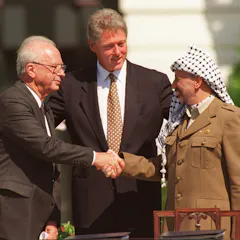
The two sides got very close to a deal in the 1990s but have drifted apart since then.
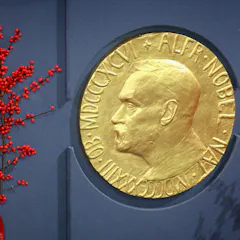
The Nobel Peace Prize has recognized some legendary leaders and peace activists, but it has a mixed track record of recognizing people who actually deserve the prize.
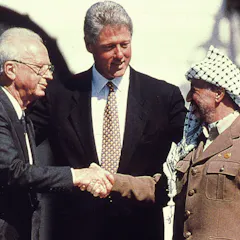
A famous gesture kick-started hopes of peace in the Middle East. But today, the idea of a two-state solution seems further away than ever before.
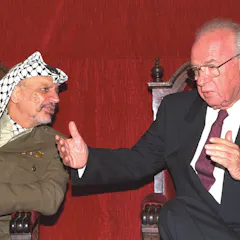
When Yasser Arafat and Yitshak Rabin shook hands on the White House lawn in September 1993 it looked as if Israel and Palestine might achieve a lasting peace. Three decades on this remains a dream.

Studies show, though, that voters don’t like all that nastiness.
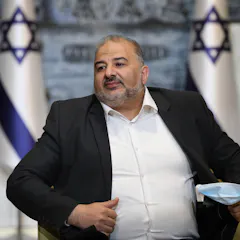
An unwritten rule in Israeli politics kept Arab political parties out of ruling government coalitions – until the latest election.
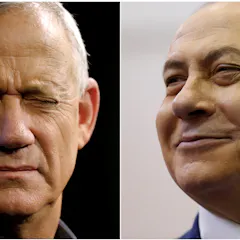
They wanted to oust Israeli leader Benjamin Netanyahu in Tuesday’s election, but the failure of three centrist generals to talk about key issues may have made Netanyahu the apparent winner.

In 1993 the Oslo Accords were struck in optimism, but a quarter of a century later little has changed - and there’s no real prospect it ever will.
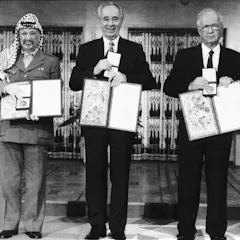
A scholar analyzes the history of the Nobel Peace Prize to ask: What difference has it made?
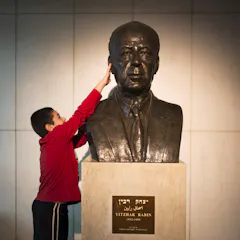
Twenty years ago, Israeli Prime Minister Yitzhak Rabin – the man who ushered in the Oslo Accords with the Palestinians – was assassinated. Today’s Israel is a very different place.
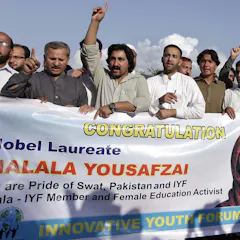
The awarding of a shared Nobel Peace Prize award to a 17-year-old Pakistani girl, Malala Yousafzai, and a 60-year-old Indian man, Kailash Satyarthi, is historic and aimed at conveying multiple messages…
Top contributors
-

Associate Professor of Political Science, University of Texas at Arlington
-
Distinguished McKnight University Professor and Professor of Political Science, University of Minnesota
-
Distinguished Professor of Energy and the Environment, University of Delaware (USA); Honorary Professor, The University of Queensland
-
Tony Walker AM is a Friend of The Conversation.
Director, La Trobe University
-
Emeritus Professor of Law, University of East London
-
Associate Professor, School of Public Affairs, American University
-
Rhoda and Richard Goldman Chair in Jewish Studies, San Francisco State University
-
Associate professor, American University School of International Service
-
Lecturer in Middle East Studies, Deakin University
-
Adjunct Professorial Lecturer Critical Race, Gender, and Culture Studies (CRGC), American University
-
Executive Director and Professor of Practice at Joan B. Kroc Institute for Peace, University of San Diego
-
Associate Professor in the School of Middle Eastern and North African Studies, University of Arizona