

Nations that lead the development of open-source technology will have a strategic edge for decades to come.
Articles on Open Source
Displaying 1 - 20 of 62 articles

AI models that are open source allow developers and users to see and modify the underlying program code.
More efficient AI models may make research easier – and raise questions about the value of investments in huge datacentres.

The early internet was like the coolest club around. Then, big tech companies swept in. But the alternative to a corporate online world has always existed.

Courts face growing challenges in assessing digital evidence in international crime trials. A new guide aims to help judges verify online information.

Open-source AI models promise a more democratic and transparent future. They can also be open to misuse – and ethical concerns remain.

In open-source endowed research positions, professors release all of their intellectual property. Surveys of academics in the U.S. and Canada find most like the idea.

AI art tools like DALL-E, Midjourney and Stable Diffusion are starting a revolution in the way art is made.

Many doctors currently diagnose skin conditions by eye. Advances in molecular testing could lead to more precise and accurate diagnoses for ambiguous rashes and skin lesions.

With an antenna, a laptop and some software, you can take a picture of Earth from space.
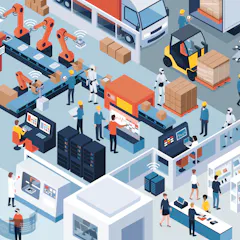
An ‘open’ approach to hardware could make production bottlenecks a thing of the past.

‘Science 4.0’ is real. It is about a revolution in which science is an integral part of society.

Consumers can turn plastic waste into valuable products at minimal cost using the open source technologies associated with DRAM – distributed recycling and additive manufacturing.

Governments must embrace policies that promote sharing and collective invention to create and distribute a vaccine quickly.

How two massive opposing forces - the shift towards a sustainable world and the force that thrives on inequality - are unfolding at a global level.

Intelligence work is no longer the sole preserve of intelligence agencies. Powerful platforms now allow everyday people to gather intelligence collaboratively – even from opposite sides of the world.

Seniors and other people suffering from arthritis could do more daily tasks for themselves, and save money, by 3D printing their own small plastic aids, like key holders and pill-splitters.

Cybersecurity efforts could take a lead from open-source software, creating hardware whose designs are open for all to see and examine.
Start-ups are innovative and agile, while big companies have abundant resources. Corporate accelerators bring them together, and a new case study outlines best practices.

Even as digital social innovations (DSI) are booming in Europe, obstacles remain for their being able to provide effective solutions to the big challenges of our times.
Top contributors
-

John M. Thompson Chair in Information Technology and Innovation and Professor, Western University
-
Lecturer in Software Engineering, Monash University
-
Senior Lecturer in Networking, The Open University
-
Lecturer and programmer, Australian National University
-
Associate Professor, School of Chemistry, University of Sydney
-
Lecturer, Australian National University
-
Lecturer, Information Systems and Computing, Brunel University of London
-
Former Director General, Council of Scientific and Industrial Research (CSIR) and Academy Professor, Academy of Scientific and Innovative Research (AcSIR)
-
Associate Professor Media and Communication, University of Leicester
-
Directeur de l'agence Villes Innovations, Chercheur associé au laboratoire PACTE (Université de Grenoble), Co-fondateur du Laboratoire d’usages culture(s)-art-société (LUCAS), Université Grenoble Alpes (UGA)
-
Ph.D. Student in the Human and Social Dimensions of Science and Technology, Arizona State University
-
Professor of International Security & Director of the Queen's Institute for Peace, Security and Justice, Queen's University Belfast
-
Adjunct Senior Lecturer, Applied Ethics and CyberSecurity, Griffith University
-
Principal Fellow, The University of Melbourne
-
Joanna Mendelssohn is a Friend of The Conversation.
Honorary Senior Fellow, School of Culture and Communication, The University of Melbourne