
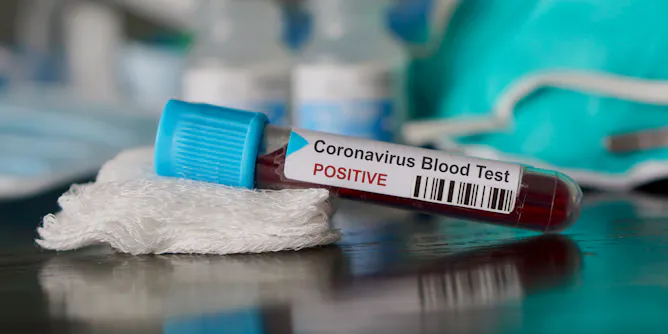
Frontier research initiatives to tackle the 2019 coronavirus seem to be dominated by institutions in China, the US, Japan and labs across Europe. Very little seem to be coming form Indonesia.
Articles on Open science
Displaying 21 - 30 of 30 articles
20 years ago, who could predict how much more researchers would know today about the human past – let alone what they could learn from a thimble of dirt, a scrape of dental plaque, or satellites in space.

The govt recently launched the National Scientific Repository (RIN) to become a national-level data bank that aggregates research data from various sources. What are the benefits and challenges?
Indonesia’s unhealthy obsession with research output is driving scientists to commit unethical acts to produce research that are more publishable. What can the research community do to stop this?
In a new research study, more than 900 people from around the world explain the challenges and benefits of microdosing LSD and psilocybin-containing mushrooms.
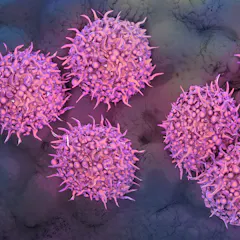
Thomas Durcan’s lab is growing 3D mini-brains in the search for a cure for Parkinson’s disease. Over the next year he is giving all his lab’s protocols, methods and results away.
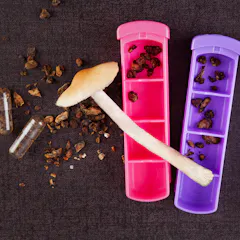
According to new research, individuals who take small regular doses of psychedelics such as LSD and psilocybin mushrooms score higher on mental health, well-being and creativity.

To know the real promise of psychedelic substances like LSD, mushrooms and MDMA, researchers must embrace the principles and practise of ‘open science.’
In our institutions of higher education and our research labs, scholars first produce, then buy back, their own content. With the costs rising and access restricted, something’s got to give.

Partly in response to the so-called ‘reproducibility crisis’ in science, researchers are embracing a set of practices that aim to make the whole endeavor more transparent, more reliable – and better.
Top contributors
-

Lecturer in Social Psychology, Universitas Airlangga
-
PhD student in Clinical Psychology, York University, Canada
-
PhD Candidate, Congnitive Neuroscience, University of Toronto
-
Reader in Sociology, Cardiff University
-
Professor in science and technology studies, Cardiff University
-
Research associate in environmental governance, Cardiff University
-
Associate Professor of Geography, University of Guelph
-
Senior Lecturer in Sedimentology, James Cook University
-
Associate Professor of Anthropology, Rice University
-
Assistant Professor of Psychology, Grand Valley State University
-
University of Oxford
-
Professor of Psychology, University of Virginia
-
Curator of Human Evolution of the Cleveland Museum of Natural History and Research Assistant Professor of Anthropology, Stony Brook University (The State University of New York)
-
Head of the Centre for Data and Scientific Documentation, Indonesian Institute of Sciences (LIPI)
-
Research Fellow, UMR1284 INSERM et Université de Paris au CRI, chercheur invité au Center for Complex Network Research (Northeastern University), et co-fondateur de Just One Giant Lab, Université Paris Cité