

Each study adds a piece to the puzzle of scientific knowledge. But any one study on its own doesn’t tell you all that much.
Articles on Replication crisis
Displaying all articles

Replication research can take the temperature on how accurate science in a given field is, but research replication is easier said than done.

Funding replicating research is important, but only when allocated well.

246 scientists looked at the same data sets and drew very different conclusions.

People who have a strong sense of fairness are less likely to cheat.

For a while it was all the rage to adopt Wonder Woman’s famous stance and other body positions that allegedly pumped up your confidence – until more studies of the phenomenon failed to find the connection.

The lack of large numbers of fossils makes it hard to study sexual dimorphism in dinosaurs. But a new statistical approach offers insight into this question and others across science.

Researchers found the letters X, Y, and Z make tweets more shareable. The nonsensical result shows how easily statistics can be misused.

Behind a lot of news headlines often lie either questionable, oversold or misinterpreted research findings. So what should readers be aware of when reading news that contain scientific claims?

Australia’s behavioral economics unit publishes rather than hides the results of its unsuccessful experiments.

Across science, only around half of published results can be successfully replicated. But while this is a serious problem, the proposed public audit looks like a political bid to cast doubt on science.

Rising evidence shows that many psychology studies don’t stand up to added scrutiny. The problem has many scientists worried – but it could also encourage them to up their game.

Two prestigious journals have suggested abandoning the traditional test of the strength of a study’s results. But a statistician worries that this would make science worse.

To know the real promise of psychedelic substances like LSD, mushrooms and MDMA, researchers must embrace the principles and practise of ‘open science.’

Questionable research practices are not fraud, and they’re not cause for panic. But they do give us some hints about how we can make science more robust.
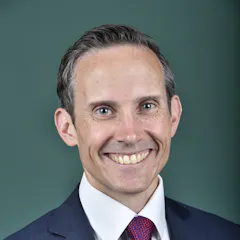
Economist, author and MP Andrew Leigh spoke to Fiona Fidler about how we should be using randomised trials more to drive decisions and policy in public life.

Bad research techniques have called into question the results of many psychology studies. Fixing the problem starts with making sure students don’t pick up bad habits.
Top contributors
-

Professor, School of Biosciences & School of Historical and Philosophical Studies, The University of Melbourne
-
Postdoctoral Researcher , The University of Melbourne
-
PhD student in Clinical Psychology, York University, Canada
-
Associate Professor, University of Guelph
-
Associate Professor, Taylor's University
-
Associate Professor, University of Guelph
-
Teaching Fellow, Research Assistant, School of Psychology, University of Leicester
-
University of Derby
-
Professor of Psychology, University of Leicester
-
Lecturer, Northwestern University
-
Associate professor, University of Connecticut
-
Professor, School of Psychology, University of Sydney
-
Professor of Cognitive Psychology and Director of the Institute for Climate Risk and Response, UNSW
-
Professor, University of California, Davis
-
PhD Candidate, Congnitive Neuroscience, University of Toronto