

President Muhammadu Buhari’s Twitter shutdown will be hard to enforce and could have dire consequences for Nigeria’s fragile democratic institutions and economy.
Articles on Open internet
Displaying all articles
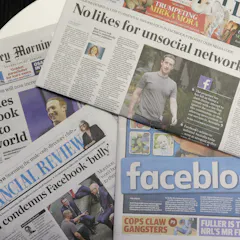
The internet of 2021 is not the open public sphere that early visionaries had imagined.

The father of the web wants to address issues including malicious content circulation, misinformation, and the polarisation of online debate. But the methods he is proposing aren’t great.

A recent federal court ruling lets big telecom companies censor the internet in ways that boost their own profits – but also allows local and state governments to outlaw censorship if they wish.

Private companies – many based in the US – are blocking access to their websites from particular countries around the world. It’s contributing to a splintering of the global internet.

The internet developed as a place for open collaboration; there are technical limits on its transformation into a commercial marketplace.

Efforts to curb railroads’ monopoly power in the 19th century hold lessons for 21st-century policymakers and internet giants alike.
As the issue of an open and free internet again comes up for public debate, Congress could participate – and help regulators devise a workable set of policies.

How do internet companies decide which network traffic to slow down and which to charge against users’ data plans? And what can we learn about net neutrality from the answers?

There are other more pressing problems when it comes to internet regulation.

A new data management system can give emergency responders a fast lane on the internet to help speed rescue efforts after a disaster.

The digital economy in the US is already on the verge of stalling; failing to protect an open internet would further erode the United States’ digital competitiveness.

The Trump administration’s proposed budget suggests it will continue to spend federal dollars on expanding broadband internet access. But the rules governing internet traffic matter too.
President Trump has touted infrastructure investment as a way to boost the U.S. economy. At the moment, he’s missing a key opportunity – expanding broadband internet service.

As the Trump administration settles into office, regulators and lawmakers have big plans for shifting the country’s media landscape, with potentially profound effects on the public.

The US is set to rollback the rules that keep internet companies on a level playing-field. It could make services slower and more expensive.

Trump’s FCC chairman Ajit Pai has proposed a major change in internet regulation, doing away with the Open Internet Order. Experts describe what’s at stake, and why it matters.

The public must prepare to stand up for a free press, and against online censorship and surveillance.
Top contributors
-

Professor of AI, Technology and the Law, Monash University
-
Assistant Professor of Digital Communication, The University of Texas at San Antonio
-
Professor of Public Policy and Economics, University of Maryland, Baltimore County
-
Visiting Assistant Professor of Information Sciences and Technologies, Rochester Institute of Technology
-
Professor of American History, Stanford University
-
Co-Director, Institute for Information Policy and Associate Professor of Telecommunications, Penn State
-
Professor of Information Sciences and Technologies, Rochester Institute of Technology
-
Assistant Professor of Computer and Information Science, Northeastern University
-
Associate Professor of Public Affairs and Administration, Rutgers University - Newark
-
Eugene H. Fram Chair in Applied Critical Thinking; Principal of the Collaboratory for Resiliency & Recovery @ RIT & Professor of Civil Engineering Technology, Environmental Management and Safety, Rochester Institute of Technology
-
Dean of Global Business, The Fletcher School, Tufts University
-
Lecturer in Competition Law and Regulation, University of Leeds
-
Associate Professor of Communications (Social Media), Syracuse University
-
Pioneers Chair in Telecommunications & Professor of Telecommunications, Penn State
-
Assistant Professor of Computer Science, Worcester Polytechnic Institute