

A combination of volume, technology and financial need has opened the door to sleazy and dangerous advertisements on reputable websites.
Articles on Online media
Displaying 21 - 40 of 51 articles

It only took a relatively small number of Twitter accounts to get hashtags #DictatorDan and #DanLiedPeopleDied trending. And “bots” weren’t really a part of the story.
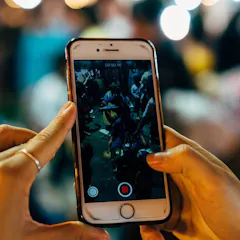
The adoption of mobile journalism by Indonesian media is still immature due to limited human resources and poor access to the technology.

There is heavy social media use among both the most lonely and least lonely people. So what exactly is the relationship between social media use and loneliness?
Media Files: ACCC seeks to clip wings of tech giants like Facebook and Google but international effort is required
The Conversation55 MB (download)
In Dickens' era, international copyright law developed from a worldwide effort to deal with a global problem. Is it time to tackle tech giants the same way? A journalist and a media owner explain.

People fall for fake photos regardless of whether they seem to come from Facebook or The New York Times. What actually helps?

Canadians have relatively high trust in their media compared to other countries, but that doesn’t translate into a willingness to pay for online news.

Effective communication strategies will be crucial if scientists want to counter the worrying anti-vaccination trend.
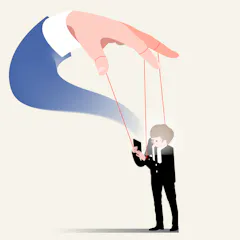
Academic research highlights the dangers – personal and societal – of giving too much time and attention to social media.

Now with more unicorns than fintech, could it be showtime for mediatech?
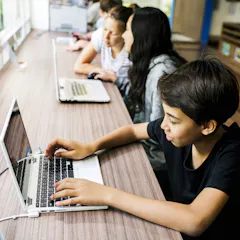
A new survey reveals that while most young Australians get news from online sources, they lack the skills to distinguish fake news.
New research shows that Australians from diverse backgrounds are turning away from traditional media and heading online, a trend that has great significance for media companies.

Wikipedia has earned our trust. Now its founder proposes an innovative assault on fake news with Wikitribune.

As a second independence referendum beckons, a counterweight to the unionist-leaning press is hugely important to the Yes side.

Researchers have found that today’s students, despite being ‘digital natives,’ have a hard time distinguishing what is real and what is fake online. Metaliteracy might provide the answers.

Trump has given extremists a high-profile stage, but in the process exposed them to the disinfecting sunlight.

Threats to humiliate an intimate partner by sharing explicit photos or video is an old problem with a new digital twist, a new study finds.

China is used to media being kept on a tight leash, but the party’s latest swoop has an ominous new zeal about it.
Fibbers beware: experts have developed a new digital lie detector.

Social networking, smartphones, ad blockers, oh my. A global survey of 50,000 news consumers assessed the ways we get our news in 2016.
Top contributors
-

Associate Professor of Visual Communication & Digital Media, RMIT University
-
Postdoctoral Researcher in Computer Science, Carnegie Mellon University
-
Associate Dean, Interaction, Technology and Information, RMIT University
-
Professeure/Professor, Directrice/Director, Centre d'études sur les médias, Université Laval
-
Lecturer in Journalism, University of Sussex
-
Professor of Journalism Innovation, City St George's, University of London
-
Carolyn S. Chambers Professor in Journalism, University of Oregon
-
Director
-
Adjunct professor, Queensland University of Technology
-
Assistant Professor in Journalism Studies and Media, University of Groningen
-
Senior lecturer, University of Twente
-
Postdoctoral Researcher, Discipline of Media and Communications, University of Sydney
-
Professor in Digital Media, Western Sydney University
-
Director of Undergraduate Studies, School of Journalism, Media and Cultural Studies, Cardiff University
-
Professor of Persuasive Language and Storytelling, SKEMA Business School