
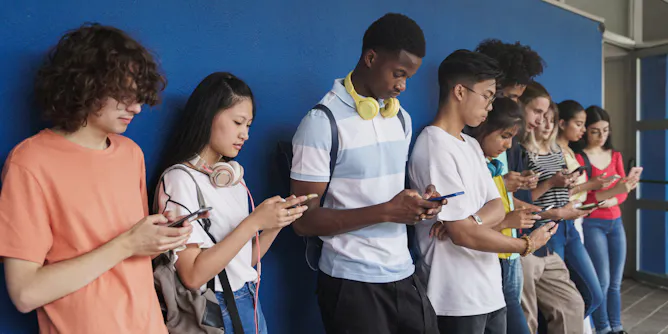
Perhaps the greatest danger is not that restrictions fail, but that they succeed just enough to convince us that the work is done.
Articles on online harms
Displaying 1 - 20 of 32 articles

Since its launch on 10 December 2025, Australian media has been filled with stories of children remaining on social media platforms.
A new study involving 1,195 young people found found clear risks from heavier social media use on young people’s mental health.

Big Tech is facing a ‘Big Tobacco’ moment. To regulate social media effectively, we need to understand the teenage brain.

Ireland is a hub for EU technology companies.
Most online platforms appear free to use, but they are largely funded through advertising.
MPs have effectively postponed the decision.
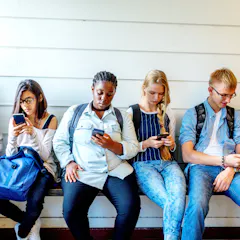
The appeal of a ban lies in its simplicity. But complex social problems rarely yield to simple technological solutions.
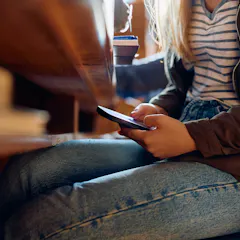
Children may be put off telling adults about something harmful they’re not supposed to have seen.
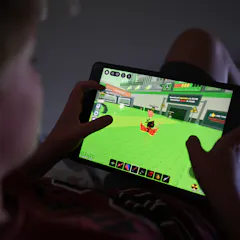
It comes at a time when the online gaming giant faces several lawsuits and growing calls to be included in Australia’s social media ban.

From digital immersion to Covid, today’s youngsters are growing up in a very different world to their parents.

Just because you ‘heard it on a podcast’, it doesn’t mean the info is necessarily more trustworthy than a random social media post.

The Online Safety Act intends to put greater responsibility on platforms and content creators themselves for children’s safety.

A key difference between YouTube and other social media platforms is the way that it’s designed to be used.
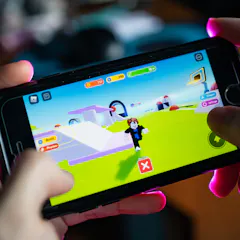
More safety features that don’t just revolve around parents are needed to keep kids safe on Roblox.

The ban will affect platforms such as Facebook, Instagram, TikTok and Snapchat. But the bill is vague about how exactly these platforms must comply.

The new proposal is aligned with approaches in the European Union and United Kingdom – and overcomes the flaws of banning people under 16 from social media.
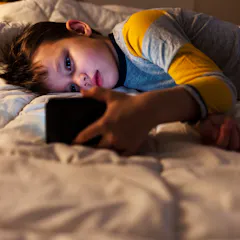
Meta wants Apple and Google to force parents to approve apps on their child’s phone. A better solution would be for the tech giants to cooperate.

Our research has found that young people rarely report their experiences.

Canada needs to take action immediately to protect children online from exposure to age-inappropriate material. More stringent age verification measures need to be in place.
Top contributors
-

Professor of Information Sciences & Director, Social Change Enabling Impact Platform, RMIT University
-
Professor of IT Ethics and Digital Rights, Bournemouth University
-
Professor of the Sociology of Gender and Education, Institute of Education, UCL
-
Lecturer in Law, Keele University
-
Associate Professor in Criminology, University of Surrey
-
Associate Professor and the Deputy Programme Director of Digital Humanities in the Department of Information Studies, UCL
-
Associate Professor, Criminology, Department of Social Science, York University, Canada
-
Doctoral Researcher, Queen Mary University of London
-
Associate Professor of Political Science, Brock University
-
Professor in Sociolinguistics, University of Nottingham
-
Reader, School of Education, University of Birmingham
-
Professeur, École des médias, Université du Québec à Montréal (UQAM)
-
Public Scholar & PhD Candidate, Electrical and Computer Engineering, Concordia University
-
Policy Lead on Technology, Cybersecurity and Democracy, Leadership Lab, Toronto Metropolitan University
-
Associate Professor of Human Development and Family Studies, University of Wisconsin-Madison