

What do Rishi Sunak’s 100 new drilling licences mean for the UK’s net zero target?
Articles on Oil and gas
Displaying 81 - 100 of 252 articles
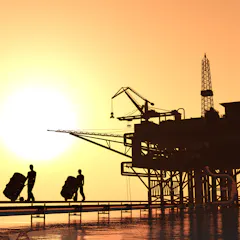
Oil producers behave as if heatwaves, forest fires and rising sea levels were happening on another planet.
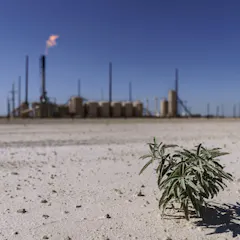
Regulating greenhouse gas emissions is an important part of Canada’s strategy to achieve net-zero emissions by 2050. However, a newly published study illustrates why enforcing regulation is key.
Falling gas prices led to declining interest and investment by oil and gas companies, squeezing out the supply sectors in the process.

Newly elected Alberta Premier Danielle Smith is likely to chart a course forward that involves brawls with Ottawa. Here’s what that means for Canadian Confederation.
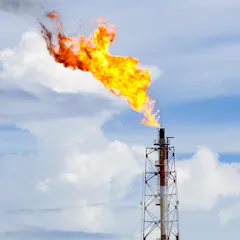
Major sources, like oil and gas ‘super-emitters’, are almost entirely neglected by regulations.
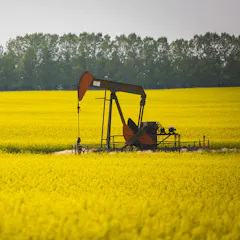
A series of ongoing issues in Alberta’s oil and gas sector suggest the province’s energy regulator is controlled by the industry and has lost the public’s trust.

New agreements in B.C. provide economic compensation for land restoration activities to several First Nations and limit new oil and gas development projects.

Canada’s federal Impact Assessment Act seeks to minimize the environmental impacts of major economic projects. Will the Supreme Court uphold the act?
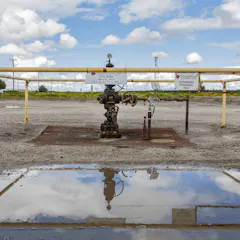
Fracking for oil and gas uses millions of pounds of chemicals, some of which are toxic or carcinogenic. Two researchers summarize what companies have disclosed and call for more transparency.
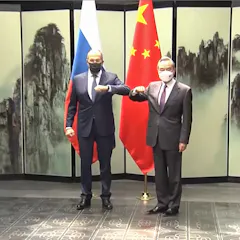
China and Russia’s relationship is complex. But China’s decision to support Russia’s war on Ukraine could ultimately come down to China’s own political interests.
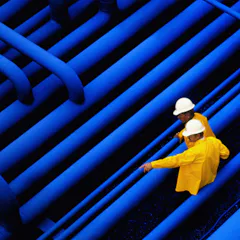
Researchers looked at a decade of political spending by the oil and gas industry and others engaged in climate policy. If money talks, one side had a giant megaphone.
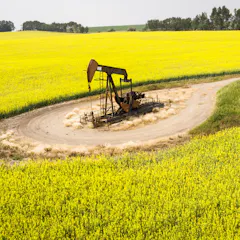
Canada has no choice but to adapt its energy sources and industries in a ‘just transition.’ If it doesn’t, the inevitable transition will be much more disruptive — and much less just.
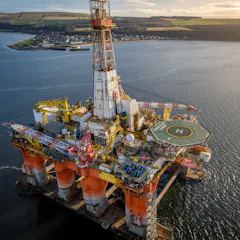
The UK windfall tax has barely made a dent in surging energy profits this year.

The Alberta government is failing to ensure environmental liabilities are adequately accounted for and that progress is being made to address the province’s massive tailings ponds.

Despite once holding promise, the UK’s climate compatibility checkpoint has become a formality.
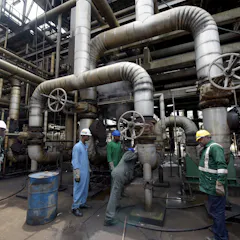
There should be a better long-term strategy for foreign direct investments in Nigeria that’s not tied to its oil reserves.
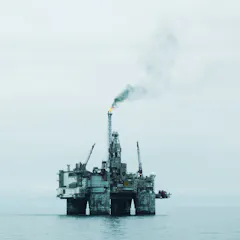
Force oil and gas companies to dispose of a tonne of CO₂ for every one they emit.
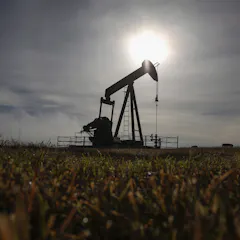
Four companies contribute about 20 per cent of Alberta’s total revenue, giving them an enormous amount of control over the province’s finances and, by extension, politics.
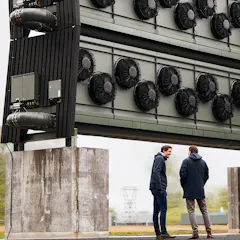
One estimate suggests at least a sixth of all emissions cuts expected from the Inflation Reduction Act would come from carbon capture.
Top contributors
-

Lecturer in International Studies, University of Washington
-
Research Fellow, Public Economics, The Parkland Institute, University of Alberta
-
Professor, Department of Geography & Environmental Studies, University of Regina
-
Lecturer in Energy Systems, University of Oxford
-
Director, Energy, Climate Justice, and Sustainability Lab, and Research Professor, New York University; Tufts University
-
Senior research associate (Resources for the Future), Lecturer (University of Michigan Ford School of Public Policy), University of Michigan
-
Associate Professor of Sociology; Co-Founder, Center for Environmental Justice at CSU, Colorado State University
-
Pro-Vice Chancellor: Global and Sustainability, Newcastle University
-
Director, Queen's Institute for Energy and Environmental Policy, Queen's University, Ontario
-
Lynton K. Caldwell Professor of Public Affairs, Indiana University
-
Professor at the Haas School of Business, University of California, Berkeley
-
Josey Centennial Professor of Energy Resources, The University of Texas at Austin
-
Distinguished Professor of History and Environmental Studies, Penn State
-
Assistant Professor of Public Policy, University of Michigan
-
Royal Academy of Engineering Chair in Emerging Technologies - Intelligent & Resilient Ocean Engineering, University of Southampton