

The inability of some federal public servants to use their official language of choice at work is pushing them to ponder leaving their jobs for something else within the public service or quitting entirely.
Articles on Official bilingualism
Displaying all articles

Concern over bilingual road signs in New Zealand is as much political as it is about safety – but the international evidence suggests there’s little to worry about.

Pitting the representation of historically marginalized groups on the Supreme Court against another constitutionally protected minority — Canada’s francophones — is a misguided race to the bottom.

The federal government’s ambitious new plan to modernize the 51-year-old Official Languages Act is the most significant proposal on the status of French in Canada since 1982.

A recent survey reveals a general uneasiness about using French among both francophone and anglophone public servants in administrative regions where bilingualism is required.

Seven million French-speaking Canadians shouldn’t have to decipher English-only labels during the pandemic. Ottawa must take into account the fundamental rights and safety of all Canadians.
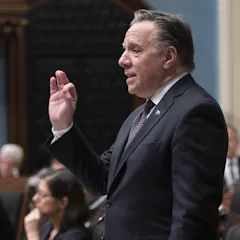
Ontario and New Brunswick francophones have spoken out against Québec abolishing English school boards, fearing this could set a negative precedent for French language education rights across Canada.

To read English-Canadian media, you would think that Québec’s anglophones are under greater threat than the rest of the country’s minority language communities. Why the selective outrage?
Top contributors
-

Full Professor, Research Chair in Language Rights, Faculty of Law | Professeur titulaire, Chaire de recherche Droits et enjeux linguistiques, Faculté de droit, L’Université d’Ottawa/University of Ottawa
-
Professeur en sociologie de l’éducation/ Professor of Sociology of Education, L’Université d’Ottawa/University of Ottawa
-
Professor of Politics, Te Kunenga ki Pūrehuroa – Massey University
-
Associate professor, Department of Political Science / Professeure agrégée, Département de science politique, Queen's University, Ontario
-
Professeure et vice-rectrice adjointe à la recherche, Université de l'Ontario français, L’Université d’Ottawa/University of Ottawa
-
Emeritus Professor , Department of Psychology, UQAM, Université du Québec à Montréal (UQAM)
-
Associate professor, Human Rights Studies, King's University College, Western University
-
Associate Professor of Public Management, L’Université d’Ottawa/University of Ottawa