

In Canada, language is not just about communication — it touches on identity, power and recognition. But how does linguistic identity shape perceptions of languages and those who speak them?
Articles on Official Languages Act
Displaying all articles

Is the new Official Languages Act unfair? Three constitutional experts say that those who claim it is are distorting Canadian realities.

The almost complete absence of French at the Public Order Emergency Commission does not come from a subservient reflex on the part of French speakers so much as their fear of being scorned.
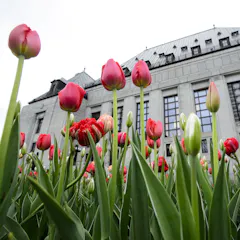
Pitting the representation of historically marginalized groups on the Supreme Court against another constitutionally protected minority — Canada’s francophones — is a misguided race to the bottom.
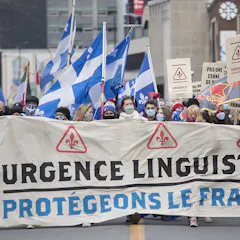
The federal government’s ambitious new plan to modernize the 51-year-old Official Languages Act is the most significant proposal on the status of French in Canada since 1982.
Top contributors
-

Full Professor, Research Chair in Language Rights, Faculty of Law | Professeur titulaire, Chaire de recherche Droits et enjeux linguistiques, Faculté de droit, L’Université d’Ottawa/University of Ottawa
-
Associate professor, Department of Political Science / Professeure agrégée, Département de science politique, Queen's University, Ontario
-
Associate professor, Faculty of Law, L’Université d’Ottawa/University of Ottawa
-
Vice-Dean and Full Professor, Common Law Section, L’Université d’Ottawa/University of Ottawa
-
Associate Professor of French and Linguistics, Binghamton University, State University of New York