

Thinking about what makes work worth doing and what you would do with your time if you weren’t spending it at work are useful questions to pose this and every year.
Articles on Office work
Displaying 1 - 20 of 27 articles

While the rest of nature rises and slumbers to lunar and solar cycles, humans work and sleep to the resetting of their artificial clocks.

Return-to-work tensions reflect deeper questions about how different people work best and what modern organisations actually need to succeed.
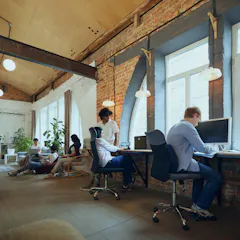
Today’s co-working spaces can boost employee skills and left-behind communities.

As the weather warms up, offices are cranking up the air conditioning. But it may be an impossible task to find a temperature that suits everyone.

New research finds workers who take up working from home are generous with the time they save by not commuting, devoting about one-third of it to unpaid extra work for their employer.
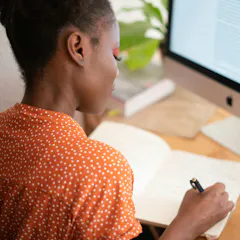
The Fair Work Commission is considering basic rights to work from home. Here’s what the evidence says about the impacts of working from home on physical health and mental wellbeing.

Most workers have experienced a bad team meeting. To run a good and effective one, managers need to make staff feel safe expressing ideas – even if they’re outside the box.

Developers have overbuilt office and commercial space in US cities for decades. Now, in the wake of pandemic shutdowns, many downtowns face hard choices about the future.
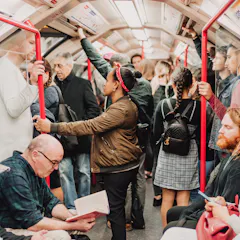
Our long-term research project found commutes over 3km were associated with a greater likelihood of being overweight.

Flexible working can bring people autonomy and joy, but so can feeling part of a team at the office.

It turns out that there are some benefits to all the time we spend commuting.

A survey of more than 2,000 people as Melbourne reopened after COVID lockdowns shows the pandemic and digital technology have made the city less a place of work, more a place to visit now and then.

Performance reviews were always a challenge, but even more so in the age of hybrid work, when some employees are in the office more often than others.
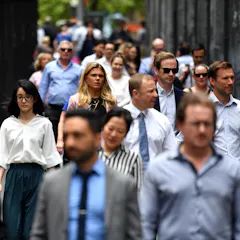
The first national study of Australian working arrangements since the end of work-from-home directives shows remote work is here to stay.

An increasing number of workers are demanding a more human-centric work environment, with space to express trust and vulnerability.
Organizations can reduce some of the negative effects of the COVID-19 pandemic. Providing customizable support measures can improve employees’ work commitment and well-being.

How we read messages is as important as what we write when it comes to happy workplace relations – especially in lockdowns or when working from home.
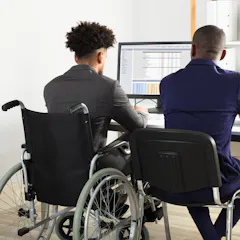
Hiring people with disabilities isn’t just the right thing to do, it’s a smart business strategy.

Our approach to work has had to adjust, so let’s change even more.
Top contributors
-

Research professor at the Warwick Institute for Employment Research, University of Warwick
-
Professor of Organisational Behaviour, Warwick Business School, University of Warwick
-
Associate Professor, Business Administration, McGill University
-
Distinguished Business Research Professor of Organizational Behaviour, McMaster University
-
Research Fellow in Public Health, Stockholm University
-
Professor, Northern Kentucky University
-
Professor of Management, Deakin University
-
Professor of Management, Babson College
-
Professor of Ethics and Business Law, University of St. Thomas
-
Research in Epidemiology, Stockholm University
-
Professor of Organisational Behaviour, University of Canterbury
-
Lecturer, The University of Melbourne
-
Assistant Professor of Management, Rutgers University
-
Senior Research Fellow and Lecturer, Human Resource Management and Technology, Münster University of Applied Sciences
-
Program director of Interior Architecture, Adelaide University