

Lewd customers, backstabbing co-workers and managers making unrealistic demands can take a toll.
Articles on Objectification
Displaying all articles

Past research has looked at the objectification of women and violence against them. Our new study makes it personal.

Mirrors, selfies and knowing other people are looking at you all cause people to think of themselves as objects. Video calls are all three in one and are likely increasing the harms of self-objectification.

If we learn how to disengage from communication circuits that lay the groundwork for fear and aggression, we have a better chance of managing conflict constructively.

Ample research demonstrates the harms Instagram causes teen girls, especially around body image. Meta is now facing the consequences of knowingly marketing a harmful service.

Virtual assistants and robots are frequently given female attributes. To curb the massive use of such gendering in AI, we need to better understand the deep roots of this phenomenon.

We can teach young people to respond more critically to pornography, helping them assess and respond to pornography’s influence.

It can happen at work, on the street or at home – even by the people who love us. Everyday sexism might be hard to pin down, but it’s pervasive and creates an additional layer of stress for women.

Uganda’s tourism ministry has launched a beauty pageant to use local women to attract tourists.

Perfectionism-driven social anxiety means young men will also be susceptible to ideological scripting of behaviour on TV.

The unpleasant influence of the adult entertainment industry.

Hefner’s iconic Playmates, a scholar argues, need to be understood within their historical context, when men and especially women were expected to uphold strict standards of sexual propriety.

To properly address the social harm of online privacy invasions, such as in the “CanadaCreep case,” Canada must devote federal attention to strengthening its minimal and unclear privacy laws.
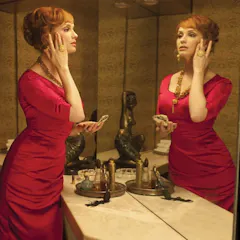
Women experience negative effects from the objectification that’s common in our society. What happens if they try to seize the reins and elicit sexualized attention in their romantic relationships?

We spend most of our waking hours at work, but are we really ourselves when we step through the door?

The money might be a little better, but the lewd comments and unwanted advances may have a negative impact on the mental health of waitresses.

Our new research shows the culture of sexualisation not only affects how young girls see themselves, but also how they are treated and viewed by adults.
Top contributors
-

Professor of Psychology, The University of Melbourne
-
Professor of Psychology, University of Tennessee
-
Reader in Education with Psychology and Centre for Death and Society, University of Bath
-
Adjunct Instructor of History, Colorado State University
-
Principal Lecturer, Corporate Education, Faculty of Business and Law. Anglia Ruskin University. Human Resource Management, Anglia Ruskin University
-
University of Tennessee
-
Honorary Research Fellow, The University of Melbourne
-
Professor of Psychology, Monmouth University
-
Master's Student in Psychology, Villanova University
-
Senior Lecturer in Philosophy, University of Lancashire
-
PhD Candidate in Social Psychology, University of South Florida
-
Lecturer, Department of Forestry, Biodiversity and Tourism, Makerere University
-
Professor, Department of Communication Arts, University of Waterloo
-
Tourism Lecturer and Gender and Development Specialist, Makerere University
-
Professor of Sociology, School of Justice, Queensland University of Technology