

COVID-19 has shown that what’s known as financialization in seniors housing has intensified the profit-seeking approach of private owners, with harmful outcomes for residents and workers alike.
Articles on Nursing homes
Displaying 41 - 60 of 82 articles
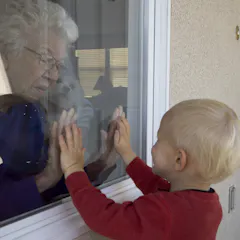
Prejudice toward older Americans can impact their physical and emotional health.

While nursing homes have accounted for more than half of COVID-19 deaths in some states, they’ve barely been a factor in others. Three experts explain why.
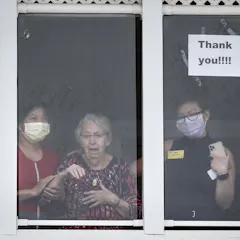
Nursing homes and long term care in Canada are predominantly staffed by immigrant women, migrants and refugees — mostly women of colour.
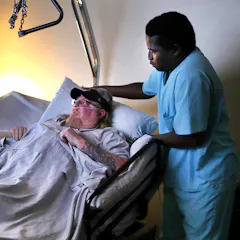
Home health care is a much trickier question after COVID-19, and that becomes an issue for millions of older people who rely on home health care, as well as the workers who care for them.

The draft visitor access code for aged care balances residents’ rights to see their family with the need to keep coronavirus under control. But the changes will require more staff time to implement.

Audiologists recommend enhanced communication strategies in the time of coronavirus to help the nearly 60 million Americans living with hearing loss in one or both ears.
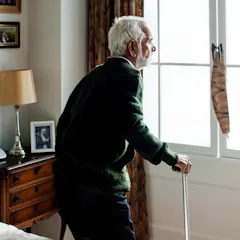
For many people living in residential aged care, their priority is quality of life, not length of life. So how do we reconcile this with the need to restrict visitors during the coronavirus pandemic?

Nursing homes in the U.S. are not ready to care for coronavirus patients. Things need to change – fast.
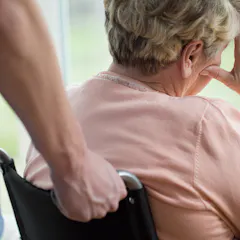
We took a close look at breaches of aged care standards in 2019 to see what effect the new aged care standards are having, and where aged care providers are falling short.

We interviewed older gay men, lesbian women, and trans women about their perceptions of residential aged care. Our research shows we need to make aged care safer for LGBTI+ people.
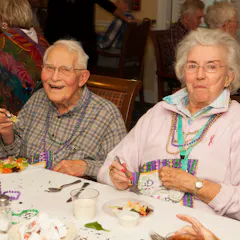
Assisted living facilities are one option for seniors. But finding clear and accurate information about them isn’t easy.
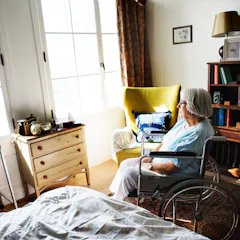
Expanding suicide prevention frameworks to include aged care residents, aligning nursing home life with community living, and improving residents’ access to mental heath services will be key.
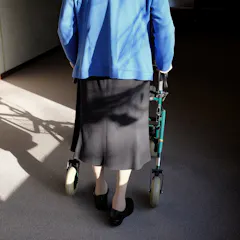
The aged care royal commission’s interim report paints a picture of a system in deep crisis. Its recommendations for action have some merit, but won’t address what are underlying, systemic problems.
The aged care workforce is 90% women and 30% migrant. The royal commission might find that’s why it lacks clout.

Australia’s rich diversity is reflected in its older population. It’s time our nursing homes do the same.

It’s all very well having rights. But what do these rights really mean when you’re with your GP, in hospital or in a nursing home?

Bureaucratic ‘red tape’ has contributed to the current crisis in our aged care system. We need a system of accountability that focuses more on residents’ outcomes, and less on processes.

Ever more Americans are using digital cameras to keep an eye on elderly relatives who live in nursing homes. This surveillance may violate patients’ privacy and demoralize their caretakers.
While the majority of aged care funding comes from government, residents also have to contribute. Here’s how the payment system works.
Top contributors
-

Professor, Aged Care Medical Research Australian Centre for Evidence Based Aged Care, La Trobe University
-
Professor Emeritus of Social Behavioral Sciences, University of California, San Francisco
-
Professor, Director Florida Policy Exchange Center on Aging, University of South Florida
-
Assistant Professor, Department of Finance, HEC Montréal
-
Research director (CNRS), Toulouse School of Economics – École d'Économie de Toulouse
-
Assistant Professor, Economics, Carleton University
-
Research fellow, Monash University
-
Research Assistant, Monash University
-
Associate Professor, Monash University
-
Professor of Nursing Aged Care (Dementia), University of Technology Sydney
-
Investigative Journalist, The Conversation
-
Professeure titulaire en Sciences Economiques, Université du Québec à Montréal (UQAM)
-
Assistant Professor, Economics, University of Groningen
-
Instructor, School of Aging Studies, University of South Florida
-
Distinguished Research Professor of Sociology, York University, Canada