
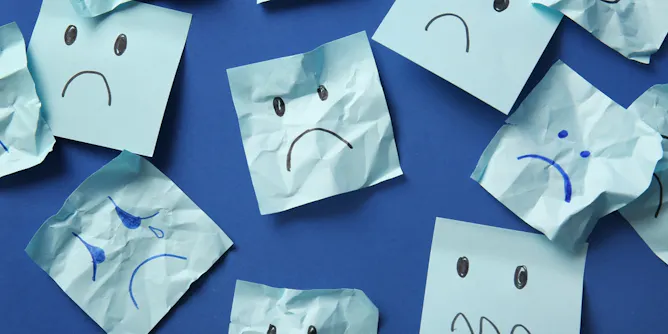
The nocebo effect is the opposite of the placebo effect. And it can affect what we think of medicines, and the side-effects we report.
Articles on Nocebo effect
Displaying all articles

Diet plays an important role in human health, but how it does so — especially among those with gastrointestinal diseases — becomes complicated by the emotional and psychological aspects of eating.
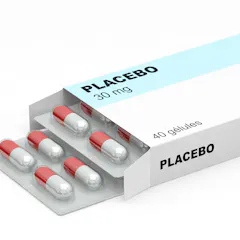
Placebos are the closest thing to magic that medicine has discovered.

Studies show if medical staff talk about potential side effects in negative terms, the patient’s experience can worsen. We need to consider this ‘nocebo’ effect when talking about COVID vaccinations.
The mind is a powerful thing – it can generate both symptoms of illness and symptoms of healing. Here’s what this could tell us about consciousness.

The nocebo effect could be making more people ill.
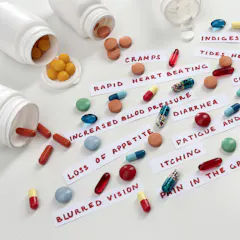
Recent evidence about the existence of nocebo effects has revealed that the way patients are informed about treatment side-effects is unethical.

Studies suggest electrosensitivity is a “communicated” disease, spread by people hearing about the alleged dangers, and sometimes worrying themselves sick.

Doctors break no law in using a placebo, but may cross an ethical boundary in choosing not deceive a patient, or to facilitate a patient’s self-deception.

Wi-Fi networks are everywhere, from cafes and libraries to shopping centres. So should we be worried now a French woman has won compensation after she complained of an allergy to Wi-Fi?

The Australian newspaper’s campaign against wind farms continued this morning with a page one story from the paper’s environment editor Graham Lloyd.

The out-going head of the National Health and Medical Research Council (NHMRC) Warwick Anderson confirmed in Senate Estimates recently that calls for research proposals for up to a total of A$2.5 million…

The Australian Medical Association has released a statement once again affirming that there is no evidence that wind farms harm human health. Geoffrey Dobb, chair of the AMA’s Public Health Committee…

There is no reliable or consistent evidence that proximity to wind farms or wind farm noise directly causes health effects. That’s the finding of the National Health and Medical Research Council’s (NHMRC…

Despite at least 19 reviews of the scientific evidence universally concluding that exposure to wind farm sound doesn’t trigger adverse health effects, people continue to report feeling unwell because they…

A surge in health complaints linked to wind farms could owe more to increased discussion of health risk than the low-level sound generated by the actual turbines, according to a new study. The study by…
A study of mine published last night delivers a double whammy to those who argue that wind turbines cause health problems in communities. Earlier this week researchers at the University of Auckland published…

At the beginning of this year I started collecting examples of health problems some people were attributing to wind turbine exposure. I had noticed a growing number of such claims on the internet and was…

There’s good evidence showing expectations to get better have significant effects on how patients suffering a variety of ailments feel. This is called the placebo effect from the original meaning in Latin…
Top contributors
-

Emeritus Professor in Public Health, University of Sydney
-
Professor and Director of the Stoneygate Centre for Excellence in Empathic Healthcare, University of Leicester
-
PhD candidate in psychological medicine, University of Auckland, Waipapa Taumata Rau
-
Director Radiation Research and Advice, Australian Radiation Protection and Nuclear Safety Agency (ARPANSA), and Adjunct Associate Professor, University of Wollongong
-
Lecturer, Australian National University
-
Postdoctoral Researcher, Anthropology, London School of Economics and Political Science
-
Senior Lecturer in Psychology, Leeds Beckett University
-
Associate Professor in General Practice, University of Otago
-
PhD candidate, Medical Sciences, Physiology and Pharmacology, McMaster University
-
Professor and Head of School in the School of Psychology, University of Sydney
-
Senior Lecturer, Australian National Centre for the Public Awareness of Science, Australian National University
-
PhD candidate, Sydney Placebo Lab, University of Sydney
-
Professor of Neurophysiology, Department of Physiology, Flinders University
-
Lecturer, University of Wollongong