
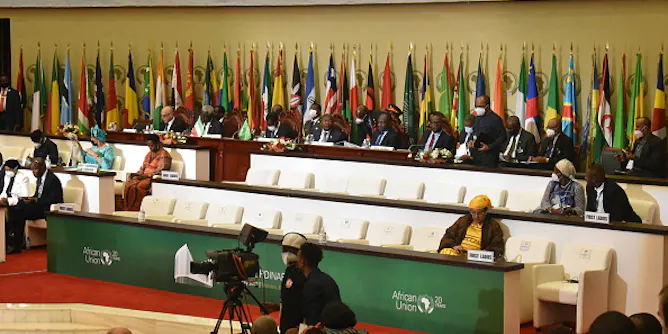
The AU’s first two decades have largely represented a magical, mystical world of unfulfilled expectations.
Articles on Nkosazana Dlamini-Zuma
Displaying 1 - 20 of 40 articles
Citizens must always be vigilant that the exceptional powers do not become permanent and that the powers are not used to achieve other objectives.
Ramaphosa’s rise to power in 2018 offered South Africans hope that he would end corruption. Indeed, he made promises to do so. But he has met with resistance, especially within the ANC.

South Africa’s lockdown rules started with high legitimacy. But it has been eroded and has now dissolved.

The judgment creates a new layer of uncertainty in an already highly fluid situation and heaps further unwelcome pressure onto government.
The Cabinet signals to the Zuma faction that the Ramaphosa group believes their star is waning and that they are not strong enough to turn the tide.
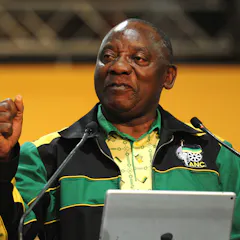
The ANC has lost so much support among its traditional voters it’s now forced to look beyond them to retain power.
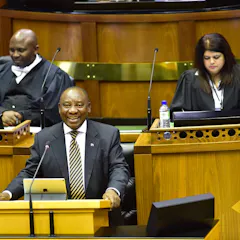
President Cyril Ramaphosa’s popularity has improved the favourability of the governing ANC among South Africans.
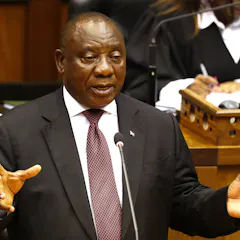
South Africa’s new president, Cyril Ramaphosa, has done well so far but more challenges relating to reigniting the economy lie ahead.
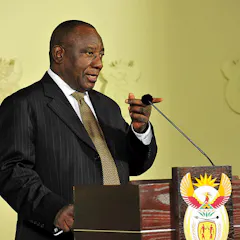
Overall South Africa’s new president has a cabinet that forms a team with whom he can work.
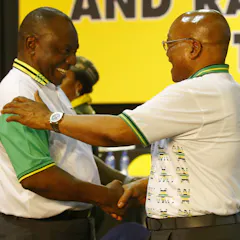
President Jacob Zuma’s camp is pushing to have him replaced by an interim leader as an excuse to prolong his disastrous rule for their own benefit.
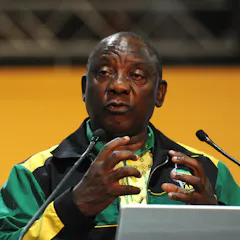
Free university education and land redistribution without compensation have far-reaching implications for South Africa’s economy, and requires exceptional leadership.
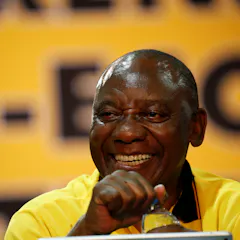
South Africa’s ruling ANC has a new leader - Cyril Ramaphosa. But this doesn’t mean that the country is out of the woods. Political instability remains a real possibility.
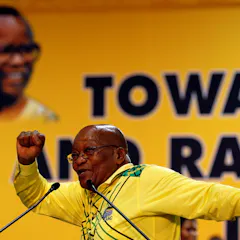
Zuma’s last address to South Africa’s governing party, the ANC, as its president, betrayed his strange way of dealing with issues. He came across as delusional and self-indulgent.
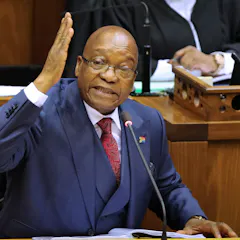
Changing the South African system to allow for direct election would require the country to look carefully at how a directly elected president should be held accountable to parliament.
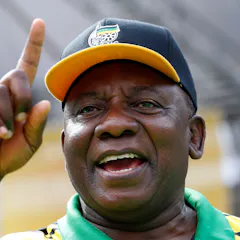
The ANC’s elective conference has very important implications for South Africa’s future. Whoever leads determines the kind of leader the country will get, and what policy trajectory will be taken.
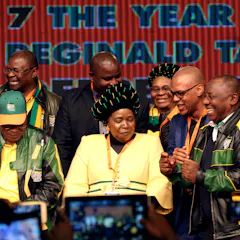
The race for the presidency of South Africa’s governing ANC will go down to the wire. Exact calculations for the frontrunners are impossible and the result is likely to be known by 17 or 18 December.
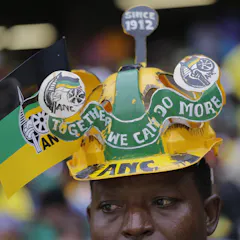
The ANC’s elective conference is important for the party and South Africa. This is because the person chosen to lead the governing party since 1994, has gone on to become president.
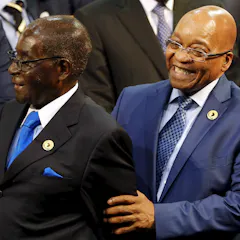
The unfolding misfortunes of Zimbabwean President Robert Mugabe hold key lessons for his South African counterpart Jacob Zuma who faces the possibility of a forced exit.
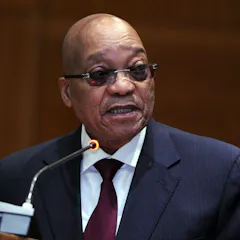
South Africa’s President Jacob Zuma’s loss in the Appeals Court forms part of three milestones in his recent history dominated by corruption, unethical conduct and a knack to avoid criminal charges.
Top contributors
-

Professor of Sociology, University of the Witwatersrand
-
Political Scientist, University of the Western Cape
-
Professor of Public Affairs, Tshwane University of Technology
-
Visiting Professor and Professor Emeritus, University of the Witwatersrand
-
Professor in Political Science, University of South Africa
-
Professor of Political Studies, University of Johannesburg
-
Emeritus Professor, University of Cape Town
-
Emeritus Professor of International Relations, University of Pretoria
-
Professor of World Politics, SOAS, University of London
-
Associate Professor of Political Science, University of Johannesburg
-
Senior Research Fellow, Centre for the Study of Governance Innovation, University of Pretoria
-
Professor of International Relations, London School of Economics and Political Science
-
Associate Professor of Law, North-West University
-
Professor and Senior research fellow, Centre for the Advancement of Scholarship, University of Pretoria
-
Professor in Geography and Head of the African Centre for Disaster Studies, North-West University