
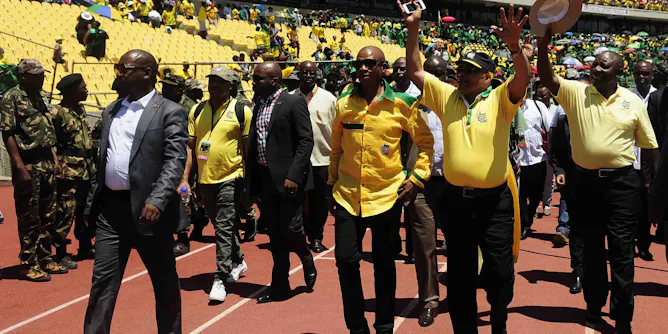
The decline in support for the ANC suggests that coalition governments will become increasingly common in the country, affecting its appointment policy.
Articles on ANC factions
Displaying 1 - 20 of 82 articles
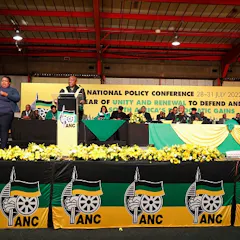
The country’s long-dominant party has been losing support in elections.
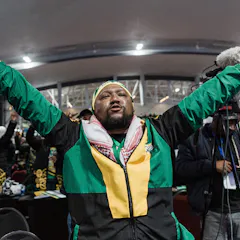
Despite its vagueness, the RET has become central to the contemporary ANC. It is destined to remain a powerful bloc within the party, and a constant constraint on Ramaphosa leadership.

South Africa has long been seen as deficient in dealing with terrorism financing.

Parliament’s failure to live up to its constitutional mandate was noted by the State Capture Commission as having enabled former president Zuma’s regime to corrupt state behaviour with ease.
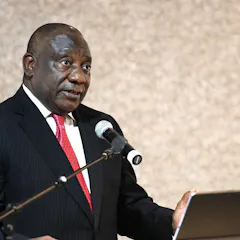
Ramaphosa’s presidency has been dogged by several controversies related to his business interests.
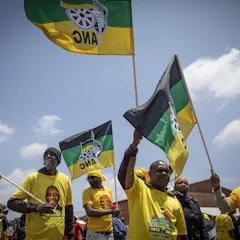
The deliberations were characterised by disingenuous, counter-factual policy pronouncements, and de facto denials of the ANC’s culpability in causing many of the current problems facing the country.

The country is still a very different political space. It’s a noisy democracy with a free media, lots of dissenting voices, and insulting the government doesn’t carry any overt sanction.
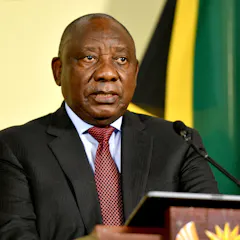
The ANC has been using multiple tactics to fend off the looming calamity of not having Ramaphosa as its president, and that of the country, in the clear absence of a credible candidate to replace him.
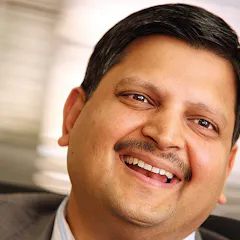
A judicial commission into state corruption found that the Gupta family influenced former President Jacob Zuma’s political decisions.
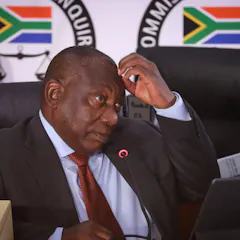
Rebuilding South Africa after the devastation of state capture would not be possible without the work of the Zondo commission.

The ANC retains its determination to rule yet lacks the capacity to do so effectively. The only way out of the dilemma is its defeat in an election.
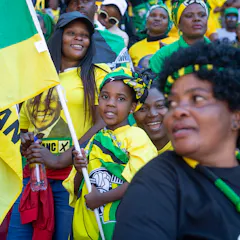
Exactly when the ANC’s reign will end rides on what the party does or does not do between now and its elective conference in 2022.

The violence wreaked its damage because South Africa’s journey to democracy remains incomplete. It sends a sharp message that the country must look its past far more squarely in the eye.
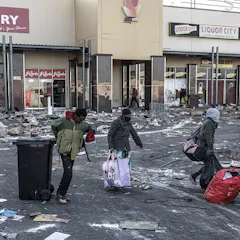
South Africa can’t possibly remain the same country in the aftermath of this mayhem. There are just too many storms ahead to simply continue unchanged.
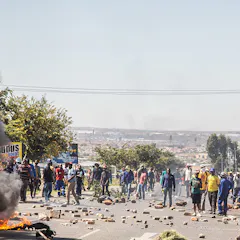
The problem in municipalities is not that the wrong people are being chosen. It is that the wrong people are doing the choosing – not only of candidates but of what they do if elected.

Ramaphosa is set to go down in the annals of history as an ANC president who presided over a tumultuous epoch in the party’s evolution.
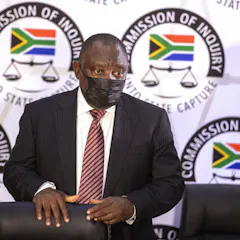
Unlike most politicians but typical of a negotiator, South Africa’s president has not put his plans on the table for public scrutiny.
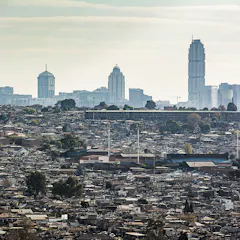
In the country’s insider politics, the majority who try to survive outside the formal economy are talked about, but are never heard.
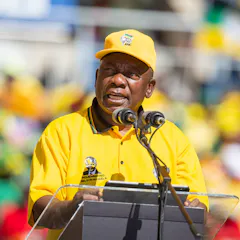
Ramaphosa’s rise to power in 2018 offered South Africans hope that he would end corruption. Indeed, he made promises to do so. But he has met with resistance, especially within the ANC.
Top contributors
-

Professor of Political Studies, University of Johannesburg
-
Professor of Sociology, University of the Witwatersrand
-
Professor in Political Science, University of South Africa
-
Political Scientist, University of the Western Cape
-
Emeritus Associate Professor in Public Law, UCT. Visiting Adjunct Professor, WITS School of Governance; Director, Africa Programme, University of Cambridge Institute for Sustainability Leadership, University of Cambridge
-
Visiting Professor and Professor Emeritus, University of the Witwatersrand
-
Professor of Public Affairs, Tshwane University of Technology
-
Associate Professor of Political Science, University of Johannesburg
-
Head: Wits School of Governance, University of the Witwatersrand
-
Professor Emeritus of Public Law, University of Cape Town
-
Director, African Centre for the Study of the United States, University of Pretoria
-
Executive director, Africa Institute of South Africa, Human Sciences Research Council
-
Associate researcher, University of the Witwatersrand
-
Professor of Urban Governance, University of the Witwatersrand
-
Chief Research Specialist., Human Sciences Research Council