
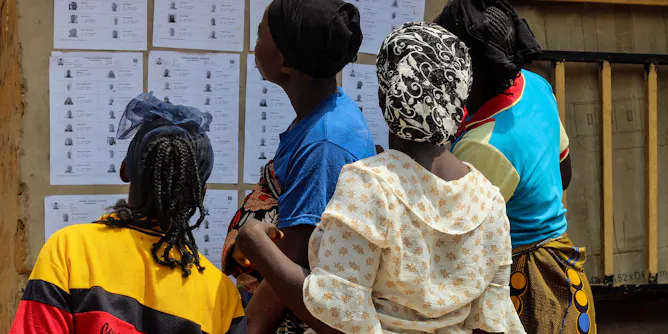
It’s not lack of ambition that keeps young women out of politics.
Articles on Nigeria elections 2019
Displaying all articles
One year after the 2019 general elections in Nigeria, courts and not the electorate, are busy deciding actual winners of the polls.

What role do foreign actors play in African elections? Cambridge Analytica’s case sheds some light.
CC BY-NC-ND6.48 MB (download)
WhatsApp can amplify and complement a candidate’s ground campaign. But it cannot replace it.
Nigeria has the world’s highest number of out-of-school children and over 60 million of its citizens are illiterate. Here’s what the country can do to improve its education sector.
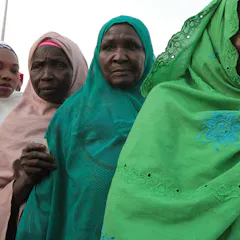
While the 2019 presidential election wasn’t perfect, it showed that democracy is gradually being entrenched in Nigeria.
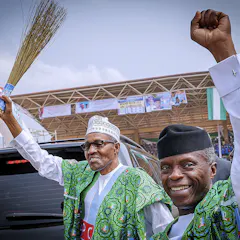
In the end, Buhari possibly won simply because the Peoples Democratic Party wasn’t offering a viable alternative.
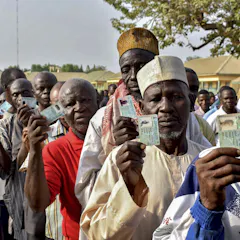
After a long history of botched elections, Nigerians are hopeful that the 2019 poll results will be more credible.
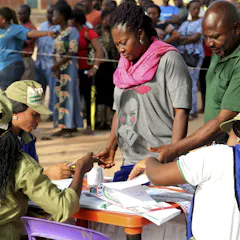
The electorate monitored political parties very closely, an indication that democracy in Nigeria is taking root.
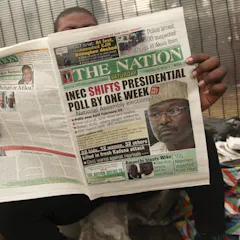
Regardless of how the elections are conducted on the new dates announced, losing parties will blame the postponement for their defeat.
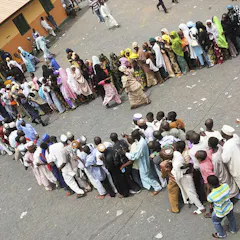
More than half of Nigeria’s 51% registered voters are aged between 18-35 years.
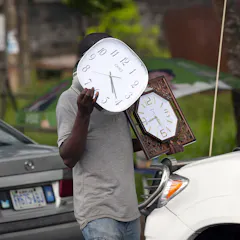
Most of the things Nigerians complained about in 2015 are still unresolved – unemployment, poverty and economic disempowerment.

African countries’ adoption of e-government platforms hasn’t served the majority of their citizens.
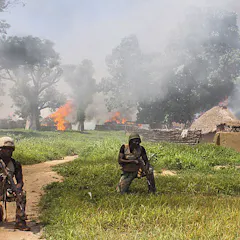
Nigerian President Muhammadu Buhari is hoping to be reelected but he’s fallen short on the country’s security challenges.
Top contributors
-

Associate professor in Politics and International Relations, Leeds Beckett University
-
Lecturer, Political Science, Obafemi Awolowo University
-
Research Associate, University of Bristol
-
Professor of Democracy, University of Birmingham
-
Associate Professor of Journalism & Mass Communication, University of Iowa
-
Professor of Economics & Business, Allegheny College
-
Prof, University of Pretoria
-
Associate Professor and Director, School of Journalism and Mass Communication, University of Iowa
-
University of Benin
-
Associate Professor, Institute of Political Science, Leiden University
-
Senior Research Officer, University of Essex