
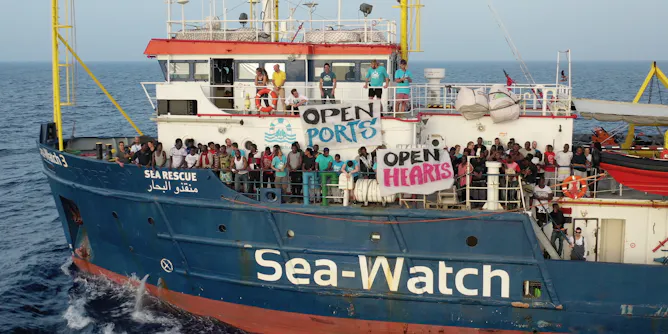
Carola Rackete, captain of an NGO search and rescue ship, was arrested by Italian authorities when landing in Italy. She isn’t the first to be criminalised for trying to save people at sea.
Articles on NGOs
Displaying 41 - 60 of 103 articles

As the cost of holding the Winter Games rises, local taxpayers around the globe are losing interest in hosting the event.

The ugly turn in Canadian-Cuba relations stemming from Canada’s new visa requirements puts at risk decades of creative, productive connections between Cuban and Canadian people.
Depending on foreign aid to pay the bills makes moving on when it’s gone harder.
Narendra Modi’s BJP views NGO activists as defiant because they challenge conventional notions of power, social structures and hierarchies that conflict with the idea of Hindu majoritarianism.

The mere presence of NGOs, no matter their size or aims, inadvertently reduced the legitimacy of local village headmen.

India has become a difficult place for NGOs to operate.
It’s not necessarily because of Islamophobia.

Legislators in a growing number of democracies are clamping down on civil society. In the United States, it’s happening at the state level.

Sierra Leone has declared a national emergency to combat rape and sexual violence.
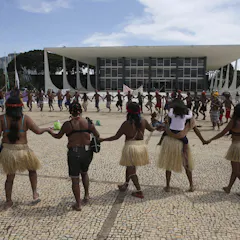
Brazil’s new president could clear the way for plans to develop remote areas around the Tapajos River basin over the objections of the indigenous people who live there.
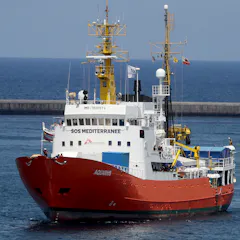
Gibraltar’s decision to terminate permission for the Aquarius to conduct operations in the Mediterranean is the latest example of national politics undermining rescue at sea.
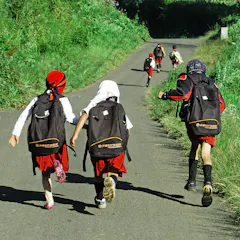
A new regulation makes it easier for the government to contract local NGOs.

The international aid sector’s use of languages needs to change if it is serious about dealing with the issues raised by recent scandals.
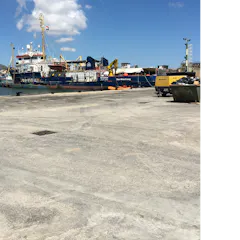
The Sea-Watch 3 vessel has been prevented from leaving Malta to continue its search and rescue operations in the Mediterranean.
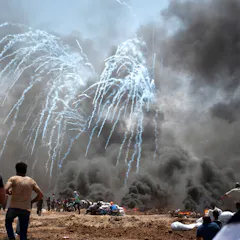
International NGOs are promoting a ‘resilience agenda’ that masks their own failings in Palestine.
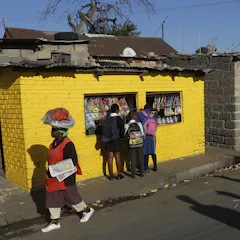
The majority of South Africans are separated from the wealthy and formal-sector employed minority.

AI seems able to answer questions at the heart of humanitarianism – questions such as who we should save, and how to be effective at scale.
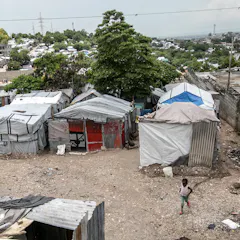
It’s all too easy to miss the point about sex work in areas hit by conflict and disaster. How about listening to the people who experience it?

Regulation adds operational costs that are often inefficient to the delivery of services, or even completely unnecessary.
Top contributors
-

Senior Lecturer in International Relations, University of Portsmouth
-
Professor of International Politics, University of Warwick
-
PhD Candidate, Department of Political Science, McMaster University
-
Assistant Professor of Public Policy, University of Maryland
-
Associate Professor of Political and International Studies, Rhodes University
-
Associate lecturer, University of Sydney
-
Médecin, Fondation Maison des Sciences de l'Homme (FMSH)
-
sociologue (Institut des mondes africains), École des Hautes Études en Sciences Sociales (EHESS)
-
Professor, James Cook University
-
Senior Lecturer in Politics and International Relations, University of Liverpool
-
Leverhulme Early Career Fellow, University of East Anglia
-
Professor & Canada Research Chair in Global Women's Issues, Western University
-
Doctorante en sociologie, Université Sorbonne Paris Nord
-
Distinguished Research Professor and Australian Laureate, James Cook University
-
PhD Candidate, Cambridge Judge Business School