

With H5N1 now in New Zealand, protecting the most threatened birds will involve difficult decisions, careful prioritisation – and sometimes chance.
Articles on New Zealand birds
Displaying all articles
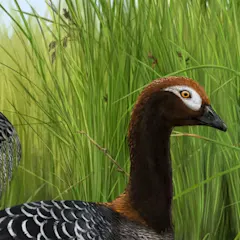
The newly described fossil goose Meterchen luti lived alongside crocodilians and turtles on the shores of the ancient Lake Manuherikia.
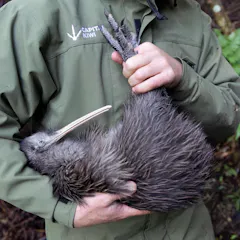
A recent announcement that kiwi and moa are Australian immigrants is not borne out by available evidence. Working out when birds arrived in New Zealand requires both fossil evidence and genetics.
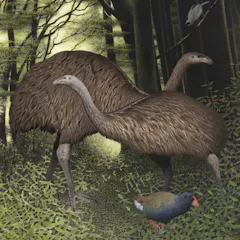
Reconstructing the demise of New Zealand’s extinct moa can help conserve the country’s remaining flightless birds, which are retreating to the same final places - cold, isolated mountaintops.
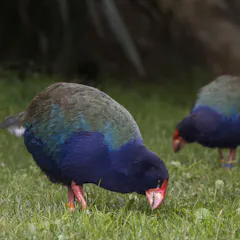
Examining the DNA of the takahē has upended long-held beliefs about how the flightless bird ended up on the southwestern tip of New Zealand. This new knowledge can help future conservation efforts.
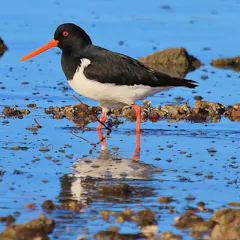
When scientists first thought to deceive predators with bird smells, the idea seemed crazy. But after seeing how fake news messes with the minds of both humans and animals, it now makes sense.
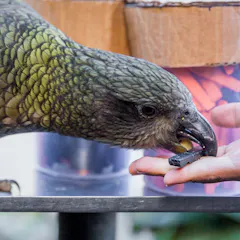
Kea were able to correctly guess the most probable scenarios, by evaluating various physical and social cues. Previously, only great apes and humans were known to be able to understand probability.
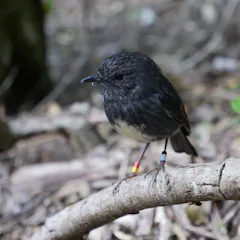
The New Zealand robin has learnt to hide left-over food for later consumption, and it turns out that male birds with the best spatial memory have the greatest breeding success.

Inbreeding and male infertility could be impeding the recovery of one of New Zealand’s threatened birds - the stitchbird, or hihi. Hihi sperm might hold the answer, and help raise funds for conservation.

New research suggests that New Zealand’s bizarre nocturnal parrot, the kākāpō, needs plant hormones to breed successfully.
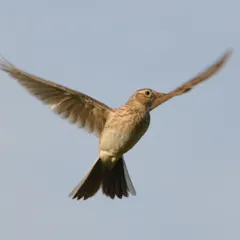
Latest results from garden bird surveys in New Zealand show that at least six non-native species have declined over the past decade.
Top contributors
-

Associate Professor in Ancient DNA, University of Otago
-
Curator of Vertebrates, Museum of New Zealand Te Papa Tongarewa
-
Professor of Animal Behaviour, University of Canterbury
-
Research Associate, Ecology and Evolution, Adelaide University
-
Professor of Global Change Ecology, Adelaide University
-
Professor emeritus, State University of New York College of Environmental Science and Forestry
-
Senior Lecturer in Reproductive Biology and Biotechnology, Te Herenga Waka — Victoria University of Wellington
-
Discovery Early Career Research Fellow, University of Sydney
-
Senior Lecturer in Ecology and Evolution, Adelaide University
-
Lecturer, Te Herenga Waka — Victoria University of Wellington
-
Researcher, Department of Zoology, University of Otago
-
Research fellow in conservation genetics, University of Otago
-
Postdoctoral Research Fellow in Molecular Ecology, University of Otago
-
Professor of Ecology, Lincoln University, New Zealand
-
Professor of Conservation Genomics, University of Canterbury