

For both Roman gladiators and modern-day mixed martial arts participants, physical contests become moral dramas about sacrifice and human limits. That has led today’s fighters to right-wing politics.
Articles on Nero
Displaying all articles
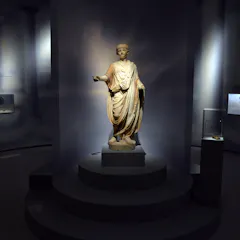
Nero, Rome’s emperor from 54 to 68 C.E., rose to power at a young age and remained focused on himself, letting the needs of citizens fall to the wayside.
The Roman Stoic Seneca is the author of many letters and dialogues that can help us overcome adversity.
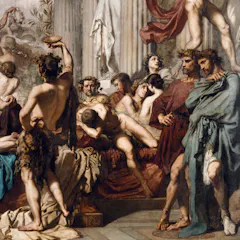
The oldest surviving novel in Latin literature, Satyricon follows three young men on their misadventures and homosexual love triangle.

The Roman senate declined from a long-held position of authority under the Roman Republic to become almost wholly reliant on the whims of a given emperor, writes a classics scholar.

The Monteverdi opera exploring passion in ancient Rome has been transposed to a contemporary gangster setting in a new Sydney production.

The image of cowering Christians being thrown to the lions by Roman emperors is a grisly staple of popular culture. But how accurate is it?
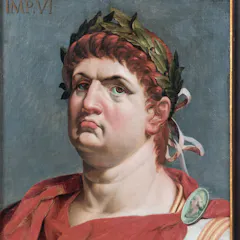
The image of a crazed and capricious Emperor Nero is immortalised in popular culture: from fiddling while Rome burns to having a sexual relationship with his mother. The historical evidence, however, is rather different.
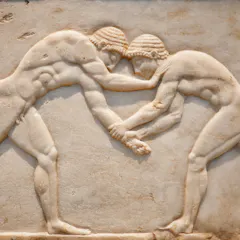
There’s plenty of evidence to suggest that attempts to manipulate the outcome of the competitions are as old as the Games themselves.
Top contributors
-

Assistant Professor of Classics, University of Cambridge
-
Professor of Classics and Head of the Centre for Classical Studies, Australian National University
-
Professor in Philosophy, Australian Catholic University
-
Professor of Classics and the Director of Peace and Conflict Studies, College of the Holy Cross
-
Associate Professor of Classics and Ancient History, UQ, The University of Queensland
-
Brooks and Suzanne Ragen Professor of Classics, Yale University
-
Honorary associate, Sydney College of Arts, University of Sydney
-
Research Professor, University of Michigan
-
Professor, Department of Classics and Ancient History, University of Sydney