

Ross Garnaut’s new book Reset argues for much bolder approach to employment, debt, interest rates and basic income than is widely envisaged.
Articles on negative interest rates
Displaying all articles

UK banks have been given six months to prepare for rates going below zero.

If the Reserve Bank had acted as it usually does, the cash rate would have dipped briefly negative in August.

All sorts of transactions are “two-way value exchanges” in which it isn’t clear in which direction the money should flow. The proposed media bargaining code is one of them.

Australia is being paid to borrow. For those funds at least, borrowing is the opposite to a burden on the budget.

Yes, the bank would effectively pay you to borrow money. But negative interest rates won’t please savers, nor will they meet the big challenges of economic recovery.

There’s more to that Coronavirus. Even before it, businesses weren’t keen to invest.
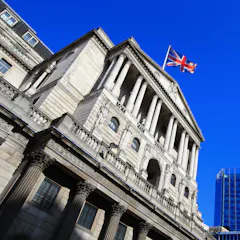
The bank has so far shied away from negative rates but it is running out of other firepower.
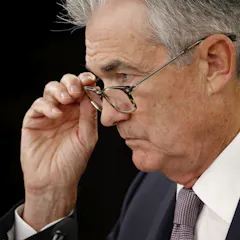
The US economy may be in worse shape than it seems.

With a relatively low debt to GDP ratio, Australia was never at risk of becoming Greece. But Germany, with negative interest rates and scant prospects for economic growth, is an open question.
The Reserve Bank’s best case scenario is that its forecasts are wrong.
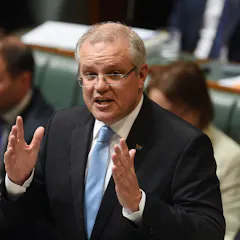
While Australia faces its greatest economic challenges in a generation, we are still waiting for the greatest economic reformers in a generation to arrive.
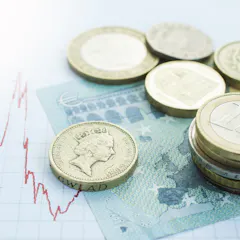
The FTSE rebounded after its Brexit shock – but how long will it last?
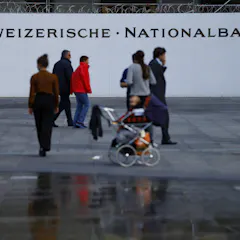
Negative interest rates are not the weapon some central bankers had hoped they would be.
Top contributors
-

Professor of Financial Economics, University of Leicester
-
Visiting Fellow, Crawford School of Public Policy, Australian National University
-
PhD candidate at the LSE and Research Fellow at the Superpower Institute, The University of Melbourne
-
Professor, Finance, UTS Business School, University of Technology Sydney
-
Professorial Research Fellow in Economics, The University of Melbourne
-
Professor, School of Economics, The University of Queensland
-
Lecturer in Economics, Monash University
-
Scientia Professor of Economics, UNSW
-
Professor of International Economic Affairs at The Fletcher School, Tufts University
-
Professor of Finance, University of Bristol
-
Senior lecturer, Canberra School of Government, University of Canberra
-
Adjunct Professor, Swinburne University of Technology