

What if there was a middle option between retention and abolition that made negative gearing work better? There are multiple ways to improve accountability for this $8 billion-a-year tax concession.
Articles on Negative gearing
Displaying 101 - 120 of 130 articles
The results of changing negative gearing are not as straight-forward as the government suggests.
The Turnbull government has lost its lead in the latest Newspoll, which has the Coalition and Labor 50-50 in the two-party preferred vote.

If Scott Morrison ever watched Joe Hockey and thought “how much better I could do”, he’s getting a rough lesson in humility.
In recent months the opposition has been on the policy front foot, but it’s a risky strategy that has had mixed success for both major parties.

Negative gearing is not the housing saviour those in the industry claim it to be.
The problem is there are already too many buyers willing to pay high prices, and negative gearing is designed to create more buyers willing to pay more.
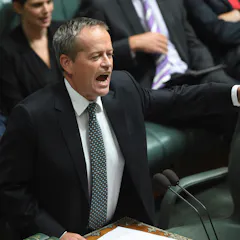
Even 12 months ago, challenging negative gearing seemed off limits. Now, there are real plans for reform.

The Australian Council of Social Service has called for the tax treatment of private trusts to be tightened, which it says could save $1.5 billion in 2017-18.

Fairfax-Ipsos’ first poll of 2016 has the government ahead 52-48% on the two-party vote and Malcolm Turnbull leading Bill Shorten 64-19% as preferred prime minister. While the numbers for the Coalition…
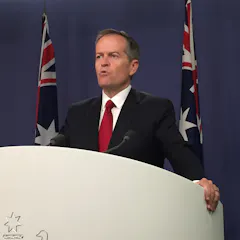
Bill Shorten has unveiled tax changes that will tighten negative gearing and capital gains tax provisions, saving $565 million over the forward estimates and $32.1 billion over a decade.
These three tax areas have become mired in poor analysis and misconceptions.

Assistant Treasurer Kelly O'Dwyer told the ABC that “average income earners largely are the people who do get to take advantage of negative gearing.” Is that a fact?
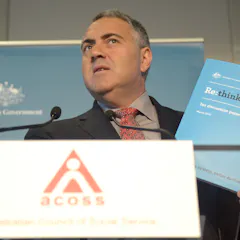
Even when everyone agrees on the need for reform, there’s no guarantee we’ll ever see it happen.

Lessons from the sharing economy could provide a housing solution for both buyers and sellers.
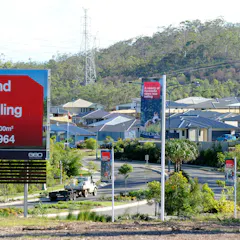
Real estate is favourably taxed in Australia, and it will continue to bite the housing market unless there is serious reform.

Almost 1.3 million Australian taxpayers use negative gearing. But the policy is inherently unfair.

There are well-rehearsed arguments both for and against removing negative gearing from property.

Australia’s current tax system distorts investor behaviour. Rethinking the entire structure could shift things for the better.

While policies such as negative gearing have helped middle to high income earners own property, they have also locked low income earners out of the market and created an unequal housing sector.
Top contributors
-

Professorial Fellow, University of Canberra
-
Adjunct Professor, Curtin Law School and Curtin Business School, Curtin University
-
Professiorial Fellow, The University of Melbourne
-
Visiting Fellow, Crawford School of Public Policy, Australian National University
-
Vice-Chancellor’s Fellow, University of Tasmania
-
Chief executive officer, Grattan Institute
-
John Curtin Distinguished Professor, Curtin University
-
Emeritus Professor of Housing, UNSW
-
Associate Professor of Taxation Law, UNSW
-
Program Director, Housing and Economic Security, Grattan Institute
-
Emeritus Professor of Housing and Housing Studies, RMIT University
-
Honorary Fellow, School of Social and Political Sciences, The University of Melbourne
-
Associate Professor, POLIS@ANU Centre for Social Policy Research, Australian National University
-
Professor of Urban Policy and Director, Urban Futures Enabling Impact Platform, RMIT University
-
Senior Lecturer in Finance, University of Sydney