
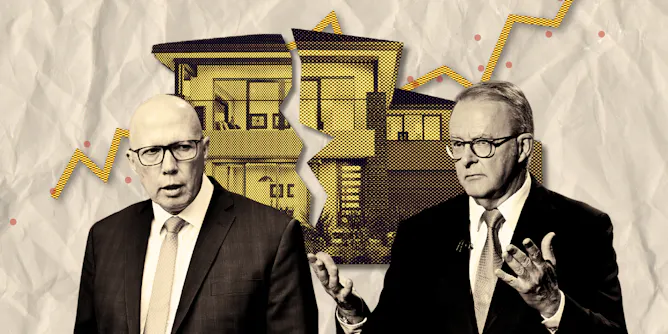
Labor and the Coalition have both made some big housing policy announcements this election, but there are real problems going unaddressed.
Articles on Negative gearing
Displaying 21 - 40 of 130 articles
If Dutton is serious about his tax plan, this is the most radical proposal we’ve heard for the election, apart from the nuclear policy.
Several options are available for meaningful tax reform, that would make Australia a fairer place for all generations. All it will take is some political courage.

My calculations suggest that if homeownership bounced back to 70% – where it was before a key tax change – an extra 430,000 homes would now be owned by the people living in them.
Is the government about to propose changes to negative gearing? The apparent differences between a bullish treasurer and a cautious prime minister leave us none the wiser.
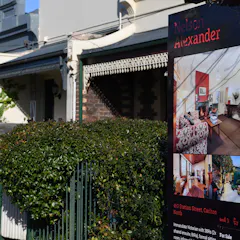
Australia needs bold new housing policies that don’t just rely on the taxation system but consider a range of measures to meet the housing needs of all Australians.
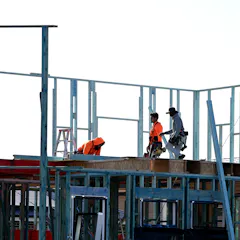
Limiting or scrapping negative gearing and the capital gains tax discount would help take the heat out of the market and give the government much more money to invest in social housing.
The opposition leader wants to restrict foreign investors to new properties. In 2016 and 2019 Labor wanted to restrict negative gearing to new properties.
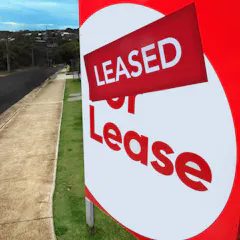
Australia’s rental crisis has been a long-standing problem and will not be repaired unless there is real reform of both supply and demand issues.

Australia builds only 45,000 new homes per quarter. If we really want to fix the rent crisis we’ll have to build more.

Negative gearing is popular because it lowers home owners’ tax bills. But its critics say it has reduced affordable housing stock keeping the less well off out of the market.

Even changing the tax system won’t end steadily-climbing property prices. They are the result of urbanisation, and while COVID has eased some of the pressures, it has added some more.

Genuine reform should include tackling tax concessions on superannuation, capital gains and trusts and redesigning the GST.
The Tax Office should prepare a test case to establish the limits of negative gearing. It might be more limited than has been widely assumed.

An astounding one in nine taxpayers negatively gear, costing Australia more than $2.7 billion a year. Here’s how we could get better value for that money – and supercharge investment in new housing.

Well-off investors with multiple properties own a majority of rental homes. They have no excuse not to do the right thing by their tenants.
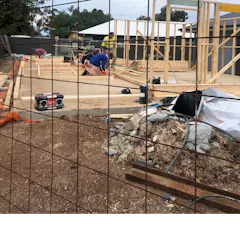
The people with the worst health often live in rental homes likely to make them sicker, and poor policy could make it worse.
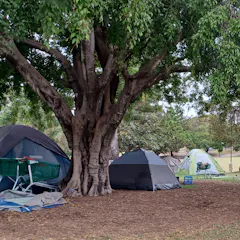
There are no ‘silver bullet’ solutions to a crisis that has left both renters and owners struggling. Only a comprehensive package of bold policies can ensure all Australians are securely housed.

Grattan Institute estimates point to deficits without end, growing with the need for greater spending on health, defence and natural disasters. We’ve presented the treasurer with 13 costed options.

Asked to choose the fairest ways to raise billions, half of the economists backed introducing inheritance taxes. Around a third chose winding back super tax concessions and increased resource taxes.
Top contributors
-

Professorial Fellow, University of Canberra
-
Adjunct Professor, Curtin Law School and Curtin Business School, Curtin University
-
Professiorial Fellow, The University of Melbourne
-
Visiting Fellow, Crawford School of Public Policy, Australian National University
-
Vice-Chancellor’s Fellow, University of Tasmania
-
Chief executive officer, Grattan Institute
-
John Curtin Distinguished Professor, Curtin University
-
Emeritus Professor of Housing, UNSW
-
Associate Professor of Taxation Law, UNSW
-
Program Director, Housing and Economic Security, Grattan Institute
-
Emeritus Professor of Housing and Housing Studies, RMIT University
-
Honorary Fellow, School of Social and Political Sciences, The University of Melbourne
-
Associate Professor, POLIS@ANU Centre for Social Policy Research, Australian National University
-
Professor of Urban Policy and Director, Urban Futures Enabling Impact Platform, RMIT University
-
Senior Lecturer in Finance, University of Sydney