

The government has announced several ‘practical changes’ to the NDIS. While these edge the scheme in the right direction, some impracticalities continue to underpin it.
Articles on NDIS
Displaying 161 - 180 of 263 articles

In a Sydney community centre, a group of artists with and without disabilities are showing how creativity can connect us all.

Michelle Grattan discusses the government’s new family law inquiry, and Australia being banned from the speaking list at the upcoming UN climate change summit.
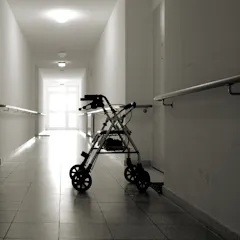
Around 6,000 Australians aged under 65 still live in nursing homes, cut off from their families and peers, with inadequate support for their disabilities.

Children with autism don’t usually begin therapy until they’re given a diagnosis, which rarely occurs before the age of two. But new research shows there’s benefit to starting early.
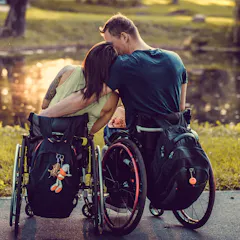
A woman with a disability has won the right to have a sex therapist funded under the NDIS. This sets a positive precedent, but the NDIS should go further and fund sex worker services, too.

Help with reading and writing increases the probability of receiving the Disability Support Pension by about 20%.
If you’re poor, female, or live in rural Australia, you’re less likely to access the NDIS or get as much bang for your buck.

Geoff Crisp speaks with Michelle Grattan about the week in politics.

The government now has a dedicated NDIS minister. Here are the four key areas of the scheme that need attention.

The experiences of Aboriginal and Torres Strait Islander Australians must be at the forefront of the Royal Commission into Violence, Abuse, Neglect and Exploitation of People with Disability.
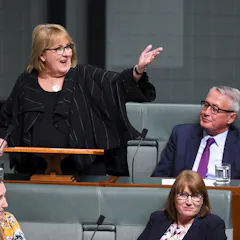
Jenny Macklin on inequality and Labor values
In this podcast she tells The Conversation a Labor government would fix "one of the worst" problems of the NDIS by abolishing the cap on the number of staff that could be employed in the agency.

Wanting to change a person’s autistic behaviours is like attempting to correct left-handedness or sexual preference. The modern workplace should see strength in difference.

Current rules about who meets the eligibility criteria for autism support services are patchy and inconsistent, meaning those with the greatest need don’t necessarily have the greatest access.

The NDIS has good intentions, but its design doesn’t seem to support the unique needs of Indigenous people living with a disability, particularly if they’re living in remote communities.

People with intellectual disability experience higher rates of mental ill health than the rest of the population, so NDIS can be doubly relevant.
The NDIS aims to help people with disability live more independently. It was hoped this would reduce carers’ responsibilities and allow them more time to work. But evidence shows this hasn’t happened.

The NDIS is required by law to provide ‘reasonable and necessary’ supports. But what this means is often subjective, and depends on the assessor.

We are getting closer to being able to apply private sector rigour to the examination of public sector projects with social benefits.

We don’t actually know how NDIS participants weigh their personal goals and then make choices about achieving them through services, supports, therapies and interventions.
Top contributors
-

Professor, Public Service Research, UNSW
-
Professorial Fellow, University of Canberra
-
Professor, Rehabilitation, Ageing and Independent Living Research Centre and Occupational Therapy Department, School of Primary and Allied Healthcare, Monash University
-
Deputy Director, The Kids Research Institute Australia, Professor of Autism Research, The University of Western Australia
-
Adjunct Professor, Summer Disability Research Centre, La Trobe University
-
Professor, University of Sydney; RMIT University
-
Disability Program Director, Grattan Institute
-
Senior Research Fellow, Crawford School of Public Policy, Australian National University
-
Head of Autism Research and Senior Principal Research Fellow, The Kids Research Institute Australia
-
Professor, Social Policy Research Centre, UNSW
-
Senior Lecturer in Public Policy and Politics, UNSW
-
Senior Lecturer of Wellbeing Science, The University of Melbourne
-
ARC Research Fellow in Indigenous Health, Disability and Community Development, University of Sydney
-
Senior Lecturer Economics, Deakin University
-
Adjunct Senior Research Fellow, Living with Disability Research Centre, La Trobe University