

The NDIS review found a lack of clarity about what supports should be considered ‘reasonable and necessary’ was at the heart of many of the scheme’s problems.
Articles on NDIS
Displaying 81 - 100 of 263 articles
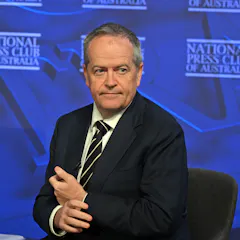
Bill Shorten joins us on the podcast today to discuss the recent NDIS report and how he sees its path forward in modern Australia.

5 disability experts tell us their initial thoughts about plans to reform the NDIS and make it sustainable
Ahead of Thursday’s release of the review into NDIS, the states have agreed to provide more and expanded services for people with disability in exchange for an extension of the GST top-up.
While the latest poll gives the Labor government a comfortable lead, this is not supported by other polls.
The government seeks to end the year with a series of new announcements, but the ongoing crisis with the high court decision overshadows the government’s work.

What fell away when the NDIS was rolled out? And what are the chances of such services being revived?

We’re getting better at early identification and adult diagnosis has contributed to NDIS numbers. But functional impairment is likely to be given greater emphasis in the NDIS reboot.

Currently, when someone turns 65 they are not eligible to apply for NDIS support, even if they had disability before then. We asked experts if that should change.

Over 20% of people diagnosed with brain cancer survive longer than five years. But the NDIS may not recognise their need for support to live, work, learn and play.
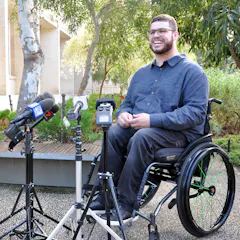
In this podcast, Greens Senator and disability advocate Jordon Steele-John, who campaigned for the Royal Commission, joins The Conversation to give us his take on the report.

The new Quarterly Essay weaves personal history and detailed policy analysis, examining the unintended consequences of the NDIS, and how we can best realise the scheme’s original intent.

Parents are their child’s first and most important supports. Parents and carers of children with disability need help to maximise this relationship – and the NDIS should provide it.

Many students with a disability are bullied, excluded and do not feel welcome in Australian schools. They cannot be ignored in the next National School Reform Agreement.

Developmental delay is viewed clinically as a temporary state where children are slower to develop than expected. It is most often used for children under five.

We spoke to young people with intellectual disability. They had the same goals for life after high school as most people their age. But they felt ‘stuck’.

Research shows nearly 20% of the poorer mental health reported by young adults with disability could be alleviated by helping those who want to work into jobs.

The increase in children with developmental concerns may flow from the erosion of protective factors that support children during early development.
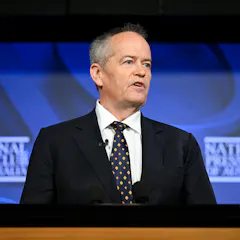
In this podcast, Bill Shorten joins The Conversation to discuss the aftermath of the royal commission report, and progress reforming the NDIS to make it more sustainable.

The NDIS needs to focus on helping people with disability reach their goals rather than what they can’t do. It’s time the NDIS returned to its roots.
Top contributors
-

Professor, Public Service Research, UNSW
-
Professorial Fellow, University of Canberra
-
Professor, Rehabilitation, Ageing and Independent Living Research Centre and Occupational Therapy Department, School of Primary and Allied Healthcare, Monash University
-
Deputy Director, The Kids Research Institute Australia, Professor of Autism Research, The University of Western Australia
-
Adjunct Professor, Summer Disability Research Centre, La Trobe University
-
Professor, University of Sydney; RMIT University
-
Disability Program Director, Grattan Institute
-
Senior Research Fellow, Crawford School of Public Policy, Australian National University
-
Head of Autism Research and Senior Principal Research Fellow, The Kids Research Institute Australia
-
Professor, Social Policy Research Centre, UNSW
-
Senior Lecturer in Public Policy and Politics, UNSW
-
Senior Lecturer of Wellbeing Science, The University of Melbourne
-
ARC Research Fellow in Indigenous Health, Disability and Community Development, University of Sydney
-
Senior Lecturer Economics, Deakin University
-
Adjunct Senior Research Fellow, Living with Disability Research Centre, La Trobe University